Rainy season in Southwest Florida has a way of showing you every little thing your house is dealing with.
The black streaks that were “kinda there” in April suddenly look darker. The roof that seemed fine now looks blotchy. And of course, that’s exactly when you start wondering if roof cleaning is even possible right now… or if you’re supposed to wait until everything dries out sometime in November.
So yes. You can clean a roof during rainy season.
But there are a few important “depends” in that sentence. Because a roof is not a driveway. And rainy season here is not a light drizzle that comes and goes politely.
Let’s talk through what’s actually safe, what’s smart, and how roof cleaning companies handle it in Naples, Florida.
What “roof cleaning” really means (and why rain changes the rules)
Most homeowners picture roof cleaning as water blasting. Like pressure washing a patio, just… higher up.
That’s not what you want on an asphalt shingle roof. Or most tile roofs either, honestly.
In a place like Naples, the real issue is usually organic growth. You’re dealing with:
- Gloeocapsa magma (that black algae that makes streaks)
- Lichen spots that cling and spread
- Moss in shaded areas (less common here, but it happens)
- General grime and pollen that bonds to the surface
The safest method for this is typically soft washing. It’s a low pressure rinse combined with a cleaning solution designed to break down the algae and growth at the root, not just “knock it off.”
Rainy season matters because:
- Roof surfaces are more slippery. Obviously.
- Weather changes quickly. Lightning risk becomes real.
- The roof can stay damp longer, which affects timing and safety more than the chemistry.
So the question is not really “can a roof be cleaned when it’s raining.”
It’s more like “can it be done safely and effectively when the weather is unstable.”
Is soft washing still effective during rainy season?
Most of the time, yes.
A good soft wash treatment isn’t relying on a long sunny afternoon to “bake in.” It’s relying on dwell time and the right mix to kill the algae and loosen the staining. Light rain after application often doesn’t ruin the job the way people assume it will.
Here’s the practical truth:
- A light shower later in the day is usually not a problem.
- Heavy rain right after application can reduce dwell time and may require adjustment.
- A constant downpour during the process is where it becomes more trouble than it’s worth, mainly for safety.
If you’re hiring a professional roof cleaner, they’re watching radar and planning around windows. That’s normal in Florida.
And if you’re thinking of doing it yourself, rainy season is where DIY roof cleaning gets risky fast. Not just because of slipping. Also because most DIY setups don’t control runoff and overspray well, and rain amplifies that.
When roof cleaning should be postponed (even if you really want it done)
There are days in rainy season where the correct call is to reschedule. No hero moves.
A reputable company will usually postpone if:
Lightning is in the area
This is non negotiable. If you hear thunder, you’re in the zone. Roof work and lightning do not mix. As outlined in this official document, safety protocols should always be followed during such weather conditions.
The roof is saturated and unsafe to walk
Some roofs stay slick for hours after rain, especially tile and metal. If the crew can’t move safely, it’s not happening.
Heavy rain is forecasted during the application window
Soft washing needs a little time to work. If the storm is about to dump on you immediately, it’s smarter to wait for a clearer break.
Gutters and drainage are already overwhelmed
Rainy season can expose weak drainage. If your gutters are clogged and water is spilling everywhere, adding roof runoff from cleaning can create a mess.
If you’re not sure, just ask. A real roof cleaning company is used to answering this question 20 times a week.
What about the stains. Will they come back faster in rainy season?
This is the part that surprises people.
Rain itself does not “cause” algae streaks. What causes them is the warm, humid environment and the spores that are already in the air. Rain just helps keep everything damp, which helps algae thrive.
So yes, during rainy season, algae can spread faster. Especially on shaded roof slopes and north facing sections where the sun doesn’t blast it dry every day.
That’s actually a reason not to wait too long.
Because what starts as streaking can turn into thicker, more established growth. Then you’re looking at more staining, more retention of moisture on the surface, and more long term wear.
Can rain damage the results right after cleaning?
If the roof was cleaned properly, rain is usually fine.
But there’s a nuance here. Some homeowners expect a roof to look “perfectly new” the second the crew leaves.
With soft washing, you often get immediate improvement, but some of the lighter staining continues to fade over days or a couple of weeks as the dead organic material breaks down and rinses away naturally with weather.
In that sense, rainfall can actually help rinse away residue and speed up the final visual cleanup.
The only time rain really causes a problem is if:
- the treatment was diluted too much already
- it was rinsed off too quickly by heavy rain
- the crew applied in poor conditions and couldn’t control coverage
Which is why the “during rainy season” question is mostly about hiring someone who knows how to plan and adjust, not just showing up and hoping.
What a professional roof cleaner does differently in rainy season
This is where the gap between “spray and pray” and real professional work shows up.
A good company will usually:
Watch weather windows closely
Not just “it’s sunny right now.” More like checking radar for the next 2 to 4 hours and looking at lightning.
Adjust scheduling and crew timing
Sometimes it’s just starting earlier. Sometimes it’s swapping jobs around and doing a house wash first, roof later.
Protect landscaping more aggressively
Rain changes runoff behavior. Professionals pre wet plants, cover sensitive areas when needed, and make sure downspouts and drainage are handled.
Use safe access methods
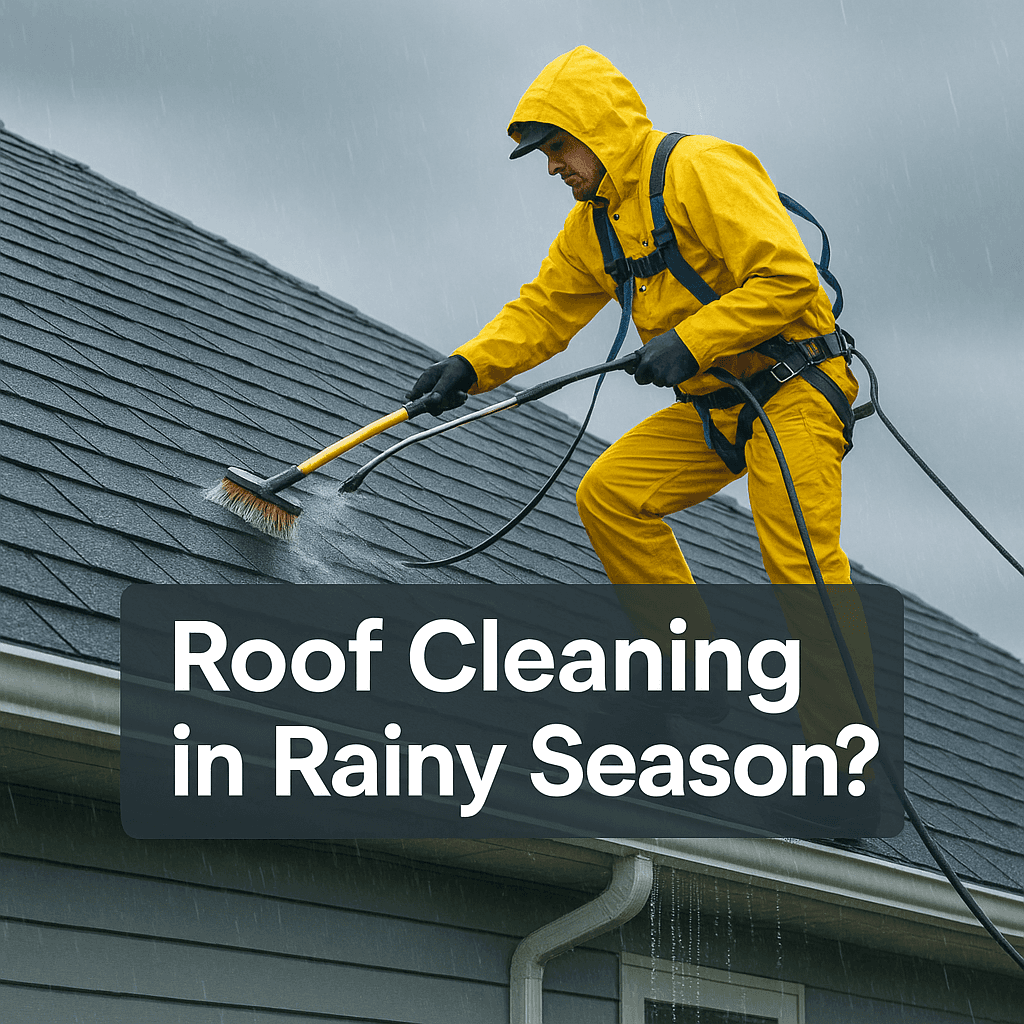
Wet roofs are slippery. Professionals use the right footwear, harnesses when appropriate, and they know when a roof pitch is just a no go in wet conditions.
Recommend paired services
Rainy season is when gutters clog faster and organic growth shows up everywhere. It’s common to bundle roof cleaning with gutter cleaning or a house wash so the whole exterior is handled together.
If you’re in Naples or nearby areas like Estero, Bonita Springs, or Marco Island, this is basically the normal working environment for half the year. Companies that live here know the drill.
Is it cheaper or more expensive during rainy season?
It depends on the company, but rainy season is often a busy season because that’s when homeowners notice the stains, and also when roofs tend to get visibly worse.
You might not get “off season” pricing. But you can sometimes get faster availability in small weather windows when other people keep postponing.
What matters more than price is whether the company is offering:
- clear expectations about timing and results
- a method that’s safe for your roof type
- proof they’re insured and experienced
And ideally some kind of guarantee. Because if you’re paying for a roof cleaning, you want it to last.
For example, Wash and Glow (Naples Soft Wash Roof Cleaning) advertises a 2 year clean guarantee, which is the kind of thing you want to look for when algae is the main issue. Not vague promises. Something specific.
Quick roof type notes (because rainy season affects each one differently)
Asphalt shingle roofs
Soft wash is typically the safest option. Wet shingles are slippery and can be fragile when walked on improperly, so rainy season makes “DIY shingle cleaning” a hard no for most people.
Tile roofs (barrel tile, flat tile)
Tile gets extremely slick when wet. Also, cracked tiles happen when people step wrong. Rainy season just increases the odds of that. Professionals will be careful with foot placement and access.
Metal roofs
Slippery, fast. You can’t “catch yourself” the same way. Metal roofs demand extra caution in wet conditions.
So… should you clean your roof during rainy season or wait?
If your roof has visible streaking, spotting, or buildup now, waiting is usually not helping.
Rainy season is when algae and organic growth are most active. Cleaning during this time can stop the spread, improve curb appeal, and help the roof shed water the way it’s supposed to.
But the job needs to be scheduled around safe weather windows. That’s the real answer.
If the forecast is lightning and heavy rain all day, reschedule. If it’s the typical Florida pattern, cloudy morning and storms later, a professional can often get it done safely.
A simple way to handle this in Naples (without overthinking it)
If you’re local and you want someone to just tell you what’s doable this week, the easiest move is to request a quote and let a pro schedule around the weather.
You can get a fast quote through Naples Soft Wash Roof Cleaning (Wash and Glow) here:
https://softwashroofcleaningnaples.com
Even if you end up booking a week later, you’ll at least know what you’re dealing with. And whether rainy season is actually a barrier for your specific roof, or just an annoying background detail.
FAQs (Frequently Asked Questions)
Can I clean my roof during the rainy season in Southwest Florida?
Yes, you can clean your roof during the rainy season in Southwest Florida. However, it depends on weather conditions and safety factors. Roof cleaning is possible if the rain is light or has stopped, but heavy rain, lightning, or slippery roof surfaces may require postponing the cleaning for safety and effectiveness.
What is soft washing and why is it preferred for roof cleaning here?
Soft washing is a low-pressure rinse combined with a specialized cleaning solution that breaks down algae, lichen, moss, grime, and pollen at their roots rather than just removing them superficially. It’s preferred for asphalt shingle and tile roofs in Naples because it safely removes organic growth without damaging the roof material.
Does rain affect the effectiveness of soft washing on roofs?
Generally, soft washing remains effective during rainy season. Light rain after application usually doesn’t harm the treatment because it relies on dwell time and chemical action rather than sunshine. However, heavy rain immediately after application can reduce dwell time and may require rescheduling to ensure optimal results.
When should roof cleaning be postponed during rainy season?
Roof cleaning should be postponed if there is lightning nearby (thunder heard), if the roof surface is saturated and unsafe to walk on (especially tile or metal roofs), if heavy rain is forecasted during the cleaning window, or if gutters and drainage are overwhelmed which could cause runoff issues.
Will algae stains come back faster if I clean my roof during the rainy season?
Algae growth thrives in warm, humid environments like Southwest Florida’s rainy season because moisture helps spores spread. While rain itself doesn’t cause algae, it keeps surfaces damp longer allowing algae to grow faster. Therefore, it’s wise not to delay roof cleaning too long during this period to prevent thicker growth and staining.
Can rain damage my roof after it’s been cleaned with soft washing?
If your roof was properly cleaned using soft washing methods, rain typically won’t damage the results. Immediate improvement is visible after cleaning, but some lighter stains may continue fading over days or weeks as dead organic material breaks down naturally with weather exposure.