
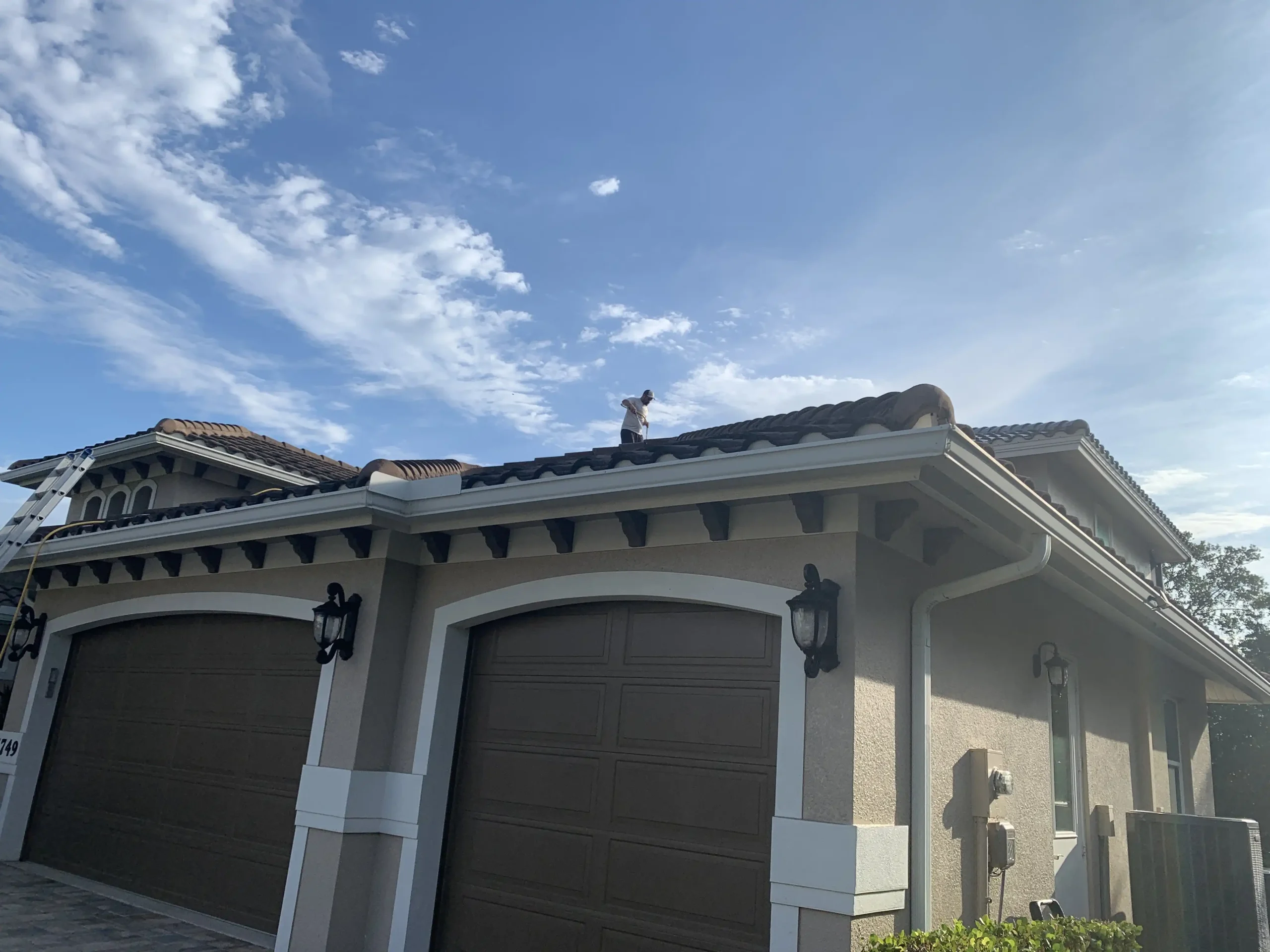
✓ 360-Degree Salt-Air Protocol
✓ Hurricane Pre/Post Priority Response
✓ Off-Island Snowbird Coordination Standard
✓ 2-Year Clean Guarantee
Marco Island is a barrier island, and that geographic fact drives every protocol modification that distinguishes Marco Island roof cleaning from any other SWFL market. Marco Island sits at the southwest corner of Collier County — the largest of the Ten Thousand Islands, surrounded by water on three sides (Gulf of Mexico to the west and south, Big Marco Pass and Collier Bay to the north, mangrove-tidal-creek system to the east), connected to mainland Collier by the Jolley Bridge (SR 951) as the single point of mainland access. The entire island is one zip code (34145), sits within the City of Marco Island (a separate municipal government from unincorporated Collier County, with its own permitting and contractor approval workflows), and represents one of the highest-net-worth island residential markets in the entire Florida Gulf Coast. Wash and Glow has been the dedicated Marco Island roof cleaning operator for 11+ years — island routing logic, off-island coordination workflows, condo association approval relationships, hurricane pre/post priority scheduling, and the 360-degree salt-air protocol all built up over a decade of continuous Marco-specific work.
The most distinctive Marco Island cleaning protocol modification is the 360-degree salt-air protocol. Naples-proper Gulf-front properties (Port Royal, Aqualane Shores, Park Shore Drive) get salt spray from one direction — the Gulf-facing west elevation — with inland and bay-facing elevations protected. Marco Island properties get salt from multiple directions simultaneously: (1) the Gulf-facing west and south elevations get continuous direct Gulf salt spray; (2) the bay-facing north elevations on properties near Big Marco Pass and Collier Bay get bay-driven salt + tidal aerosol; (3) the tidal-creek-facing east elevations on canal-front and inland-canal properties get mangrove-system tidal aerosol with elevated organic biology load; (4) the south-facing exposures on the southern half of the island get the most-aggressive direct-Gulf hurricane-track salt spray during storm cycles. Standard Naples-proper Gulf-front protocol applies salt-film-cutting surfactant pre-treatment weighted to the Gulf-facing elevations only — which fails on Marco Island because the bay-facing and tidal-facing elevations re-establish biology within 12 months from their own salt exposure source. Our Marco Island protocol applies the salt-film-cutting pre-treatment uniformly across all four elevations, with extended dwell window (15–20 minutes vs 10–15 standard) calibrated for the multi-directional salt load. The right protocol on Marco Island produces 18–24 month results across the entire roof; the wrong protocol (standard inland chemistry) produces 8–12 month re-establishment on the bay-facing or tidal-facing elevations even when the Gulf-facing elevation looks fine. Recurring annual cleaning is the dominant Marco Island cycle versus biannual which is more common on inland Naples-proper.
Hurricane direct-impact geography is the second Marco Island-specific variable that drives operational scheduling. Marco Island sits in the most hurricane-vulnerable position in Collier County as the southwesternmost barrier island in the Florida peninsula — storms tracking from the Caribbean and the Yucatan toward the Florida Gulf Coast frequently make direct landfall on or immediately adjacent to Marco. Hurricane Irma in September 2017 made direct landfall on Marco with sustained 130mph winds, producing the most aggressive single-event salt spray + storm surge + wind-driven debris load any Marco property has experienced in recent memory; the post-Irma rebuilding cycle drove a meaningful share of Marco Island roof replacement and post-storm cleaning work for years afterward. Hurricane Ian in 2022 and Hurricane Helene/Milton in 2024 produced major impact events on Marco. Pre-storm and post-storm cleaning service is a significantly larger share of Marco Island work than for inland Naples or Estero — we run pre-hurricane priority cleaning in the 24–72 hour window before forecasted landfall (so wind-driven debris doesn’t cement organic staining into already-dirty surfaces), post-hurricane priority cleaning in the 24–72 hour window after landfall (so salt spray and storm-driven biological load don’t establish before surface dries), and same-day insurance-claim documentation for any wind-driven debris damage. Recurring Marco customers get scheduling priority during active hurricane forecast windows; one-off operators chase higher-margin emergency work and are rarely available during the high-demand storm response cycle.
The off-island coordination logistics for Marco’s snowbird-heavy customer base is the third Marco-specific operational specialty. Marco Island has a roughly 50/50 part-time/full-time resident split, with the part-time residents weighted heavily toward the November–April snowbird rhythm (Northeast/Midwest/Canadian primary residences with Marco as winter property). The summer months (May–October) when biology grows fastest are exactly when most snowbird homeowners are off-island, which means most Marco roof cleaning work for this customer segment runs as pre-arrival service scheduling — we coordinate access with the property manager, house-watcher, or condo association management while the homeowner is off-island, complete the cleaning, and email the documentation packet (dated photos before/after, scope of work, soft wash protocol citation) to the homeowner wherever they are so they can verify work was completed. Recurring annual service with card on file is the dominant operational structure for the snowbird customer base — they don’t want to think about it; they want it done before they arrive in November. The system runs without homeowner involvement once it’s set up. Multiple Marco Island recurring customers have been on the same pre-arrival annual slot for 7–10+ years; we know the property managers, the gate codes, the condo association approval workflows, and the homeowner preferences across the recurring book. The Jolley Bridge mainland-access reality drives our Marco Island routing logic — we plan island-day routing to handle multiple Marco properties in a single bridge-crossing mobilization, which keeps pricing competitive and scheduling efficient versus operators who don’t have the recurring Marco volume to justify dedicated island days.
Every Wash and Glow Marco Island roof cleaning service comes with a written 2-year clean guarantee — the same warranty period as inland properties, but with the 360-degree salt-air protocol that actually delivers the 2-year result on Marco’s barrier-island geography. If visible biological growth (algae, mildew, black streaking from Gloeocapsa Magma cyanobacteria, lichen) returns within 2 years on the cleaned roof scope, we return and re-clean at no charge. The strongest written guarantee on Marco Island roof cleaning service. Documentation packet (dated photos, scope of work, soft wash protocol citation, manufacturer warranty compliance language, Collier County / City of Marco Island insurance carrier-suitable formatting) included free with every cycle.
What Wash and Glow Looks Like in Practice
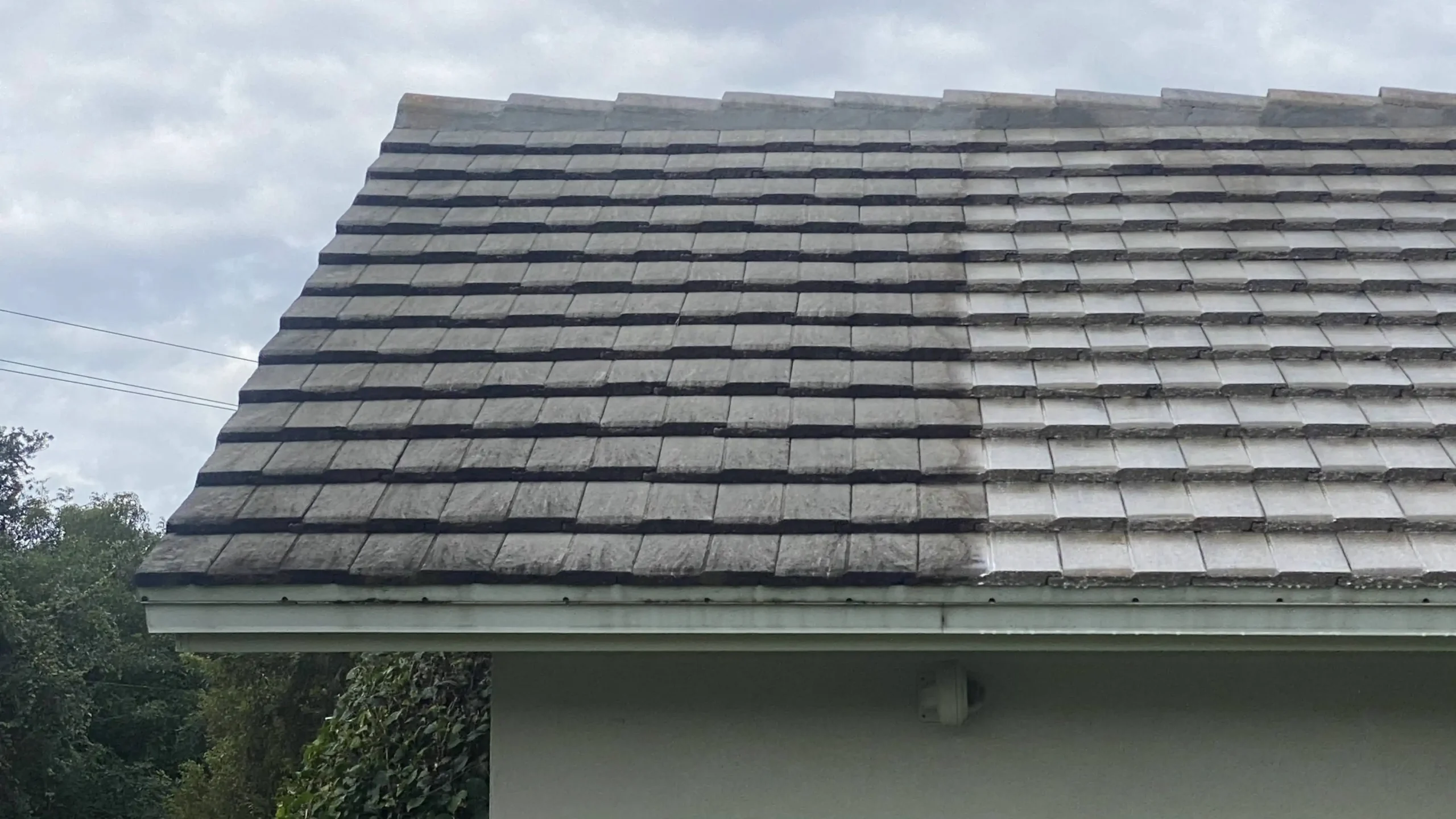
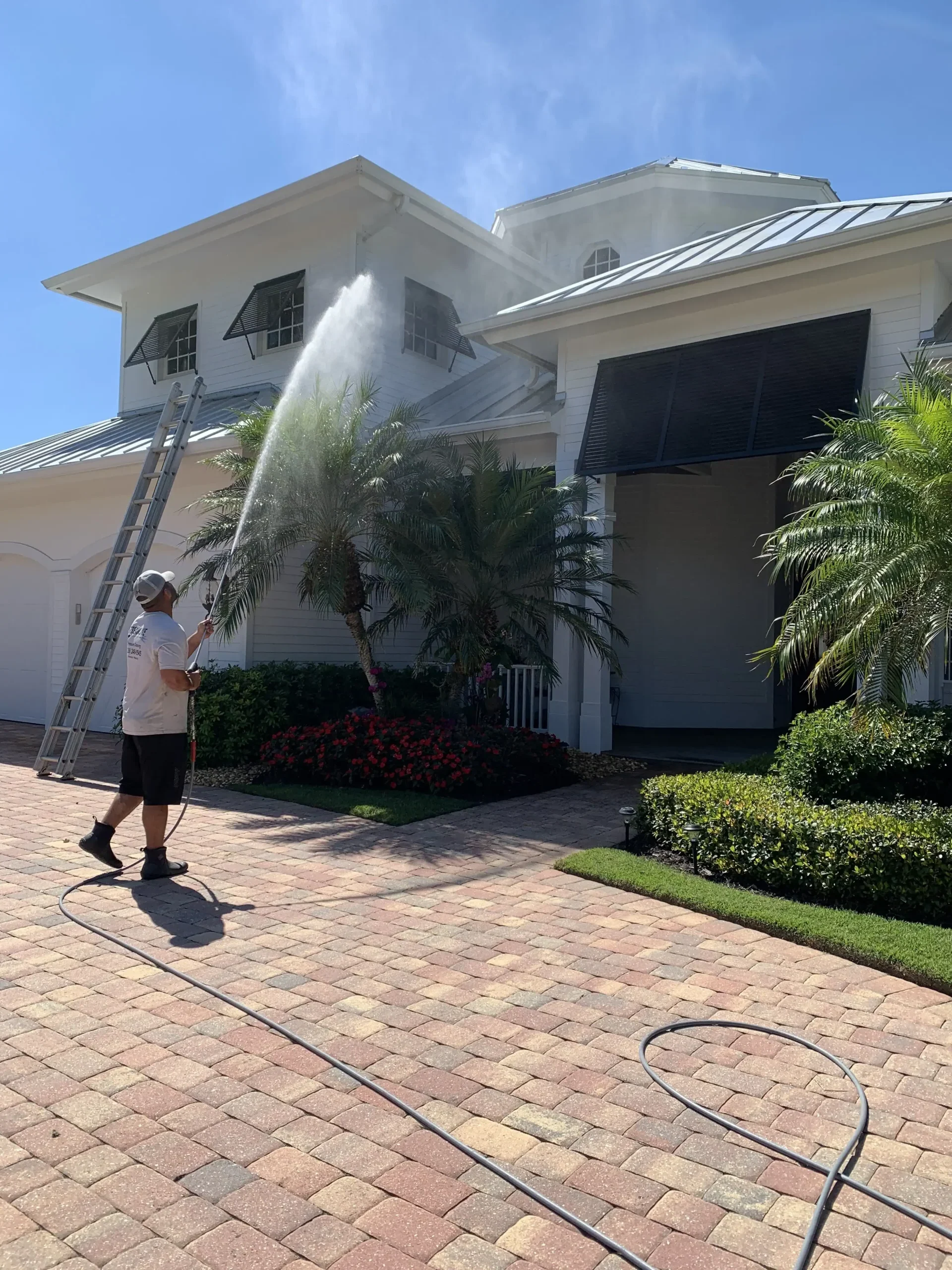
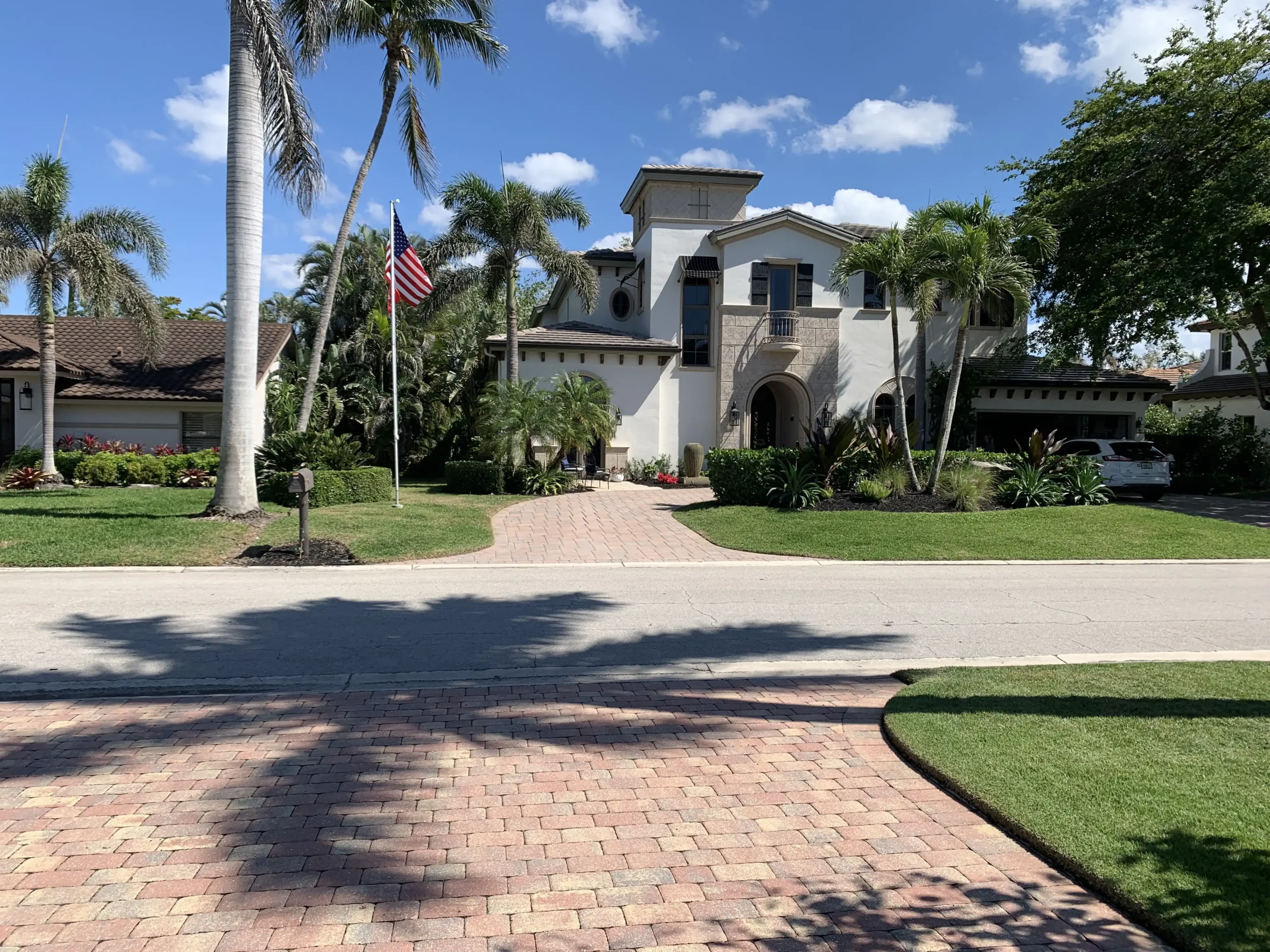
✓ 360-Degree Salt-Air Protocol Calibrated for Marco’s Barrier-Island Geography
Salt-film-cutting surfactant pre-treatment applied uniformly across all four elevations (Gulf-facing west and south, bay-facing north, tidal-creek-facing east) versus the standard Naples-proper Gulf-front protocol that weights chemistry to the Gulf-facing elevation only. Extended dwell window (15–20 minutes vs 10–15 standard) calibrated for the multi-directional salt load. The right protocol delivers 18–24 month results across the entire roof; standard inland chemistry produces 8–12 month re-establishment on bay-facing or tidal-facing elevations.
✓ Hurricane Pre/Post Priority Response for Marco Recurring Customers
Marco Island’s hurricane direct-impact geography (Irma 2017, Ian 2022, Helene/Milton 2024 all made meaningful impact) makes hurricane response a significant share of our Marco Island operation. Pre-storm priority cleaning in the 24–72 hour window before forecasted landfall; post-storm priority cleaning in the 24–72 hour window after landfall; same-day insurance-claim documentation for wind-driven debris damage. Recurring Marco customers get scheduling priority during active hurricane forecast windows. One-off operators chase higher-margin emergency work; we hold capacity for our recurring book first.
✓ Off-Island Coordination for Snowbird Pre-Arrival Service
Most Marco Island snowbird customers schedule cleaning while off-island during summer (the period of heaviest biology growth). We coordinate access with property manager, house-watcher, or condo association management; complete the cleaning; email documentation packet to the homeowner wherever they are so they can verify remotely. Recurring annual service with card on file is the dominant structure. Multiple recurring customers on 7–10+ year tenure with us. Pre-arrival November service so the property is clean and documented when they arrive for winter.
✓ Island-Routing Logistics and Condo Association Approval Relationships
The Jolley Bridge as the single mainland-access point drives our Marco Island routing logic. We plan dedicated island days to handle multiple Marco properties in a single bridge-crossing mobilization — keeps pricing competitive and scheduling efficient. Condo association approval relationships for the South Collier Boulevard high-rise stock established over 11+ years, including the major Cape Marco condominium associations. Single point of contact at most associations. The mainland-operator approach (drive to Marco for one job at a time) is structurally inefficient and explains a lot of the pricing premium charged by non-Marco-specialist operators.
A note from Blane, owner
360-DEGREE SALT-AIR PROTOCOL · HURRICANE PRE/POST PRIORITY · OFF-ISLAND SNOWBIRD COORDINATION · ISLAND-ROUTING LOGISTICS · 2-YEAR GUARANTEE

“Marco Island has been the part of our market that's required the most operational specialty over the years. The barrier-island geography means standard mainland protocol fails 8 to 12 months after the cleaning on the bay-facing or tidal-facing elevations even when the Gulf-facing side still looks fine. The salt comes from all four directions on Marco, not just the west like on Naples-proper Gulf-front. We learned that the hard way during the first couple of years working the island and adjusted the chemistry application pattern accordingly. The other operational reality of Marco is the snowbird rhythm. Probably 60 to 70 percent of our Marco recurring customer base is November to April part-time residents, which means most of our island work runs as pre-arrival service scheduling while the homeowner is off-island during the summer. We coordinate with property managers, house-watchers, condo associations, and email the documentation packet wherever the homeowner happens to be. Most of these recurring relationships have been on the same pre-arrival slot for 7 to 10 plus years now. The hurricane work is the third operational specialty. Marco gets hit harder than the inland markets and the post-storm cleaning window is a structurally larger share of our island volume during active hurricane season. We hold capacity for our recurring book during forecast windows because that's the relationship we've built up.”
— Blane, owner · answers the phone personally
Dated, Geotagged, Owner-Verified
Every job photographed before and after. Posted with date, community, and tech name.

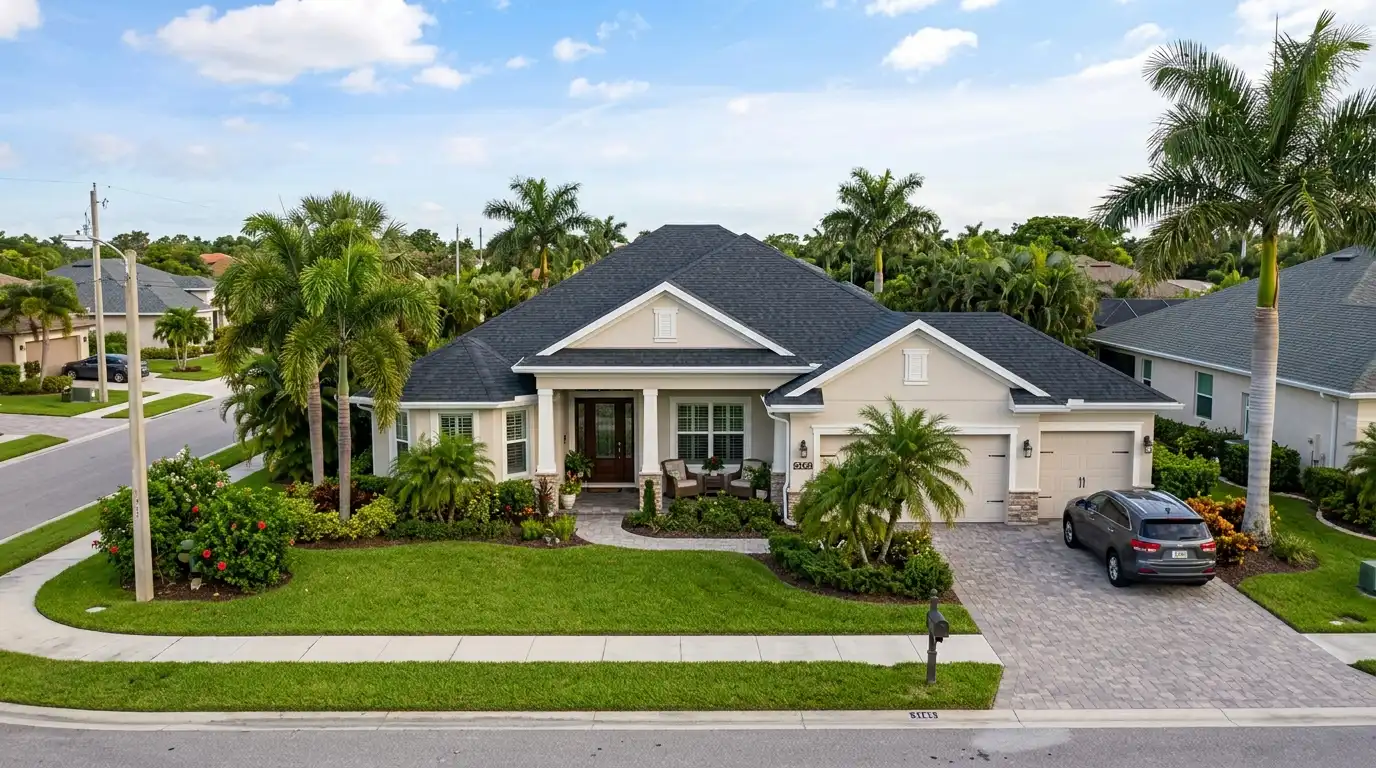
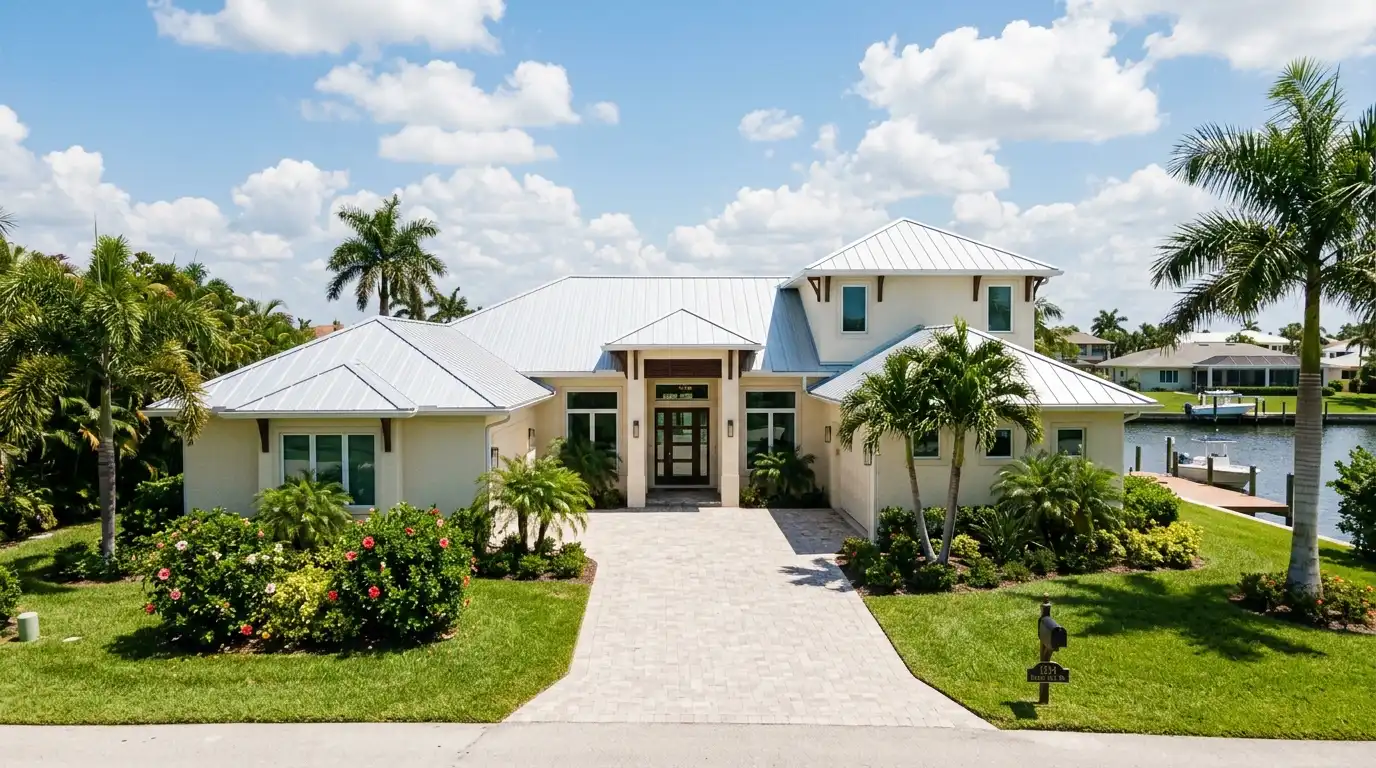
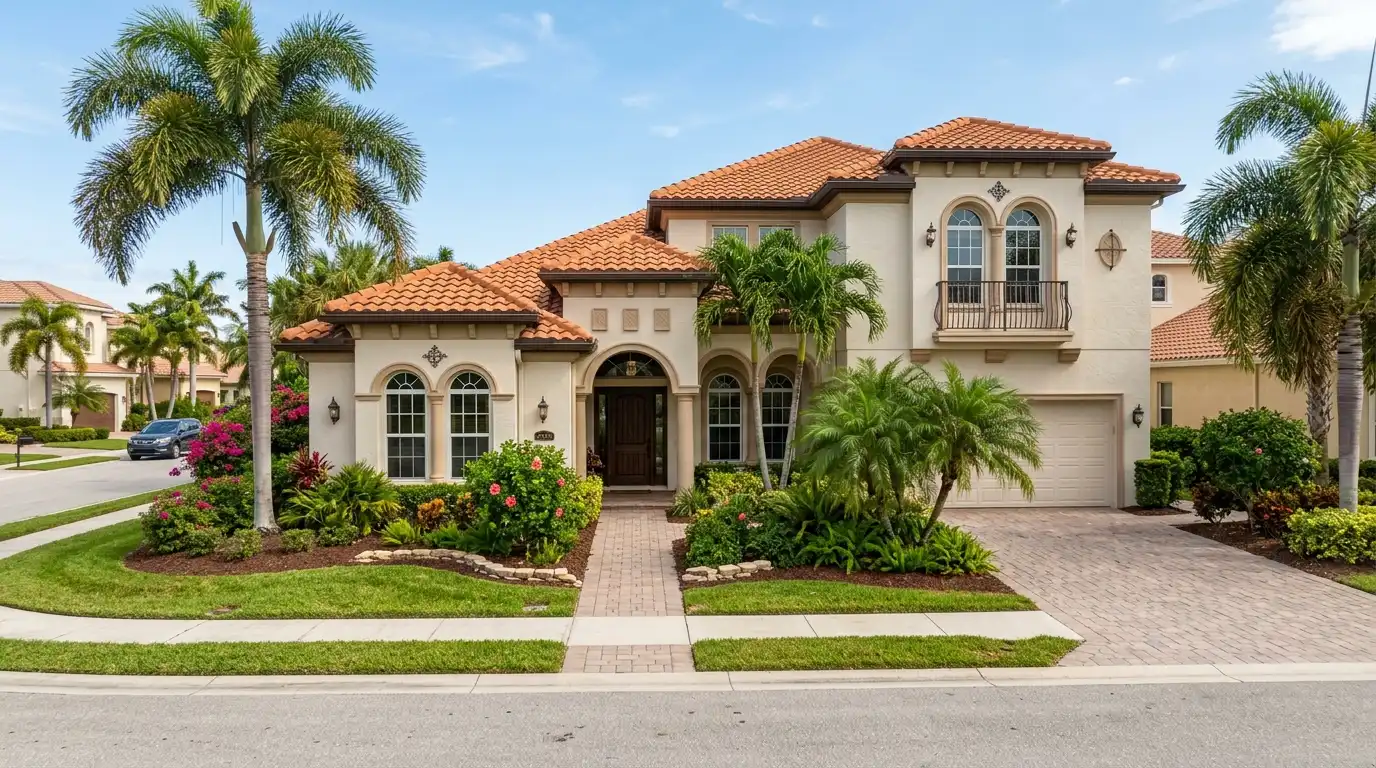
1. Hideaway Beach Club (North-End Exclusive Gated)
Hideaway Beach Club at the north end of Marco Island — the most exclusive gated community on the island, with strict contractor approval workflows and aesthetic-compliance documentation requirements. Pre-registered as approved exterior maintenance contractor; gate access via property management standard protocol. Mostly concrete tile and Spanish barrel tile inventory across the community footprint. Direct Gulf-frontage on multiple sides drives heavy 360-degree salt-air load; annual recurring service standard. White-glove documentation packet calibrated to Hideaway’s contractor compliance review.
2. Cape Marco (South-End High-Rise Condominium Cluster)
Cape Marco at the south tip of the island — the high-rise condominium cluster with multiple major condo associations sharing common amenities. Direct Gulf-frontage and bay-frontage on opposing elevations of most buildings. Common-area exterior cleaning priced separately on PM/HOA portfolio recurring contract basis (see our PM/HOA recurring contract page for the structure). Individual unit-owner work also handled where the unit’s exterior scope is owner responsibility. Pre-registered with the major Cape Marco condo associations. Mostly flat and low-slope roof sections requiring specialty access protocol.
3. Old Marco & Tigertail Beach (North-End Heritage Residential)
Old Marco at the original north-end development and the Tigertail Beach residential strip on the north Gulf-frontage. Older construction (1980s–1995 dominant), wider material mix including some Spanish barrel tile heritage stock, mature canopy of native vegetation. Tigertail Beach properties have direct Gulf-frontage with the most aggressive single-direction salt load on the island. Old Marco properties have mix of Gulf-facing and bay-facing exposures. Annual recurring service standard. Heritage residential customer demographic with longer-tenure homeowner profile.
4. Estuary Drive & Estate Strip (Premier Gulf-Front Estates)
The Estuary Drive estate strip and adjacent Gulf-front estate properties on the island’s premier residential frontage. Estate-tier homes with multi-elevation architecture, complex decorative trim, and concrete tile dominant with some metal roofing on newer construction. The most aggressive 360-degree salt-air load on the island. Five-material chemistry calibration applied per property. Annual recurring service standard with white-glove documentation. Pre-registered for the estate-strip private community management.
5. Inland Canal Communities (Caxambas, Tradewinds, Snook Inlet)
The inland canal-front residential communities on the island’s east side — Caxambas Court area, Tradewinds, Snook Inlet vicinity. Tidal-creek-facing elevations get mangrove-system tidal aerosol with elevated organic biology load; salt-film protocol modified to address the tidal load specifically. Concrete tile dominant. Standard residential demographic with mix of full-time and snowbird residents. Recurring annual service standard. Canal-access property protection during cleaning (no chemistry runoff into canal water).
6. Marco Shores & Mainland-Side Adjacent (Just Before the Bridge)
Marco Shores and the mainland-side residential strip just before the Jolley Bridge crossing — technically off-island but operationally part of the Marco Island service area because of access proximity. Standard salt-air exposure (less aggressive than the island proper because of mainland buffering), concrete tile dominant. Recurring biannual service is the most common cadence (vs annual for the island proper). Often handled in the same island-routing day as the Marco proper work for routing efficiency.
5-star reviews across Naples, Marco & Bonita
"Roof was black with algae. Gone in 3 hours, no streaks, no damage. Two years later still clean."
"Owner showed up on the quote himself. Half what the franchise quoted. Roof looks new."
"Tile roof, soft wash. They explained what they were using and why. Professional."
Ready for a clean roof, guaranteed for 2 years?
We come to your property, inspect the roof, give you a firm price. 15–30% less than franchises.