
✓ 1,500–3,500 PSI Calibrated Per Concrete Type
✓ Hot-Water Tier (200°F) Available
✓ We Run Soft Wash on Surfaces That Need It
✓ 2-Year Clean Guarantee
Pressure washing is a specific method, not a generic term for cleaning the outside of your house. Real pressure washing is high-pressure water at 1,500–3,500 PSI delivered through surface cleaner equipment (the round, rotating-jet floor-scrubber attachment) at a minimum 4 GPM flow rate, with 25° fan-spray nozzles, optional hot-water tier (180–200°F) for oil and grease, and biocidal pre-treatment + tannin extractor as needed for the substrate. The method is designed for poured concrete and concrete-equivalent hard surfaces — surfaces with structural integrity sufficient to absorb that mechanical force without damage, and texture sufficient to retain organic staining that lower-pressure methods can’t lift. It is the wrong method for any porous, coated, painted, or biological-substrate surface — stucco walls, asphalt shingle, tile roof, soffits, fascia, painted wood, vinyl siding, screen mesh, travertine. The single biggest mistake in Naples exterior cleaning is using pressure washing on surfaces that need soft wash instead.
This page is the surface-method map for pressure washing Naples FL: the 8 surfaces where pressure washing is genuinely the right method, and the 8 where it isn’t. Right-method surfaces (yes, pressure-wash these): poured concrete driveway, concrete walkways and sidewalks, concrete pool deck (where the deck is poured concrete, not pavers or travertine), foundation skirt, AC equipment pad, concrete garage floor, mailbox base, trash enclosure floor. These eight surfaces share key characteristics — poured concrete substrate, structural integrity sufficient for high-pressure absorption, surface porosity that retains tannin and organic staining that requires mechanical extraction, no underlying coating to damage, no wall cavity behind the surface to drive water into. Pressure washing at 2,000–2,500 PSI through surface cleaner equipment with biocidal pre-treatment is the optimal method on every one of them and produces dramatically better results than any lower-pressure alternative.
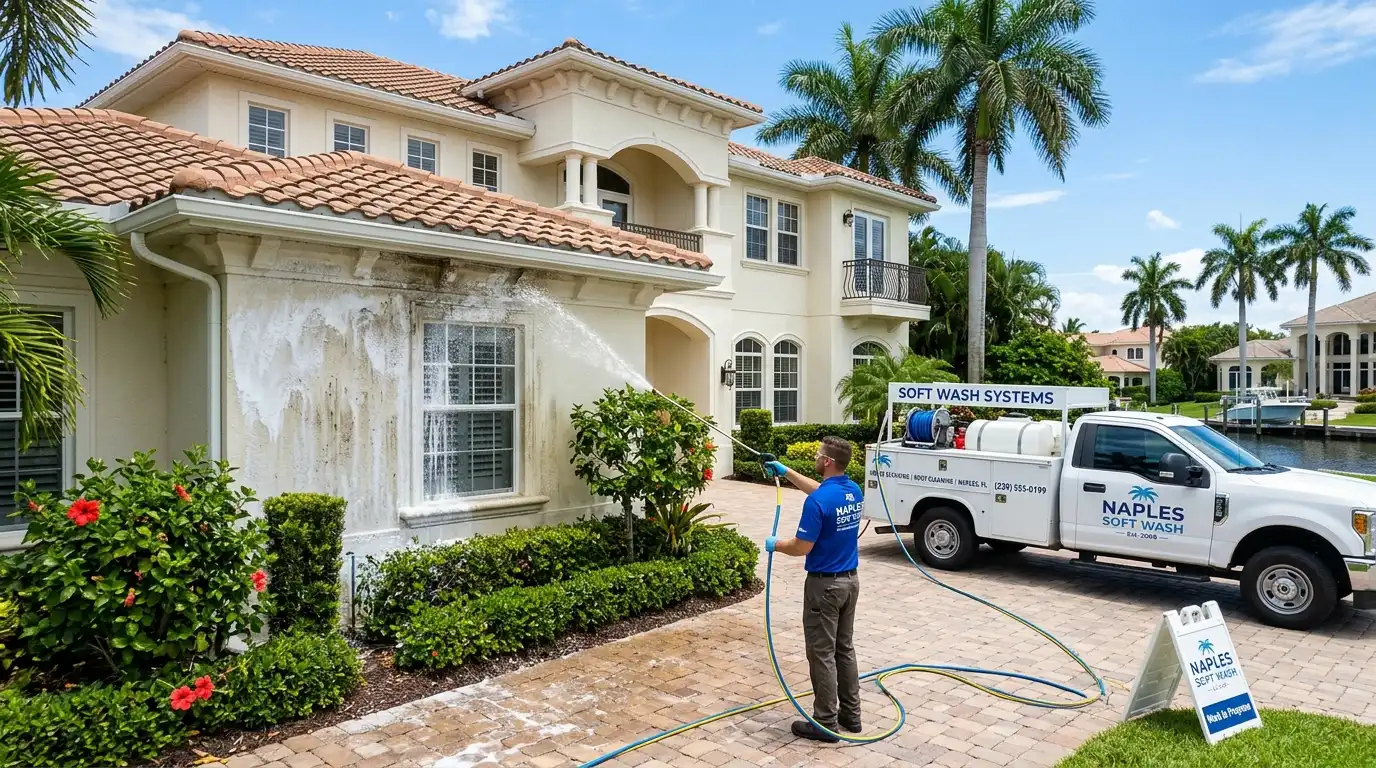
Wrong-method surfaces (no, don’t pressure-wash these — use soft wash instead): stucco walls (the moisture-intrusion wall-cavity damage chain leading to $20K–$60K delamination repairs detailed on our power wash house page), asphalt shingle roof (granule strip and ARMA-spec warranty void), concrete tile roof (tile cracking and ridge-cap mortar blowout, detailed on our power wash roof page), painted soffits and fascia (paint chalking, seam separation, water intrusion past window frames), painted wood and vinyl siding (paint stripping, vinyl seam cracking, building wrap saturation), screen mesh on pool cages (mesh tearing, frame distortion), travertine and natural stone pool coping (permanent surface etching, no recovery), pool deck pavers (joint sand displacement, paver shifting). These eight surfaces share the opposite characteristics — porous coatings, mechanical-stress vulnerability, hidden wall cavities behind, water-intrusion failure modes — and using pressure washing on any of them produces damage that costs more to fix than the cleaning was worth. The integrity test for any Naples cleaning operator is whether they’ll match method to surface or whether they’ll pressure-wash everything because that’s the only equipment they brought.
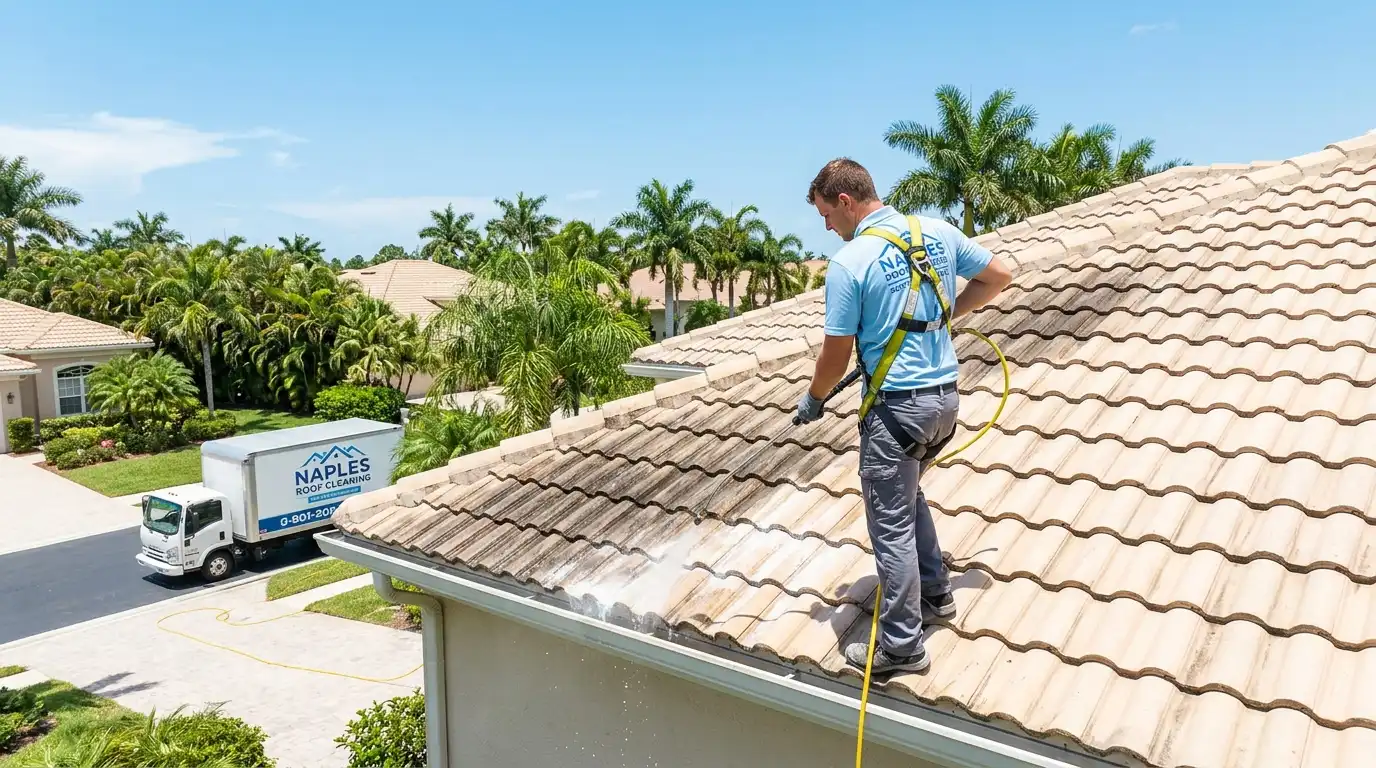
The operator-segment problem in Naples pressure washing is real and worth understanding before hiring. The market includes a meaningful population of operators whose entire equipment stack is a pressure washer — they don’t carry soft wash chemistry, soft wash application equipment, the calibrated PSI rigs, or the trained protocol for low-pressure work. When a pressure-washing-only operator is hired for a multi-surface job, they pressure-wash everything because that’s the only tool they have, including the stucco walls, the soffits, the pool cage, and sometimes the roof. The damage shows up months or years later, the operator is gone, and the homeowner is left with the repair bill. Wash and Glow runs both equipment classes — calibrated soft wash rigs and surface-cleaner pressure washing rigs, with operators trained on both — because the surface determines the method, not the equipment we happen to have on the truck. The whole-property job that arrives with stucco walls + concrete driveway + tile roof + paver pool deck gets soft wash on the walls, pressure wash on the driveway, soft wash on the roof, and medium-pressure on the pavers — four different methods, one visit, one warranty. That’s the standard. Operators selling “pressure washing” as a one-method-fits-all service either don’t know the difference or are hoping the customer doesn’t.
Every Wash and Glow service comes with a written 2-year clean guarantee. The guarantee works because we use the right method on every surface — pressure washing where it belongs, soft wash where it belongs, medium pressure on pavers and travertine. Operators running one method across every surface can’t offer a 2-year guarantee because their results don’t last 2 years on most surfaces and they’re causing damage on the surfaces they’re using the wrong method on. The right-method-per-surface discipline is what makes the guarantee economically possible.
What Wash and Glow Looks Like in Practice
✓ Surface Cleaner Equipment, Not Wand-Only
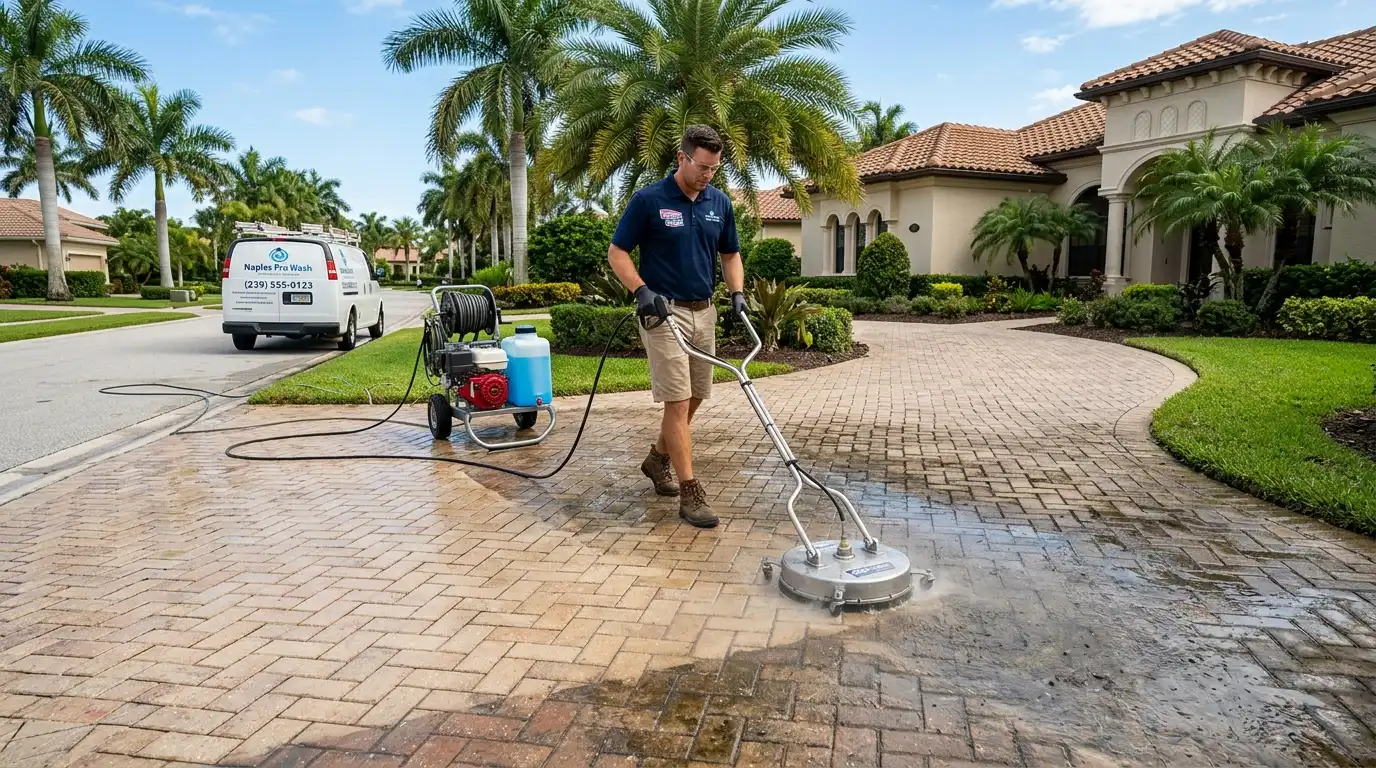
Surface cleaner is the round, rotating-jet floor-scrubber attachment that delivers high-pressure water in an even circular sweep across concrete. Wand-only pressure washing on a driveway produces tiger striping (the alternating clean and dirty bands that show every wand pass) and uneven cleaning depth. Surface cleaner produces uniform results without striping, faster work time, and consistent depth across the full surface. The equipment difference is the difference between an amateur driveway clean and a professional one.
✓ 4 GPM Minimum Flow + Biocidal Pre-Treatment
PSI alone doesn’t clean concrete — PSI × GPM (gallons per minute) is the actual cleaning power. Operators running 2,000 PSI at 2.5 GPM (typical residential pressure washer rental specs) produce dramatically less cleaning power than commercial 2,000 PSI at 4 GPM. We run 4 GPM minimum on all concrete jobs. Biocidal pre-treatment applied before pressure washing kills algae and biological growth at root depth so it doesn’t regrow within 90 days; tannin extractor applied where indicated lifts organic staining (leaf tannins, irrigation rust) that pressure alone won’t remove.
✓ Hot-Water Tier (180–200°F) Available for Oil and Grease
Hot-water pressure washing is the appropriate method for embedded oil staining, heavy grease, and severe organic staining that ambient-temperature water can’t dissolve. We run a heated-water tier at 180–200°F as an add-on for driveway oil staining, garage floor work, and commercial concrete jobs where the staining profile justifies it. Detail on our power wash driveway page. Most operators don’t carry a hot-water rig; the cleaning capability difference on oil-stained concrete is dramatic.
✓ We Refuse to Pressure-Wash Surfaces That Need Soft Wash
This is the integrity differentiator. We don’t pressure-wash stucco walls, roofs, soffits, pool cages, painted wood, vinyl siding, travertine, or pavers — not even when the homeowner specifically asks us to. Those surfaces get soft wash or medium pressure with calibrated chemistry. The operator who’ll run a pressure washer on whatever surface the homeowner points at because they’re getting paid either way is creating future damage liability we won’t be part of. Right method per surface is the standard at every Wash and Glow job, every time.
A note from Blane, owner
RIGHT METHOD PER SURFACE · SURFACE CLEANER + 4 GPM · HOT-WATER TIER · 2-YEAR GUARANTEE

“The clearest signal in Naples pressure washing is what equipment shows up on the truck. If the operator only has a pressure washer, they're going to pressure-wash everything you point at — including the stucco, the soffits, the pool cage, and sometimes the roof. The damage from that gets attributed to weather or normal wear five years later, but it's actually a sequential record of the wrong method being used on each surface. We carry both equipment classes because the surface determines the method, not the truck inventory. The eight surfaces that genuinely need pressure washing get pressure washing. The eight that don't get soft wash or medium pressure with calibrated chemistry. One job, four methods sometimes. The operators trying to sell pressure washing as a one-method service are doing it because they don't have the other equipment.”
— Blane, owner · answers the phone personally
Dated, Geotagged, Owner-Verified
Every job photographed before and after. Posted with date, community, and tech name.
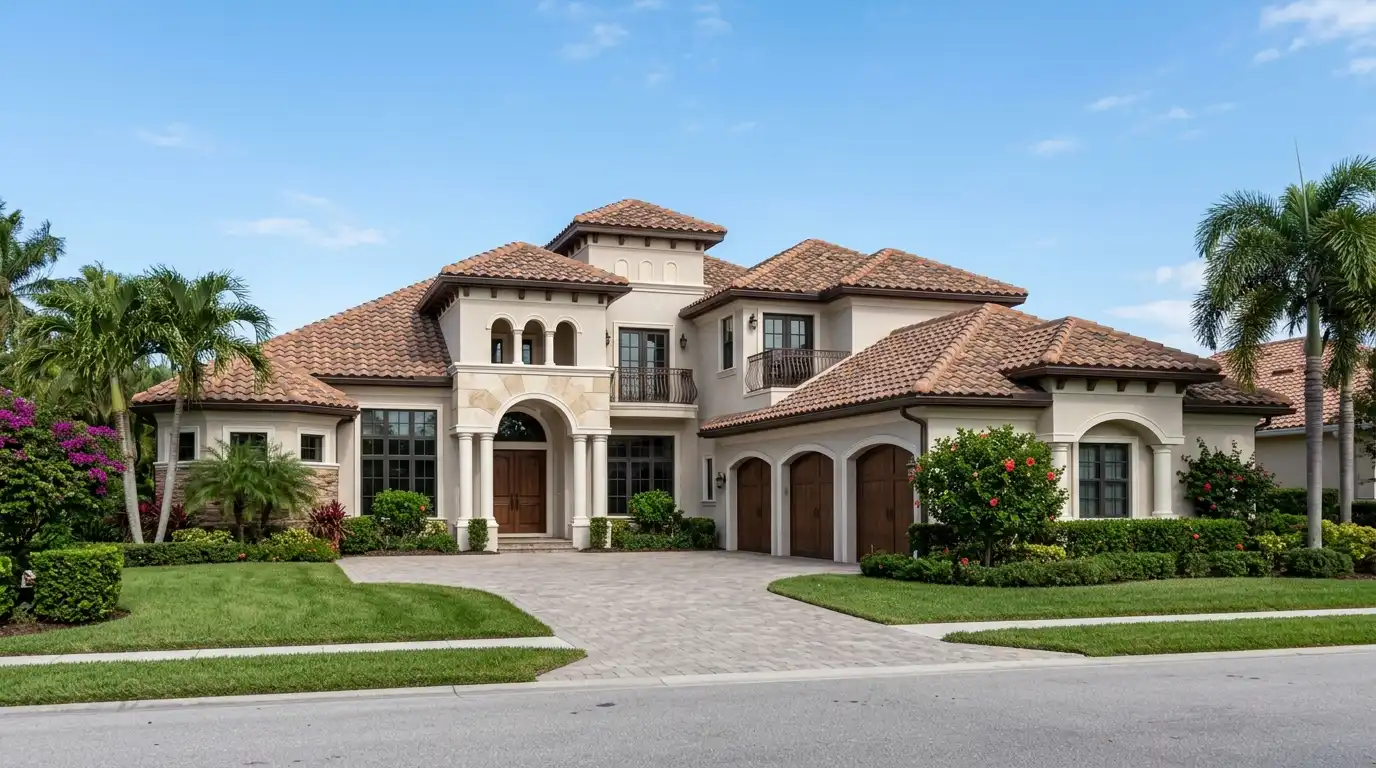
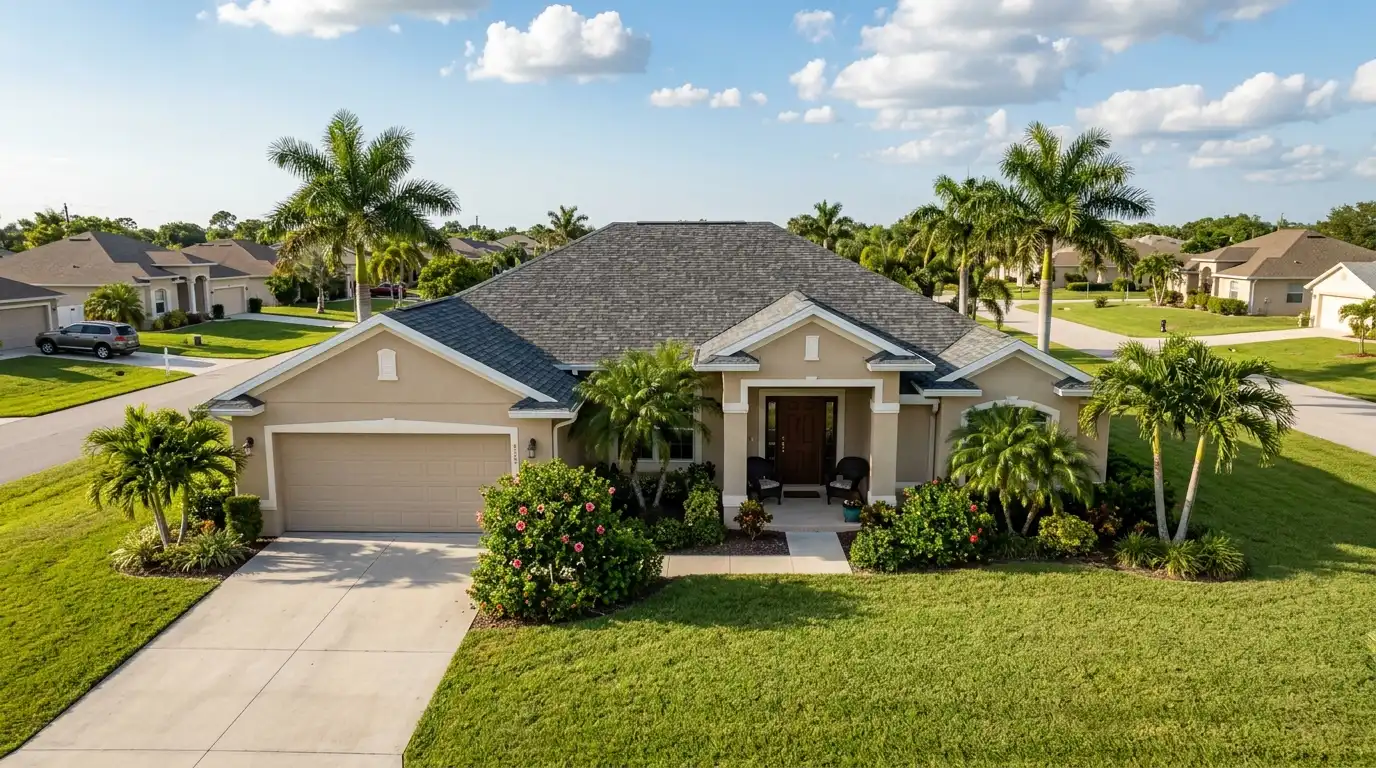
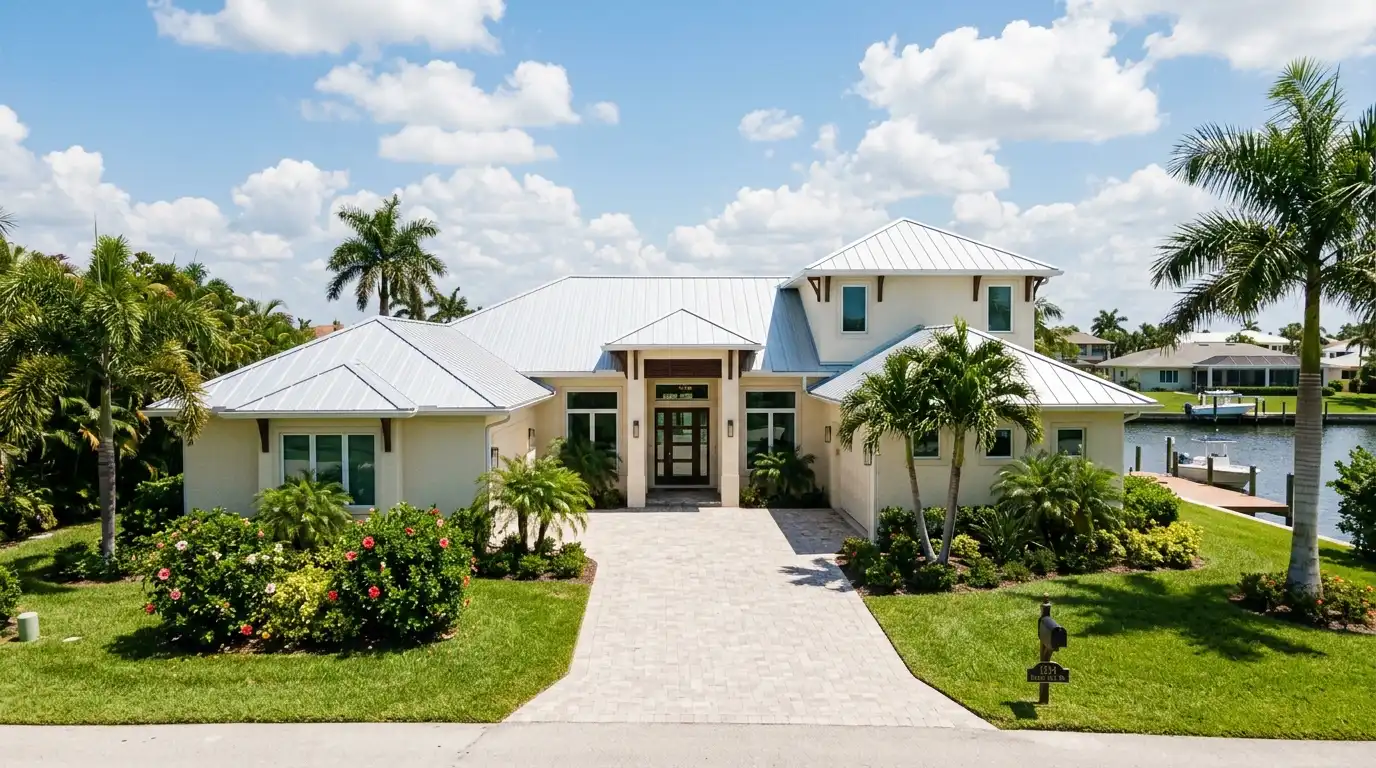
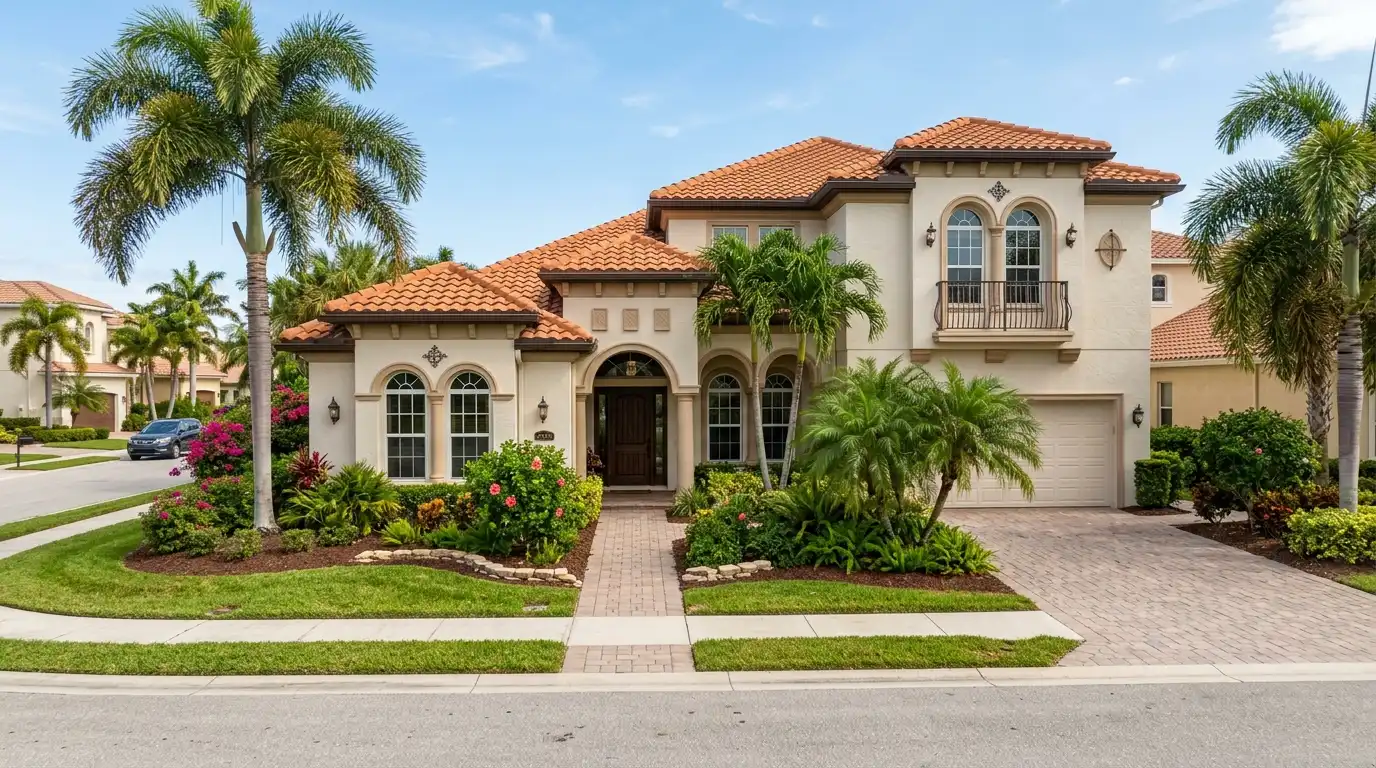
1. Poured Concrete Driveway
The dominant pressure-washing surface in Naples residential service. Surface cleaner at 2,000–2,500 PSI through 4+ GPM flow with biocidal pre-treatment for algae and tannin extractor for landscape organic staining. Optional hot-water tier for oil/grease at the parking position. Cleans 800–1,500 sq ft typical Naples driveway in 1.5–2.5 hours. Detail on our driveway pressure washer page.
2. Concrete Walkways & Sidewalks
The path from driveway to front door, the path around the side of the house, the public-side sidewalk along the property frontage. Same surface-cleaner protocol as the driveway, calibrated for narrower work area. Edge-detail wand-work along the seam between concrete and landscape borders. Often the most-overlooked surface on whole-property jobs because operators forget the front-door path and the side-yard concrete — we include them by default.
3. Poured Concrete Pool Deck
For pool decks that are poured concrete (not pavers, not travertine). Pool-safe biocidal chemistry calibrated to maintain pool water chemistry (no sodium hypochlorite drift into pool). Surface cleaner at 1,500–2,000 PSI — modestly lower than driveway PSI to preserve any decorative finish on the pool deck. Pool equipment covered, drains protected, runoff managed. Detail on our patio power washing page.
4. Foundation Skirt & Exposed Concrete Footer
The strip of concrete around the perimeter of the home where the slab meets the soil line, often hidden by landscape but accumulating biological staining from sprinkler overspray and ground moisture. Pressure washing this strip removes the biological staining that promotes algae growth up the wall surface. Most homeowners have never had this surface cleaned; the result on whole-property jobs is dramatic.
5. AC Equipment Pad
The concrete pad under the outdoor AC condenser unit. Accumulates leaf debris, organic staining, and biological growth. Pressure washing this pad with the AC unit covered and the surrounding shrubs pulled back removes the staining and prevents the algae growth that promotes corrosion on the AC unit’s lower coil and electrical components. Small surface, fast clean, often overlooked.
6. Concrete Garage Floor
Garage floor concrete with embedded oil, tire marks, organic staining from outdoor equipment storage. Hot-water tier at 180–200°F is genuinely useful here — the heated water dissolves embedded oil that ambient-temperature pressure washing can’t fully lift. Surface cleaner work followed by detail wand-work in corners and along garage door track. Garage floor cleaning often included as add-on to driveway or whole-property service.
7. Mailbox Base
Concrete pad at the mailbox post. Tiny surface, accumulates 90% biological staining + 10% landscape debris. Pressure washing with biocidal pre-treatment at lower PSI (1,500) to avoid disturbing the post installation. Most homeowners notice this surface after the rest of the front-yard concrete is cleaned and the mailbox base is the one remaining stained spot. Always included in our front-yard scope.
8. Trash Enclosure Floor & Equipment Pads
The concrete floor inside the side-yard trash enclosure (the screened area where the bins are stored). Heavy organic staining, occasional grease, year-round biological growth in the shaded enclosed environment. Pressure washing at standard concrete PSI with extra biocidal dwell time to address the organic load. Pool equipment pads and irrigation control box concrete pads included in the same protocol where present.
1–2. Stucco Walls + Painted Concrete Block
Soft wash at 50–100 PSI with biocidal chemistry. Pressure-washing stucco above 500–600 PSI drives water through the porous stucco coating into the wall cavity, leading to delamination and $20K–$60K repair costs over 3–5 years. Full damage chain documented on our power wash house page; chemistry detail on house soft wash page.
3–4. Asphalt Shingle Roof + Concrete or Clay Tile Roof
Soft wash at 50 PSI with ARMA-specified chemistry. Pressure washing strips shingle granules in long visible streaks, cracks tile, blows mortar from ridge caps, voids manufacturer warranties (GAF, Owens Corning, CertainTeed, Tamko). Repair scenarios run $8K–$25K. Detail on our power wash roof page and soft wash roof cleaning page.
5–6. Painted Soffits + Painted Fascia + Aluminum Trim
Low-pressure soft wash at 50–100 PSI with calibrated lower-concentration chemistry. Pressure-washing soffits and fascia chalks the paint, separates seams, drives water past window-frame seals into the wall cavity behind the trim, and accelerates aluminum oxidation on metal trim work. Soft wash cleans the same staining without any of those failure modes.
7–8. Pool Cage Screen Mesh + Travertine Pool Coping & Pavers
Pool cage: lowest controlled pressure (under 500 PSI), large fan-spray nozzle, parallel-to-mesh sweep direction. High pressure tears the mesh and distorts the frame. Travertine: pH-neutral chemistry only, no high-pressure surface cleaner ever — it permanently etches travertine. Paver pool deck: medium pressure (800–1,200 PSI) only, surface cleaner displaces joint sand. Each surface has a calibrated method; pressure washing works on none of them.
5-star reviews across Naples, Marco & Bonita
"Roof was black with algae. Gone in 3 hours, no streaks, no damage. Two years later still clean."
"Owner showed up on the quote himself. Half what the franchise quoted. Roof looks new."
"Tile roof, soft wash. They explained what they were using and why. Professional."
Ready for a clean roof, guaranteed for 2 years?
We come to your property, inspect the roof, give you a firm price. 15–30% less than franchises.