You notice it one day when the sun hits the roof just right.
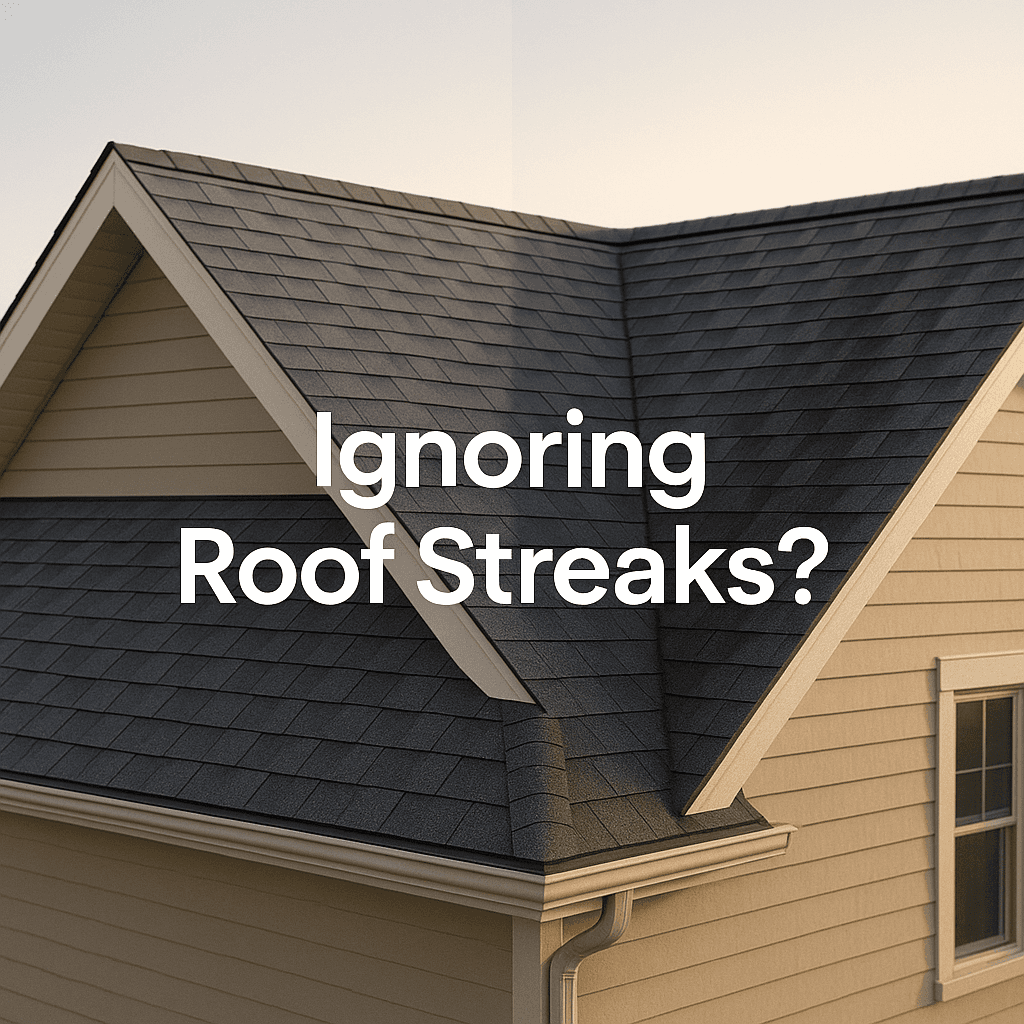
Those dark streaks. Sometimes they look like soot. Sometimes like wet lines that never dry. And the annoying part is they usually show up on the “good” side of the roof. The one facing the street.
Most people in Naples and around Southwest Florida do the same thing at first. They shrug. It’s just cosmetic, right?
Not really.
Roof streaks are one of those problems that start quiet and slow, then get expensive later. Not always overnight. But the longer you ignore them, the more likely you end up paying for repairs you could have avoided.
Below is what actually happens when roof streaks sit there and keep growing. And why “I’ll deal with it later” tends to turn into “I wish I handled it earlier.”

First, what roof streaks usually are (hint: it’s alive)
In Florida, those dark streaks are most often Gloeocapsa magma, a type of airborne algae. It feeds on moisture, warmth, and the materials in asphalt shingles, and it spreads over time.
You can also get:
- Moss (less common in Naples, more common in cooler shady areas)
- Lichen (stubborn, crusty growth that anchors down)
- Mildew on certain roof surfaces
- General grime that traps moisture and helps growth continue
But in most neighborhoods here, roof streaks are algae. The streaky pattern happens because water runs down the roof and carries colonies with it.
So no, it’s not just “dirt.” It’s a living layer that keeps going.
What happens if you ignore roof streaks?
1. The streaks spread. Slowly, then all at once.
At first it’s one section. Then two. Then you stop noticing where the original spot was.
Algae, which is often the culprit behind these black streaks on roofs, spreads through airborne spores. Wind, rain, morning dew, humidity. All of it helps. And in Naples, we basically have the perfect climate for it.
Ignoring it doesn’t keep it “stable.” It keeps it multiplying.
And the darker it gets, the more heat the roof absorbs, which helps the cycle continue.
2. Your shingles stay wet longer after rain
This is one of the big issues people miss.
A clean roof sheds water and dries out faster. An algae coated roof holds moisture longer because the growth creates a thin biofilm and traps tiny particles that act like a sponge.
That longer damp time can contribute to:
- faster shingle wear
- increased risk of organic growth taking hold (lichen, moss)
- more granule loss over time
It’s not that roof streaks instantly cause leaks. It’s more like they create conditions where the roof ages faster than it should.
3. Your roof can literally wear out sooner
Asphalt shingles have protective granules for a reason. They help with UV protection and durability.
Algae itself doesn’t “eat” your roof like termites eat wood, but it can:
- hold moisture against the shingle surface
- increase heat absorption
- accelerate granule loosening during storms
- make the roof more brittle over time in harsh sun
If you’re hoping to get the full life out of your roof, letting streaks sit there for years is basically working against that goal.
4. Lichen can show up, and that’s when it gets nasty
If algae is the early stage problem, lichen is often the “this has been here a while” sign.
Lichen looks like pale, crusty patches. The issue is it can anchor into the shingle surface. It’s harder to remove, and the longer it sits, the more damage it can do when someone tries to scrape it off.
This is also where homeowners sometimes make things worse by going aggressive.
Which leads to the next point.
5. You might try pressure washing, and that can shorten the roof’s life fast
This is a super common “panic fix.”
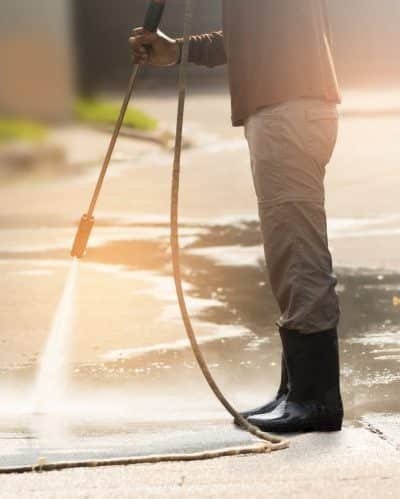
You see streaks. You rent a pressure washer. Or a guy shows up offering a cheap roof wash and blasts the roof like it’s a driveway.
High pressure on asphalt shingles can:
- strip granules (the protective layer)
- lift or loosen shingles
- force water under shingles
- void some manufacturer warranties
A lot of roof problems that show up later started with one “cleaning” that was way too harsh.
This is why soft washing exists in the first place. It’s designed to treat the organic growth without tearing up the roof.
6. Your home looks neglected, even if everything else is perfect
I know, this sounds shallow. But it matters.
In most neighborhoods, the roof is a huge percentage of what you see from the street. A stained roof can make:
- fresh landscaping look less impressive
- a newly painted exterior feel “off”
- the whole house seem older than it is
And if you ever plan to sell, roof streaks almost always show up in listing photos. Buyers notice. Even if they don’t say it out loud.
They just assume the roof is “old” or “might need replacing soon.”
7. You can lose money during a sale (or a refi) because of “perception”
Here’s what tends to happen.
A buyer sees streaks and asks the agent: “Is the roof okay?”
Now you’re either:
- offering a credit
- paying for cleaning last minute (often rushed)
- or getting hit with a lower offer because they assume replacement is coming
Even if your roof has years left, roof staining changes the conversation. It makes the roof feel like a risk.
Same goes for appraisals in some cases. The roof is part of overall curb appeal and condition.
8. Your insurance or HOA may start asking questions
Not always, but it happens.
Some HOAs in Southwest Florida send violation letters if the roof looks stained or “dirty.” They might not care what it is. They just want it handled.
Insurance is trickier. Most carriers aren’t going to cancel you over algae streaks alone. But if your roof already has age concerns, visible staining can invite more scrutiny. And if an inspector flags “biological growth,” you may be asked to remediate it.
Basically, roof streaks can turn into a paperwork problem, not just a roof problem.
9. Gutters and downspouts can get gunked up faster
This one surprises people.
As algae and debris loosen during storms, more organic material ends up washing into gutters. Combine that with leaves, shingle grit, and Florida rain, and you can end up with:
- faster gutter buildup
- overflow during heavy rain
- staining on fascia and soffits
So sometimes the roof streak problem quietly spreads to the rest of the exterior. In such cases, considering professional gutter installation might be a wise decision to manage the situation effectively.
The “hidden” cost is that it gets harder to remove later
The earlier you deal with roof streaks, the easier it tends to be.
When the growth is light, a proper soft wash treatment can knock it out and keep it away longer. When it’s thick, established, and mixed with lichen, it can take:
- stronger chemistry (still roof safe when done correctly)
- more dwell time
- more rinsing and follow up
- more risk if someone uses the wrong method
So the cost of ignoring it is not just “it looks worse.”
It’s that the solution usually becomes more involved.
So what should you do instead?
You want a method that removes the growth without damaging the roof.
That’s why most reputable roof cleaning companies in Florida use soft washing, not high pressure. Soft washing uses low pressure application and the right cleaning solutions to kill algae at the root, then the roof rinses clean naturally or with a controlled rinse.
If you’re in Naples, Estero, Bonita Springs, or Marco Island, this is exactly what Wash and Glow does at Naples Soft Wash Roof Cleaning.
They focus on soft wash roof cleaning (plus house washing, window cleaning, gutter cleaning), and they advertise a 2 year clean guarantee, which is honestly what you want here. Not just “it looked good for a week.”
You can check them out here: https://softwashroofcleaningnaples.com
Signs you should not wait anymore
If you’re on the fence, here are a few “don’t keep delaying” signs:
- streaks are getting darker month by month
- you’re seeing light crusty patches (lichen)
- the roof stays damp looking longer than neighboring roofs
- you’re planning to sell within the next 6 to 18 months
- your HOA has mentioned the roof
- you’re tempted to pressure wash it yourself (please don’t)
A quick reality check (because this is where homeowners get stuck)
A lot of people wait because they assume roof cleaning is either:
- dangerous for the roof
- wildly expensive
- a cosmetic upsell
The truth is, bad roof cleaning is dangerous, yes. But proper soft washing is meant to be roof safe.
And the cost of cleaning is usually tiny compared to the cost of:
- replacing shingles early
- dealing with lichen damage
- losing leverage during a home sale
- fixing water issues caused by someone blasting the roof with pressure
Roof streaks are one of those things where the smart move is usually boring. Just handle it early. Then forget about it.
Wrap up
If you ignore roof streaks, they typically spread, hold moisture on the roof longer, and can contribute to faster shingle wear. Over time, you also risk tougher growth like lichen, curb appeal issues, and that whole headache of dealing with it right when you are trying to sell or satisfy an HOA.
If you’re in the Naples area and want a safe, roof friendly option, take a look at Naples Soft Wash Roof Cleaning (Wash and Glow) here: https://softwashroofcleaningnaples.com. Fast quotes, soft wash process, and that 2 year clean guarantee is a nice bonus.
Because honestly, the streaks are not going to get better on their own.
FAQs (Frequently Asked Questions)
What causes dark streaks on roofs in Southwest Florida?
In Southwest Florida, dark roof streaks are most often caused by Gloeocapsa magma, a type of airborne algae that thrives on moisture, warmth, and materials in asphalt shingles. These streaks can also be caused by moss, lichen, mildew, or general grime, but algae is the primary culprit in this region.
Are roof streaks just a cosmetic issue or do they affect the roof’s integrity?
Roof streaks are more than just a cosmetic problem. While they may seem harmless at first, ignoring them can lead to faster shingle wear, increased moisture retention, accelerated granule loss, and ultimately shorten the lifespan of your roof. They create conditions that cause the roof to age faster and can result in costly repairs if left untreated.
How do roof streaks spread and worsen over time?
Roof streaks spread through airborne spores carried by wind, rain, morning dew, and humidity—conditions common in Naples and Southwest Florida. Initially appearing in small sections, these algae colonies multiply slowly at first but then rapidly expand to cover larger areas of the roof. The darker the streaks get, the more heat the roof absorbs, which further accelerates their growth.
Why is pressure washing not recommended for removing roof streaks?
Pressure washing can damage asphalt shingles by stripping away protective granules, loosening or lifting shingles, forcing water under shingles, and potentially voiding manufacturer warranties. High-pressure cleaning can shorten your roof’s lifespan. Instead, soft washing methods are recommended as they effectively treat organic growth without harming the roofing materials.
What problems can lichen cause when it appears on roofs?
Lichen is a crusty growth that anchors into the shingle surface and usually indicates long-standing organic buildup. It is harder to remove than algae and can cause more damage if aggressively scraped off. Lichen presence suggests that roof maintenance has been neglected for some time and requires professional treatment to prevent further harm.
How do roof streaks affect my home’s appearance and value?
Roof streaks make a home look neglected even if everything else is well-maintained. They diminish curb appeal by making fresh landscaping less impressive and newly painted exteriors appear off. Streaked roofs often show up in listing photos during home sales and can negatively influence buyers’ perceptions, potentially lowering your home’s market value.