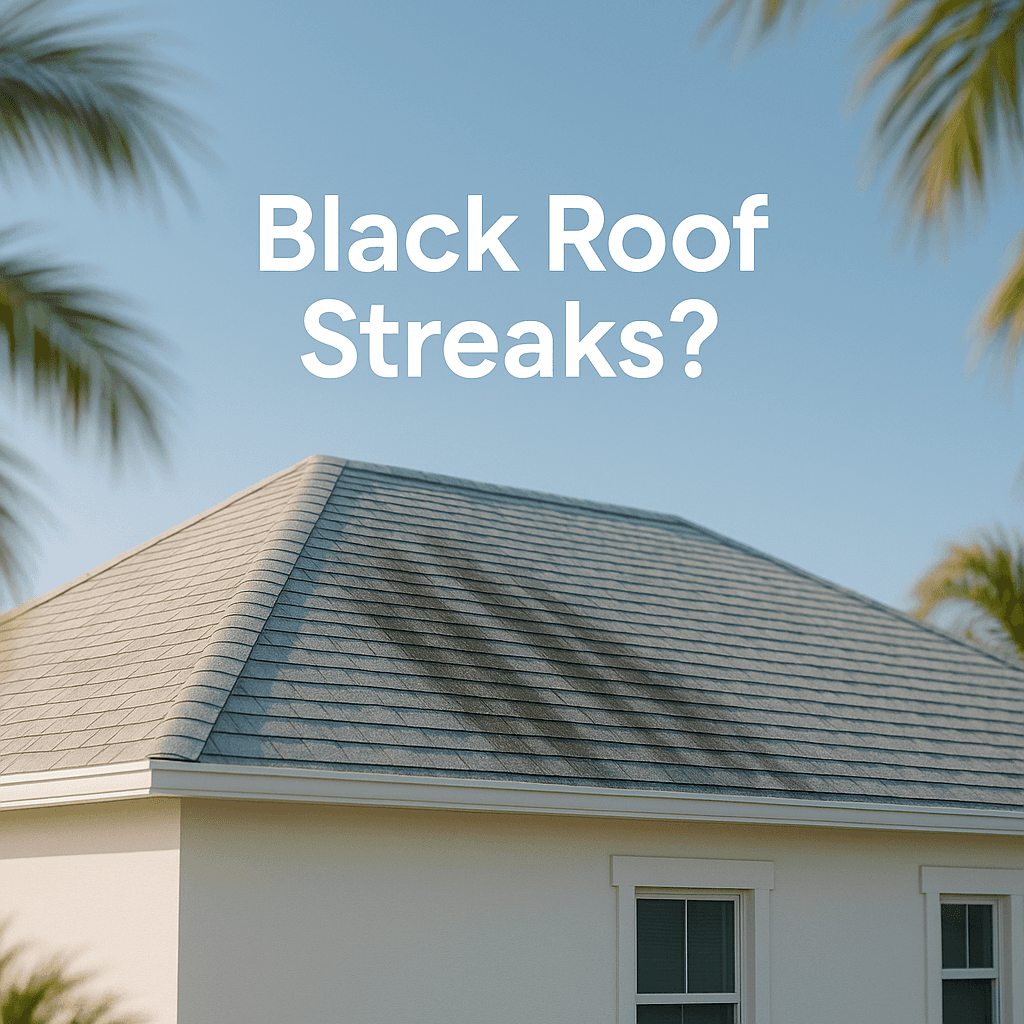
If you live in Naples long enough, you start noticing it everywhere. Those weird black streaks on roofs. Sometimes they show up slowly, like a faint shadow. Other times it feels like you blinked and your roof suddenly looks… dirty. Old. Kinda neglected.
And the annoying part is, it is not usually “just dirt.”
Most of the time in Southwest Florida, black streaks are roof algae. Specifically, the kind that loves heat, humidity, and long stretches of sun with afternoon rain. So basically, it loves Naples.
Below is what it is, why it happens, what makes it worse around here, and what you can actually do about it without wrecking your shingles or tiles.
What are the black streaks on my roof?
In most Naples neighborhoods, those black streaks are caused by a type of algae called Gloeocapsa magma.
It is a photosynthetic algae that spreads by airborne spores. Meaning. One roof gets it, the wind moves spores around, and soon the whole street has matching streaks. Not always, but you get the idea.
It tends to start as:
- Light gray discoloration
- Dark “drip” lines or streaks
- Patchy dark areas that expand outward
And it shows up most obviously on the parts of the roof that stay warm and slightly damp. Which is a lot of roof surfaces here.
Why roof algae looks like streaks (not spots)
This part trips people up. Because algae is alive, you would think it spreads like fuzzy blobs. Sometimes it does. But the classic “black streak” look happens for a few reasons:
- Water flow patterns. Rain runs down the roof the same paths over and over.
- Granule texture. On asphalt shingles especially, algae settles into the rough surface.
- Colonies build over time. It starts tiny, then thickens and darkens where it has already established itself.
So the roof doesn’t stain evenly. It “streams.”
Why Naples roofs get algae so fast
Naples is basically a perfect algae incubator.
Warmth and humidity (the obvious one)
Algae likes a warm, moist environment. Naples gives it both, almost year round.
Frequent rain, then sun
That cycle matters. Afternoon rain dampens everything, then the sun comes back out and “bakes” the roof. That combo helps algae grow and cling.
Coastal air and salt
Salt itself is not algae, but coastal air can contribute to residue and grime that helps growth stick around. Plus, roofs near the coast tend to stay humid longer.
Tree cover and shade
If your roof is shaded, it stays wet longer. That alone can speed up algae growth, and also invite other growth like lichen.
If you have big trees hanging over your roof, there is another issue too. Organic debris. Leaf dust. Pollen. Tiny bits of stuff that break down and feed growth.
Is roof algae the same as mold, moss, or lichen?
Not exactly. They get lumped together because they all make a roof look rough. But they behave differently.
Algae
- Usually dark streaks
- More cosmetic at first
- Spreads quickly in humid climates
Mold
- Typically more associated with interior moisture, but can appear outside too
- Often shows up in shaded damp zones
- Can look blotchy
Moss
- More common in cooler, damper climates
- Grows thicker, like a mat
- Can lift edges of shingles if it gets established
Interestingly, a case study from the University of Washington reveals more about the biological growth on roofs including algae and lichen which could provide further insight into this issue.
Lichen
- Looks like crusty, pale green or white patches
- Slow growing but stubborn
- Can “root” into surfaces over time
In Naples, most people are dealing with algae first. Then if it sits long enough, other growth can follow depending on shade and roof type.
Does roof algae damage the roof, or is it just ugly?
This is where people disagree. Because algae isn’t always instantly destructive.
But here is the truth. It can become more than cosmetic.
- On asphalt shingles, algae can accelerate wear by holding moisture and interfering with how the roof dries out.
- It can also contribute to the roof looking “aged” sooner, which matters if you ever sell the home.
- On tile roofs (common in Naples), algae can make the roof slick, trap grime, and create uneven discoloration that gets harder to remove over time.
And there is another factor. Heat.
Algae darkens the surface, and darker surfaces absorb more heat. That can increase attic temps slightly and potentially contribute to faster material aging. Not always dramatic, but it is not nothing either.
What makes black streaks worse? Common Naples-specific culprits
Here are the patterns we see a lot in SWFL neighborhoods.
1. North-facing roof slopes
They get less direct sun, so they stay damp longer. You often see streaks there first.
2. Roofs near lakes, canals, or heavy landscaping
More moisture in the air. More insects. More organic debris. All of it helps algae.
3. Gutters overflowing or poor drainage
Water running where it should not run creates “constant wet lanes.” That is basically an algae highway.
4. Long time between cleanings
If algae has been sitting for years, it gets thicker. Darker. Harder to remove. Then people try harsher methods. And that is where roof damage happens.
Can I just pressure wash the roof?
You can. But you really shouldn’t.
Pressure washing is high force water. On many roofs, especially asphalt shingles, it can:
- Strip protective granules
- Force water under shingles
- Crack or dislodge tiles (on tile roofs)
- Shorten the roof’s lifespan
It might look “better” immediately. For a bit. But you can trade black streaks for expensive problems.
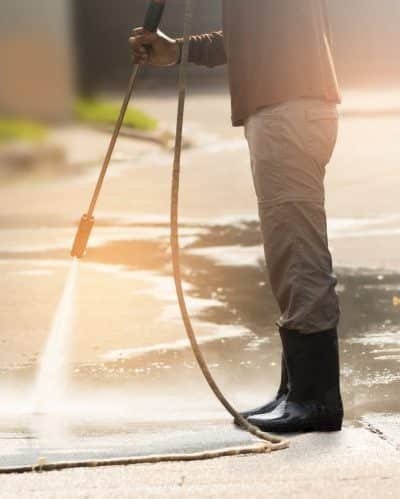
This is why most professional roof cleaning in Florida is done using soft washing, not pressure washing.
What is soft washing, and why it works for roof algae?
Soft washing uses a low-pressure application of cleaning solution designed to:
- Kill algae at the root (not just rinse the surface)
- Break down organic staining
- Rinse gently without damaging roofing materials
The main point is this. You want to kill the organism, not blast it off like mud.
If you are curious how it’s done locally, Naples Soft Wash Roof Cleaning (Wash and Glow) explains their process and services here:
https://softwashroofcleaningnaples.com
They focus on roof-safe soft wash methods, plus they advertise a 2 year clean guarantee, which is honestly what most homeowners actually want. Clean roof, stays clean.
What does roof algae removal usually look like (timeline wise)?
It depends on roof type, severity, and weather. But generally:
- You may see immediate improvement the same day.
- Some staining lightens over days or weeks as the dead algae breaks down and rinses away naturally.
- On heavier buildup, you might see a gradual “evening out” after a few rains.
A good soft wash treatment is more like a controlled kill and release, not a sandblaster moment.
How to prevent black streaks from coming back
You cannot control Naples weather, so prevention is more about reducing the conditions algae loves.
Trim back trees
More sun and airflow helps roofs dry faster.
Keep gutters and valleys clear
Stop water from pooling or flowing in weird paths.
Address chronic shade and damp areas
If one side of your roof always grows algae first, that is your “hot spot.” Keep an eye on it.
Consider zinc or copper strips (in some situations)
These can inhibit algae growth when rainwater carries trace metals down the roof. Not a magic fix, and installation matters, but it can help in certain setups.
Routine maintenance cleaning
This is the big one. You do not want to wait until streaks are jet black and thick. Light algae is much easier to treat.
How to tell if you need a roof cleaning or a roof replacement
People panic when they see black streaks. Totally understandable. But algae often looks worse than it is.
A few simple signs it is probably cleaning, not replacement:
- Streaks look like surface staining, not missing material
- Tiles are intact, no obvious cracks or shifting
- Shingles are not curling heavily or shedding granules everywhere
- No active leaks or water stains inside the home
If you are unsure, you can have it inspected. A roof cleaning pro who works with roofs daily can usually tell the difference between organic staining and actual roof failure pretty quickly.
Images: what roof algae and black streaks look like
Here are a few helpful visuals you can add to this post in WordPress. (Use photos you own, your project gallery, or licensed stock images.)
Typical black streak roof algae on shingles
Roof cleaning being performed (soft wash style)
Naples style tile roof where algae commonly develops
If you have before and after photos from your own jobs, those will usually outperform generic images. By a lot. People want to see roofs that look like their roof.
A simple rule for Naples homeowners
If you take nothing else from this, take this:
If your roof has black streaks, treat it like an organic growth problem, not a “hose it off” problem.
Because algae will come back if it is not killed. And aggressive cleaning can do more harm than good.
If you want to get it handled safely and quickly, you can request a quote from Wash and Glow here:
https://softwashroofcleaningnaples.com
They serve Naples and nearby areas like Estero, Bonita Springs, and Marco Island, and they focus on soft washing for roofs, house washing, windows, and gutters.
Quick wrap up
Black streaks on roofs in Naples are usually algae, most often Gloeocapsa magma. It spreads through airborne spores, thrives in Florida humidity, and shows up as streaks because of how water flows and how colonies build over time.
Soft washing is the roof-safe way to remove it. Pressure washing, in most cases, is the risky shortcut.
And yeah, you can ignore it for a while. A lot of people do. But if you catch it early, the cleanup is easier, the roof looks better, and you avoid years of baked-in staining that becomes a bigger headache later.
FAQs (Frequently Asked Questions)
What causes the black streaks on roofs in Naples?
The black streaks commonly seen on roofs in Naples are caused by a type of roof algae called Gloeocapsa magma. This photosynthetic algae spreads through airborne spores and thrives in warm, humid environments like Southwest Florida.
Why do roof algae appear as streaks instead of spots?
Roof algae form black streaks rather than spots due to water flow patterns that direct rain down specific paths, the granule texture of asphalt shingles where algae settles, and colonies building over time thickening and darkening established areas, creating a streaming effect.
Why do roofs in Naples get algae growth so quickly?
Naples provides an ideal environment for algae growth because of its warm temperatures, high humidity, frequent cycles of afternoon rain followed by sun, coastal air with salt residue that prolongs moisture, and tree cover that shades roofs keeping them damp longer.
Is roof algae the same as mold, moss, or lichen?
No. While they all affect roof appearance, roof algae typically cause dark streaks and spread quickly in humid climates. Mold tends to be blotchy and associated with interior moisture. Moss grows thicker mats common in cooler climates and can lift shingles. Lichen appears as crusty pale patches and grows slowly but stubbornly.
Does roof algae damage my roof or just make it look ugly?
Roof algae can be more than cosmetic. On asphalt shingles, it accelerates wear by holding moisture and slowing drying. On tile roofs common in Naples, it creates slick surfaces and uneven discoloration that’s hard to remove. Darkened surfaces absorb more heat, potentially increasing attic temperatures and aging materials faster.
What factors make black streaks worse on Naples roofs?
Several local factors worsen black streaks: north-facing slopes receive less sun so stay damp longer; proximity to lakes, canals, or heavy landscaping increases moisture and organic debris; and poor drainage or overflowing gutters cause water to run improperly, all promoting algae growth.