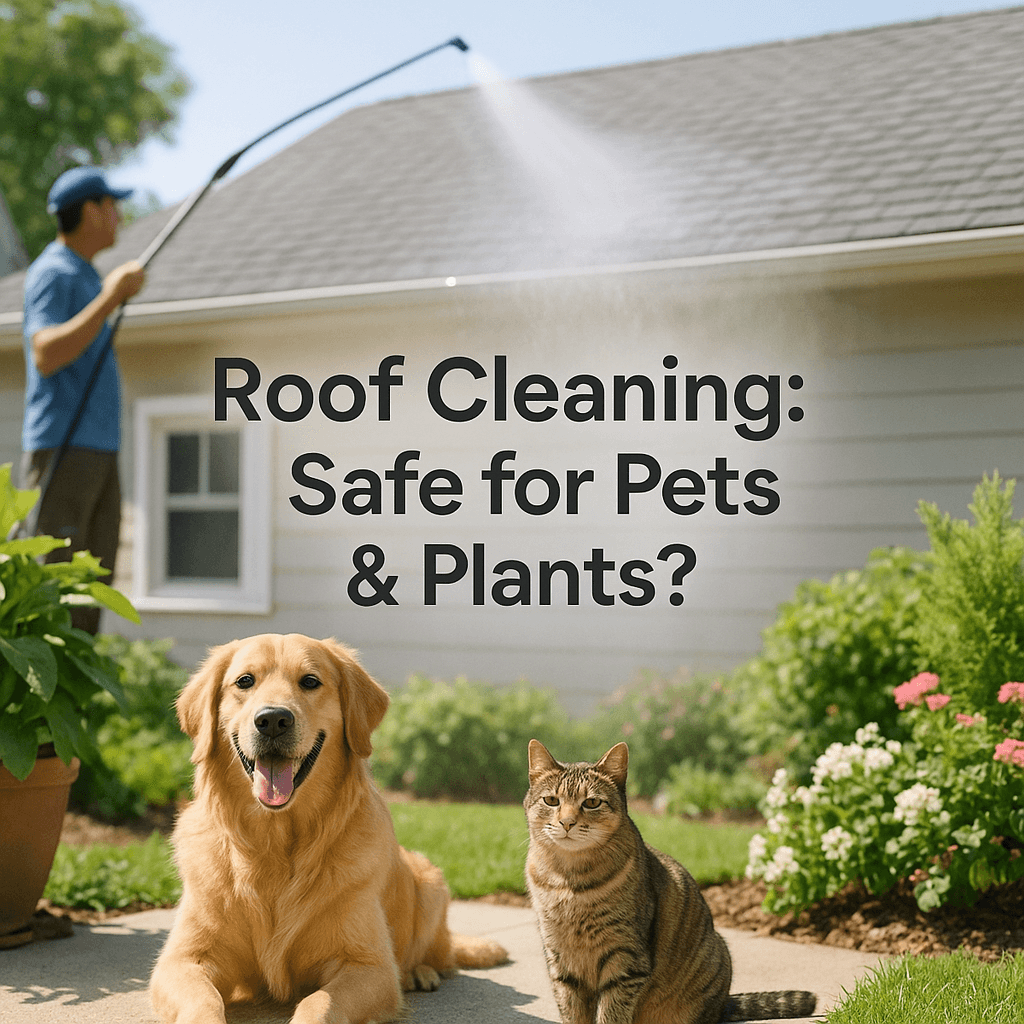
If you are a pet person and you have even one decent plant in your yard, roof cleaning can feel… risky.
Because in your head, it is basically: chemicals + runoff + your dog sniffing everything = problem.
And honestly, that concern is valid. Some roof cleaning methods can be rough on landscaping, and if the wrong stuff is used (or used the wrong way), it can irritate paws, burn leaves, or worse.
But here’s the calmer truth.
Roof cleaning can be safe for pets and plants when it is done with the right method, the right dilution, and the right prep. Which is basically what professional soft washing is supposed to be.
This guide walks you through what is actually happening during a roof cleaning, what to watch out for, and how to keep your yard, pets, and peace of mind intact.
First, what “roof cleaning” even means (because people mean different things)
When most homeowners say roof cleaning, they could be talking about:
- Pressure washing the roof
- Soft washing the roof
- A DIY spray from a big box store
- A guy with a tank who says it’s safe but doesn’t explain anything
Those are very different outcomes for your shingles and for everything below your roofline.
Pressure washing uses high pressure water to blast growth off the roof. It can damage shingles, strip granules, and it tends to throw dirty runoff everywhere.
Soft washing uses low pressure application with a cleaning solution designed to kill algae and organic growth, followed by a rinse. The key point is low pressure and controlled runoff.
If you are in Florida (especially around Naples), that black streaking you see is usually Gloeocapsa magma, a type of algae. It spreads, it holds moisture, and it makes roofs look older than they are. Soft washing is meant to treat that, not just “spray it until it looks better.”
In fact, algae discoloration of roofs like Gloeocapsa magma can significantly affect the aesthetic appeal of your home.
So… is roof cleaning safe for pets?
Usually yes, but it depends on 3 things
Roof cleaning is generally safe for pets when:
- The right solution is used at the right strength
- The job includes plant and property protection steps
- Pets are kept inside during application and rinse
What causes pet issues is almost always direct contact with fresh overspray or runoff, or a pet walking through wet grass right after.
Even “mild” solutions can cause irritation if a dog licks paws after walking through wet runoff. Cats are even more sensitive because they groom constantly.
So the real answer is: safe when done professionally and responsibly, not safe when it is rushed or sloppy.
What we recommend during a professional roof clean
If a crew is cleaning your roof, do this:
- Keep pets inside during the cleaning and rinse.
- Keep them inside for a little after (usually until surfaces dry).
- Block off the backyard if you have a runner who bolts outside.
- If you have outdoor water bowls, bring them inside first.
A professional company should also be the one thinking ahead here. If nobody asks about pets, that’s a small red flag.
Is roof cleaning safe for plants and landscaping?
Plants are usually the bigger concern, because they cannot walk away. And some plants in Naples are… dramatic. Hibiscus, crotons, palms, areca, bougainvillea. They look tough until the wrong runoff hits them.
What can harm plants during roof cleaning?
There are a few common causes:
- Strong mix applied too hot (too concentrated)
- No pre-wetting of plants
- No post-rinse after the job
- Runoff pooling in a mulch bed or planter
- Cleaning in full sun with heat stress already happening
It’s not just “chemicals are bad.” It’s contact time and concentration. Even things that are safe in normal use can damage foliage if they sit too long.
What good soft washing companies do to protect plants
A careful crew will typically:
- Pre-wet landscaping around the home
This is underrated. Wet leaves absorb less. - Cover sensitive plants when needed
Not everything needs to be covered, but delicate beds might. - Control the application and rinse pattern
Especially on steep roofs where runoff moves fast. - Rinse plants thoroughly afterward
Think of it like washing shampoo out of hair. You do not “hope for the best.”
If you are hiring a service and you want one question that cuts through the marketing fluff, ask:
“What steps do you take to protect landscaping during roof cleaning?”
If the answer is vague, that tells you something.
What chemicals are used in soft wash roof cleaning?
Most roof cleaning solutions are based on sodium hypochlorite (the active ingredient in pool chlorine and many disinfecting products) plus surfactants.
That word sounds scary because it’s chemistry. But the practical reality is: it’s common, effective, and widely used in professional exterior cleaning.
The safety comes down to:
- Dilution
- Application method
- Rinse and runoff management
A responsible soft wash is not dumping raw chlorine on your yard. It’s applying a roof mix designed to treat algae, then rinsing and neutralizing exposure through dilution and water flow management.
If you have a specific concern, like a rare plant collection or a pet with medical issues, you can ask the company to walk you through exactly what they use and what precautions they take.
Pressure washing vs soft washing, safety wise
This part is simple.
Pressure washing risks (for roofs and everything below)
- More overspray and debris
- More aggressive runoff patterns
- Higher chance of forcing dirty water into places it should not go
- Potential roof damage that leads to leaks later
Soft washing risks (when done incorrectly)
- Plant irritation if landscaping isn’t protected
- Residue issues if the rinse is skipped or rushed
- Temporary spotting if windows are not rinsed
So yes, soft washing still needs a process. But it’s typically the safer, more controlled method, especially for asphalt shingle roofs common in Florida.
What you can do as the homeowner (simple steps that help a lot)
Even if you hire a great company, you can make the day smoother with a few quick moves:
- Water your plants lightly before the crew arrives
Not a flood. Just damp. This helps. - Move potted plants away from the drip line
Especially orchids, small palms, and anything you spent real money on. - Bring in pet bowls and toys
Dogs will lick anything. Some toys hold water and runoff. - Close windows and turn off exterior fans
Keeps mist out and avoids weird drift. - Let the crew know what you’re worried about
Point out the expensive plant. Mention the dog who eats grass. It matters.
Signs a roof cleaning company is taking pet and plant safety seriously
Not every company operates the same. Here are practical signals you are in good hands:
- They mention soft washing, not blasting
- They talk about pre-wetting and post-rinsing landscaping
- They ask if you have pets, koi ponds, or delicate plants
- They do a walkthrough or at least visually inspect sensitive areas
- They give you clear instructions like “keep pets inside during service”
And if you are in Naples or nearby, you can look at how Wash and Glow approaches soft washing on their site at softwashroofcleaningnaples.com. Their whole positioning is built around soft washing, protecting surfaces, and a straightforward process, not just “we spray stuff.”
What about vegetable gardens, herbs, and edible plants?
This comes up more than you would think.
If you have:
- basil, rosemary, mint
- raised beds
- citrus trees that are actively producing
- a backyard veggie setup
Tell the crew. Don’t assume they will notice.
In most cases, the fix is easy. Extra rinsing, extra covering, or moving planters. The risk is mainly from overspray and runoff splash, not from your roof magically contaminating soil 30 feet away.
Still, edible gardens deserve more caution. Mention it up front.
What about fish ponds and bird baths?
This is the “please do not forget this” category.
If you have a koi pond, fountain, bird bath, or any standing water feature:
- Cover it.
- Turn off pumps during the wash if advised.
- Keep runoff out of it.
A professional should bring this up, but you should also point it out. Water features are where mistakes matter the most.
How long until it’s safe for pets to go back outside?
Most of the time:
- Once everything is thoroughly rinsed
- And surfaces are dry
…you are fine.
In Florida, drying happens quickly. But shaded areas and mulch beds can stay damp longer.
If you want a simple rule: wait until the crew is done, everything has been rinsed, and the grass and patios look dry. If your dog is the type to roll in wet grass, wait longer.
The bottom line
Roof cleaning does not have to be a gamble for your pets or plants.
The safe version looks like this: soft washing, correct dilution, controlled application, pre-wetting plants, protecting sensitive areas, and rinsing everything well afterward. Plus keeping pets indoors until the job is done and surfaces are dry.
If you want a local team that does soft wash roof cleaning in Naples and nearby areas and can walk you through the process, you can get a quick quote through Naples Soft Wash Roof Cleaning (Wash and Glow). Ask them directly about pets and landscaping. The way they answer will tell you a lot.
And if you take nothing else from this article, take this: a roof can be cleaned safely. It just needs to be cleaned the right way.
FAQs (Frequently Asked Questions)
What is the difference between pressure washing and soft washing a roof?
Pressure washing uses high-pressure water to blast off growth, which can damage shingles, strip granules, and spread dirty runoff. Soft washing applies a cleaning solution at low pressure designed to kill algae and organic growth, followed by a rinse, focusing on controlled runoff and gentle treatment.
Is roof cleaning safe for pets, and what precautions should I take?
Roof cleaning can be safe for pets if done with the right solutions at proper dilution, including plant and property protection steps. Pets should be kept inside during application and rinsing until surfaces dry to avoid direct contact with fresh overspray or runoff that could irritate paws or cause harm.
How can roof cleaning affect my plants and landscaping?
Plants can be harmed by strong chemical mixes applied too hot or concentrated, lack of pre-wetting or post-rinsing, runoff pooling in mulch beds, or cleaning during heat stress. Contact time and concentration of chemicals are critical factors; even mild solutions can damage foliage if left too long.
What steps do professional soft washing companies take to protect plants during roof cleaning?
Professional crews typically pre-wet landscaping to reduce absorption, cover sensitive plants as needed, control application and rinse patterns especially on steep roofs, and thoroughly rinse plants afterward to prevent damage from chemicals.
What chemicals are commonly used in soft wash roof cleaning, and are they safe?
Soft wash solutions usually contain sodium hypochlorite (similar to pool chlorine) combined with surfactants. While these chemicals sound strong, they are common and effective when properly diluted and applied with careful runoff management to ensure safety for pets and plants.
How can I ensure my roof cleaning service is responsible and safe for my yard and pets?
Ask your service provider about their methods for protecting landscaping during roof cleaning. If they provide vague answers about plant protection steps or pet safety measures like keeping pets inside during treatment, consider it a red flag. A responsible company will explain their use of proper dilution, controlled application, pre-wetting, covering sensitive plants, and thorough rinsing.