
Most people do not think about their roof until there is a problem. And fair enough. It is up there, you do not see it close up every day, and it usually does its job quietly.
But in Naples, Florida, roofs get hit with a very specific combo. Heat. Humidity. Sudden rain. Shade from palms and oaks. Salt air if you are closer to the water. All of that makes roofs dirty faster than most homeowners expect.
And the tricky part is this. A dirty roof is not just an appearance thing. Sometimes it is a “your shingles are getting eaten alive” thing. Sometimes it is a “water is not draining right anymore” thing. Sometimes it is a “your insurance company is going to ask questions” thing.
So let’s go through the real signs your roof needs cleaning now. Not next season. Not when you get around to it.
1) You see black streaks that look like water stains
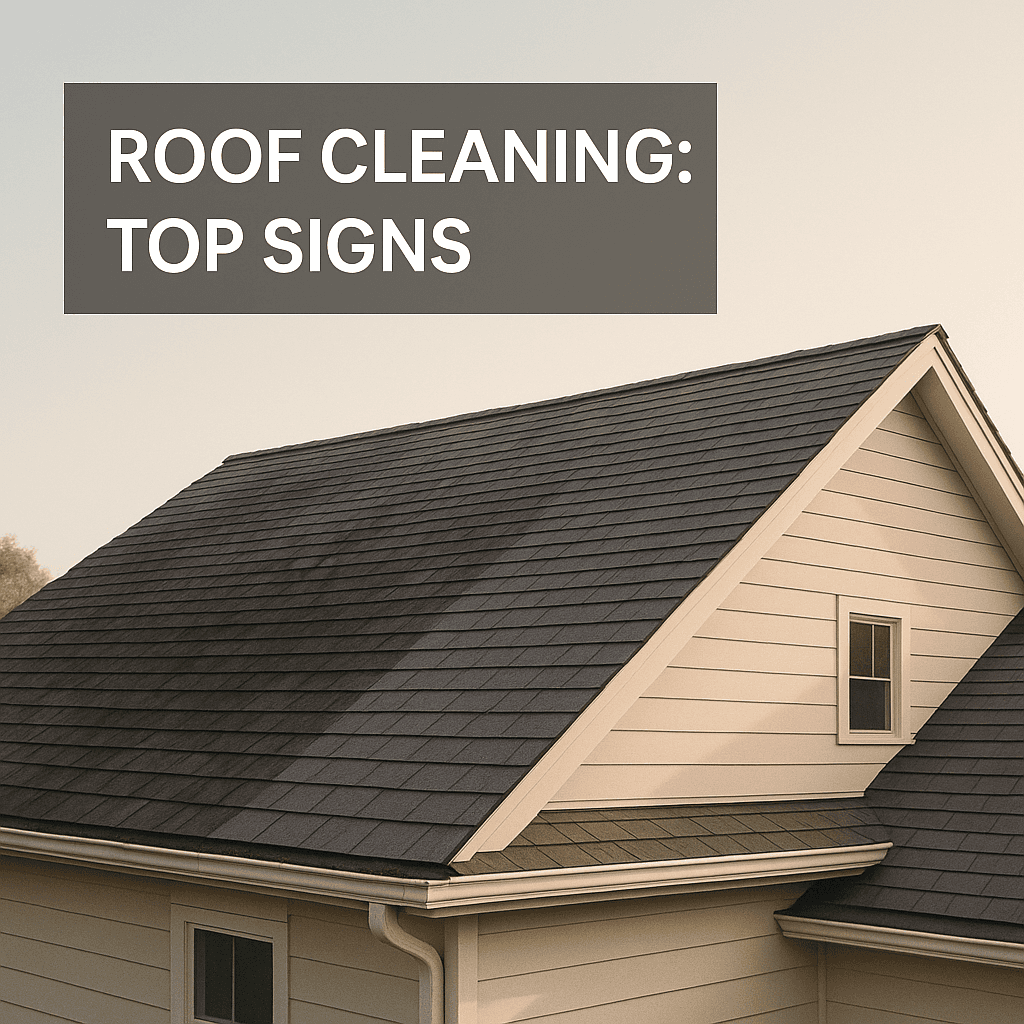
This is the big one. If you notice long black streaks running down your roof, especially on asphalt shingles, that is usually algae.
In Florida, a very common culprit is Gloeocapsa magma. It spreads. It holds moisture. It can slowly break down roofing materials over time. And it makes the roof absorb more heat, which can also mess with efficiency.
If the streaks are visible from the street, it has been there for a while.
When it is “clean it now”:
If the streaks are getting wider, darker, or showing up on multiple slopes of the roof, you are not early anymore. You are mid problem.
2) Your roof has a green tint or fuzzy patches
Green usually means moss, algae buildup, or sometimes lichen getting started. Moss is less common on some Naples roofs compared to cooler climates, but it absolutely shows up in shaded, damp spots. North facing slopes. Areas under tree cover. Spots that stay wet longer.
Moss holds water like a sponge. That constant moisture is not a friend to shingles, tile, or underlayment.
Quick gut check:
If it looks fuzzy, thick, or like little “tufts,” that is not pollen. That is growth.
3) The roof looks blotchy. Like it has stains in random islands
Some roofs do not get streaky. They get patchy. You will see dark clusters near valleys, around vent pipes, under tree lines, or where water tends to linger.
That usually means organic growth is taking hold in the exact spots where moisture and shade hang around.
These patches often grow outward over time. You might even notice them getting worse month to month, especially after rainy stretches.
4) Your gutters are filling up with black grit or roofing debris
If you clean your gutters and keep finding:
- black granules
- gritty sand like material
- little clumps of dark sludge
That can be a sign your shingles are aging, but it can also mean the roof is staying damp and dirty longer than it should. Organic growth plus trapped moisture can accelerate wear.
Also. If the gutters overflow during a normal rain, that is a different kind of roof related clue. Overflow can splash water back onto fascia and soffit, which invites more mildew and staining around the roofline.
If you want to bundle things, roof cleaning plus gutter cleaning is one of those pairings that just makes sense.
5) You are seeing dark staining around roof edges and soffits
This one creeps up slowly. You notice the roofline looks grimy. Then the soffits look a little gray. Then the fascia has mildew dots.
A dirty roof can drip organic staining down to the edges over time, especially if runoff patterns are uneven.
This is also where homeowners start saying, “I just washed the house and it still looks dingy.” Because the roofline is feeding the problem.
6) Your tile roof looks dull, dirty, or uneven in color
Tile roofs do not show “streaks” the same way shingles do, but they absolutely collect:
- algae films
- mildew
- lichen spots
- grime in overlaps and edges
And if you have a lighter colored tile, you will see it fast. The roof looks like it lost its color. Like it is permanently dusty.
Sometimes homeowners assume tile is basically maintenance free. It is not. The tile is durable, sure, but the organic growth still sits there, holds moisture, and can create long term issues if ignored.
7) Lichen spots are showing up (little crusty circles)
Lichen looks like small, crusty patches. Sometimes white. Sometimes light green. Sometimes gray with darker edges. It clings hard.
If you see lichen, do not wait. It tends to bond more aggressively to surfaces over time, and the longer it sits, the harder it is to remove safely.
Also, some homeowners try to scrape it off. That usually ends badly.
8) You tried pressure washing a “small area” and it got worse
This is more common than people admit.
They see stains, they grab a pressure washer, and they blast a test spot. It looks better for a second. Then shingles look rough. Granules loosen. Water pushes up under materials. Or the stain comes back quickly because the root issue was not actually treated.
Roofs usually should not be pressure washed. Especially asphalt shingles. Tile can also be damaged if you use the wrong pressure or angle.
This is why soft washing exists. It is designed to treat the organic growth and rinse it away without tearing up your roof.
9) The roof stays wet longer than it used to
If you look outside after a rain and notice the roof is still damp hours later, especially in sections, that can be a sign of:
- heavy organic growth holding moisture
- clogged drainage paths
- shaded areas that have built up grime and biofilm
A roof that dries properly is generally a healthier roof. When it stays wet, growth spreads faster. And materials break down faster.
10) Your HOA, insurance company, or real estate agent brought it up
Not the most fun sign. But it is a real one.
HOAs often flag roof staining because it affects the look of the neighborhood. Insurance companies sometimes look at roof condition when renewing or writing policies. And if you are selling, roof stains can make buyers assume the roof is old even when it is not.
Sometimes cleaning is the cheapest way to avoid bigger conversations.
What roof cleaning should look like (and what it should not)
A proper roof clean is not just a guy with a pressure washer “making it white again.”
For most Naples homes, the safer route is soft washing, which uses a low pressure application and cleaning solution designed to break down algae, mildew, and other organic growth. This method rinses clean without blasting the roof.
If you are in the Naples area and want to see how that process works, Wash and Glow explains it clearly on their site, and they do soft wash roof cleaning locally. You can start here: https://softwashroofcleaningnaples.com
Images: what these roof problems look like in real life
Here are a few visuals you can reference while inspecting your own roof.
Black streaks (algae) on shingles
These black streaks are often caused by algae growth on the shingles.
Lichen spots on roofing surface
Roof edge staining and gutter line buildup
Soft wash roof cleaning in progress
Note: If these exact image URLs do not exist on your media library yet, swap them with your own uploaded photos or before and after shots. The placements and captions will still work.
A quick “do I need it now?” checklist
If you answer yes to any of these, it is probably time.
- I can see black streaks from the street
- There are green patches or fuzzy spots
- There are crusty circular lichen marks
- Gutters are overflowing or filling with dark sludge
- The roof looks uneven in color, dull, or blotchy
- HOA or insurance has mentioned roof staining
- I am about to sell, and the roof looks tired in photos
Why people in Naples put this off (and why it usually backfires)
The most common reason is simple. They assume roof stains are cosmetic.
And sometimes, in the early stage, they kind of are. But once growth spreads, it becomes a surface that holds moisture. That changes how your roof ages.
Also, Naples weather does not give you a “pause button.” Growth does not stop because you are busy. It keeps moving.
If you want a simple next step
If you are in Naples, Estero, Bonita Springs, Marco Island, or nearby, and you are looking for a roof cleaning company that focuses on soft washing, you can get a fast quote from Naples Soft Wash Roof Cleaning (Wash and Glow) here:
https://softwashroofcleaningnaples.com
They also advertise a 2 year clean guarantee, which is honestly the kind of thing you want in Florida. Because if you have ever cleaned something outside here, you know it does not stay clean by accident.
Wrap up
If your roof has black streaks, green growth, lichen, blotchy staining, or gutter overflow, those are not “someday” signs. They are “now” signs.
And the sooner you handle it, the easier it tends to be. Less buildup. Less risk. Better looking home, obviously, but also just a roof that lasts closer to its intended lifespan. Which is the whole point.
FAQs (Frequently Asked Questions)
What are the common signs that my roof needs cleaning in Naples, Florida?
Common signs include black streaks resembling water stains caused by algae, a green tint or fuzzy patches indicating moss or algae buildup, blotchy or patchy stains on the roof, gutters filling with black grit or roofing debris, dark staining around roof edges and soffits, dull or uneven color on tile roofs, visible lichen spots, worsening conditions after pressure washing attempts, and areas of the roof staying wet longer than usual after rain.
Why do black streaks appear on asphalt shingle roofs and why should I clean them promptly?
Black streaks on asphalt shingles are usually caused by algae such as Gloeocapsa magma. This algae spreads, retains moisture, breaks down roofing materials over time, and increases heat absorption which affects energy efficiency. If these streaks are widening or appearing on multiple slopes of your roof, it’s important to clean them promptly to prevent further damage.
How does moss or algae growth affect my roof’s health?
Moss and algae hold moisture against roofing materials like shingles and tiles. This constant dampness can degrade shingles and underlayment by promoting rot and deterioration. Moss often appears as fuzzy, thick tufts in shaded or damp areas such as north-facing slopes or spots under tree cover. Removing this growth helps maintain your roof’s integrity.
Is it safe to use pressure washers to clean my roof?
Pressure washing roofs, especially asphalt shingles and tile roofs, is generally not recommended because high pressure can loosen granules, damage shingles or tiles, force water under roofing materials, and cause stains to return quickly if underlying issues aren’t treated. Instead, soft washing is preferred as it safely removes organic growth without damaging the roof.
What does it mean if my gutters frequently fill with black granules or gritty debris?
Black granules or gritty sludge in gutters often indicate aging shingles shedding granules or a roof that remains damp and dirty longer than it should due to organic growth. This accumulation can accelerate wear on your roofing materials. Regular gutter cleaning paired with roof cleaning helps prevent overflow that can cause mildew and staining along the roofline.
How can I tell if lichen is growing on my roof and why should I address it quickly?
Lichen appears as small crusty patches that can be white, light green, gray with darker edges, and cling tightly to roofing surfaces. It bonds aggressively over time making removal harder and risking damage if scraped off improperly. Early professional cleaning prevents long-term issues associated with lichen growth.