Most people don’t plan on “cleaning the roof” on a Saturday.
It usually starts with a glance up there after pulling into the driveway. The dark streaks. The weird green patches. That one corner that looks… fuzzy. And then you do what everyone does. You Google it.
And Google basically says: grab a ladder, buy a roof cleaner, spray it, rinse it, done.
Except. That version skips the part where roof cleaning is one of the easiest ways to hurt yourself, damage your shingles, void your warranty, kill your landscaping, or create a leak you don’t notice until your ceiling stains show up a month later.
So let’s actually compare soft washing vs DIY roof cleaning, with the real risks included. Not the “you might get a little wet” type of risks. The expensive ones.
First, what you’re seeing up there (it’s usually not “dirt”)
Those black streaks on most Florida roofs are usually Gloeocapsa magma, a type of algae. It feeds on the limestone filler in asphalt shingles. So it’s not just sitting there politely.
And then there’s:
- Moss (less common in Naples than in cooler climates, but it happens in shaded spots)
- Lichen (the stubborn crusty stuff that looks like it’s part of the shingle)
- Mildew and organic growth that loves humid air, salt air, and long rainy seasons
The important part is this. If you treat it like driveway grime and blast it off, you can shorten the life of the roof fast.
What “DIY roof cleaning” usually means in real life
DIY roof cleaning tends to fall into one of these buckets:
- Pressure washing the roof (even if people swear they’re using “low pressure”)
- Spraying a chemical cleaner from a pump sprayer and then rinsing
- “Roof shampoo” from a garden hose attachment
- Bleach + water mix (sometimes with extra stuff added from a forum thread)
- Scrubbing. Yes, people do this. With brooms. On shingles.
And look, I get it. On paper it sounds manageable.
But the roof is not a fence. Or a sidewalk. Or your vinyl siding.
It’s a layered system designed to shed water in one direction, with granules that protect the asphalt from UV. It’s also high off the ground. Sloped. Hot. And in Florida, often slick with algae.
Which brings us to the part nobody likes to talk about.
Risk #1: Falling (it’s not dramatic, it’s just common)
A few reasons it gets people:
- Algae makes shingles slippery like a thin film of oil
- A roof pitch that looks mild from the ground feels different when you’re up there
- You’re carrying a sprayer, a hose, or a bucket, which messes with balance
- Ladders shift on wet grass, gravel, mulch, pavers. All the stuff we have in Naples yards
And if you’re thinking, “I’ll just do it from the ladder edge and not step onto the roof.” That’s also risky because you end up leaning, twisting, overreaching. That’s when ladders kick out.
If you only take one thing from this article, let it be this: DIY roof cleaning isn’t a “normal weekend chore.” The height changes the whole game.
Risk #2: Pressure washing can remove the roof’s protective surface
This is the big one.
Asphalt shingles have granules. Those granules protect against sunlight and weather. If you blast them off, you can’t put them back. And it might not look horrible immediately, either. You’ll just have a roof that ages faster.
Pressure washing can also:
- Lift shingle edges and break the seal strips
- Force water under shingles (hello, future leak)
- Tear flashing loose
- Damage ridge caps and vents
- Cause water intrusion around nail heads
And yes, even “low pressure” can be too much at the wrong angle. The angle matters a lot. So does distance. So does tip selection. And most homeowners are guessing.
Soft washing is different because it uses low pressure to apply a cleaning solution that does the work, instead of relying on water force.
For more effective roof maintenance, consider exploring alternatives like soft washing which preserve the integrity of your roof.
Risk #3: DIY chemicals can burn plants, stain walls, and corrode metal
A lot of DIY advice basically boils down to: “Use bleach.”
Bleach can work, but in roof cleaning it’s not just about whether it kills algae. It’s about controlling:
- concentration
- dwell time
- runoff
- rinsing methods
- wind drift
- protecting plants and grass
- protecting exterior surfaces
Because once runoff hits your landscaping, it can scorch leaves fast. And in Naples, people have expensive landscaping. Palms, ornamentals, flowering plants, fresh mulch beds. Not the place you want to learn by trial and error.
Also, bleach runoff and overspray can mess with:
- painted soffits and fascia (streaking)
- aluminum components
- outdoor furniture cushions
- lanai screens and frames
- gutter finishes
DIY roof cleaning often turns into “roof looks slightly better, but now the plants look sad and the gutters have spots.”
If you’ve already encountered issues like leaking or extensive damage from DIY attempts, it might be time to consider a re-roofing as a long-term solution rather than continuing with ineffective cleaning methods.
Risk #4: You can void your roof warranty (yes, this happens)
Some roof manufacturers and installers have specific care instructions. And many explicitly warn against pressure washing.
If you damage shingles by improper cleaning methods, it may be considered homeowner-caused damage, not a defect. That matters if you ever need to make a claim or you’re trying to document roof maintenance.
Even if you’re not dealing with a formal warranty, there’s the resale side. Buyers and inspectors notice granule loss and prematurely aged shingles.
Risk #5: You can create leaks that show up later
This is what makes roof cleaning tricky. The damage isn’t always obvious on day one.
You can force water where it shouldn’t go:
- under shingle tabs
- into nail penetrations
- around vent boots
- under flashing
- around skylights (if you have them)
Then the next heavy rain hits, water travels, and suddenly you’re chasing a stain in the ceiling that might not even be directly under the entry point.
So the DIY job “worked.” Until it didn’t.
What soft washing actually is (and what it isn’t)
Soft washing is a method of roof cleaning that relies on:
- a roof-safe cleaning solution designed to break down algae and organic growth
- low-pressure application (not blasting)
- controlled rinsing and runoff management
It’s not just “pressure washing but softer.” Done properly, the chemistry does the heavy lifting. The goal is to clean without stripping granules or forcing water under shingles.
And because people ask this a lot: no, it’s not supposed to look like someone power washed the roof to an unnatural bright color in 30 seconds. A good clean looks… normal. Like your roof again.
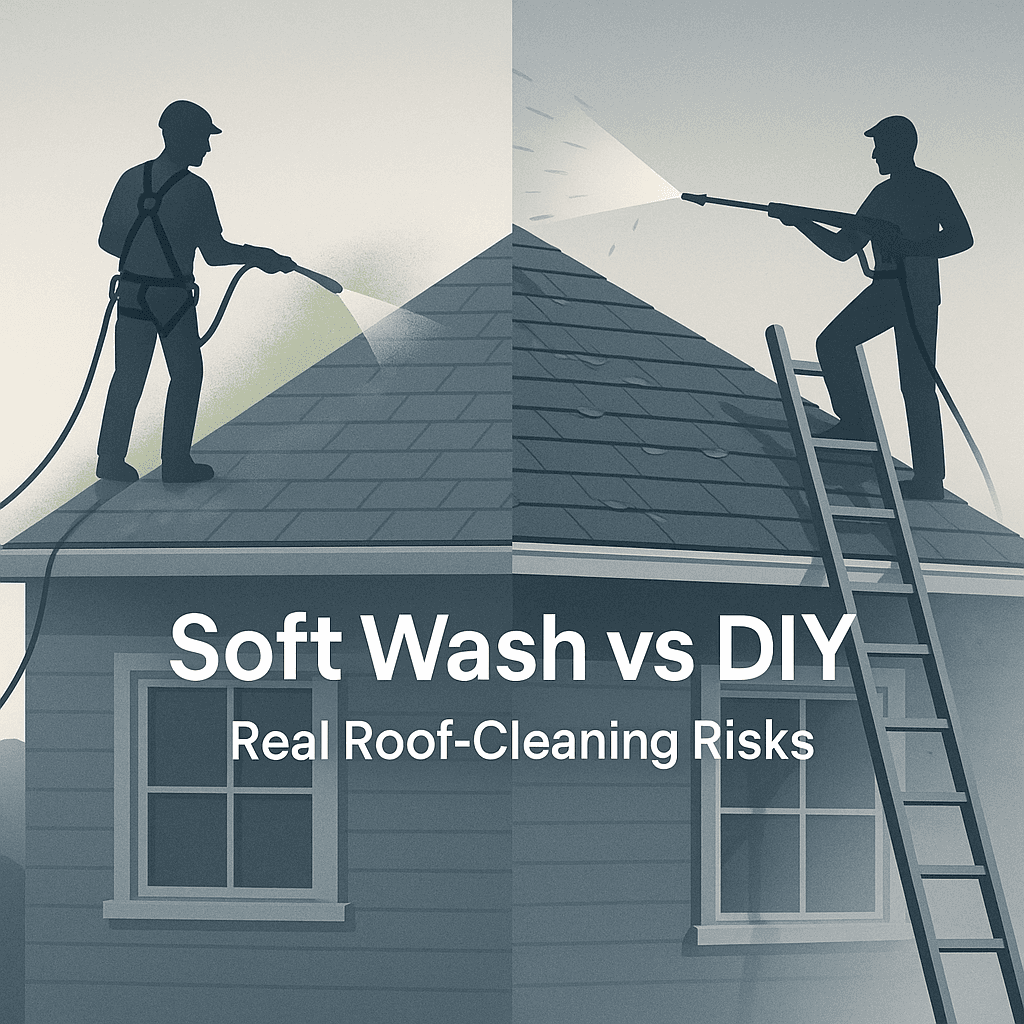
Soft wash vs DIY: the practical comparison
Here’s the honest side by side.
DIY roof cleaning can make sense if:
- You have a very low slope area you can safely reach without stepping onto a steep roof
- You’re experienced with ladders and safety gear
- You understand chemical ratios and runoff control
- You’re comfortable with the possibility that you might make it worse
That last part is doing a lot of work, I know.
Professional soft washing usually makes sense if:
- Your roof is steep, high, or slick (most are)
- You have valuable landscaping and don’t want chemical burns
- You want to avoid granule loss and avoid leaks
- You want it done fast, with predictable results
- You just don’t want the risk hanging over your head all week
Also, in Florida, roofs get re-colonized over time. That’s normal. It’s why a lot of homeowners prefer a company that can explain what to expect after, not just spray and vanish.
The “cheap DIY” math rarely stays cheap
DIY costs add up quickly:
- pump sprayer (or electric sprayer)
- roof cleaner
- ladder stabilizer
- safety harness (if you’re doing it right)
- replacement plants (if things go sideways)
- time, and the stress of doing it carefully
And the biggest hidden cost is the one nobody budgets for. If you damage shingles, or create a leak, or strip granules, you’re not “saving money.” You’re pre-paying for an earlier roof replacement.
What to do if you’re in Naples and you want the roof cleaned without gambling
If you’re local and you’d rather not experiment on the most expensive surface of your home, you can get a quote from a company that does this every day.
Wash and Glow, Naples Soft Wash Roof Cleaning specializes in soft wash roof cleaning in Naples, Florida and nearby areas like Estero, Bonita Springs, and Marco Island. The site is here:
https://softwashroofcleaningnaples.com
They also mention a 2 year clean guarantee, which is honestly what most homeowners actually want. Not a one-time blast. A roof that stays clean.
A simple rule if you’re still deciding
If you’re even slightly unsure about safety on the ladder, or you’re tempted to “just pressure wash it a little,” don’t DIY it.
Roof cleaning is one of those jobs where the risk isn’t worth proving you can do it.
Soft washing, done correctly, is specifically built to avoid the two biggest roof cleaning mistakes: high pressure and uncontrolled chemical damage. And that’s the whole point.
If you want the roof to look better and still be a roof afterward, that’s the path.
FAQs (Frequently Asked Questions)
What causes the dark streaks and green patches on my roof?
The dark streaks on most Florida roofs are usually caused by Gloeocapsa magma, a type of algae that feeds on the limestone filler in asphalt shingles. Other common growths include moss, lichen, and mildew, especially in humid or shaded areas.
Why is DIY roof cleaning risky?
DIY roof cleaning can be dangerous because it often involves climbing ladders and working on slippery, sloped surfaces coated with algae. Risks include falling injuries, damaging shingles by using pressure washing incorrectly, voiding warranties, harming landscaping with chemicals like bleach, and creating leaks that may not show up immediately.
How can pressure washing damage my roof?
Pressure washing can remove the protective granules from asphalt shingles, which shield your roof from UV rays and weather. It can also lift shingle edges, break seal strips, force water under shingles causing leaks, tear flashing loose, and damage ridge caps and vents—even low pressure can be too strong if used improperly.
What is soft washing and how is it different from pressure washing?
Soft washing uses low pressure to apply specialized cleaning solutions that kill algae and organic growth without damaging shingles. Unlike pressure washing which relies on water force that can harm roofing materials, soft washing preserves the integrity of your roof while effectively cleaning it.
Can chemicals used in DIY roof cleaning harm my plants or home exterior?
Yes. Chemicals like bleach used in DIY cleaning can burn plants, stain walls, corrode metal components like aluminum gutters or fascia, and damage outdoor furniture if not applied carefully. Proper control of concentration, dwell time, runoff management, rinsing methods, and protection against wind drift are essential to prevent such damage.
Is it safe to clean my roof myself using common methods like scrubbing or bleach sprays?
Cleaning your roof yourself with scrubbing or bleach sprays carries significant risks including personal injury from falls due to slippery surfaces and ladder instability. Additionally, improper chemical use can damage roofing materials and surrounding landscaping. Professional methods like soft washing are recommended to safely maintain your roof’s condition without these hazards.