
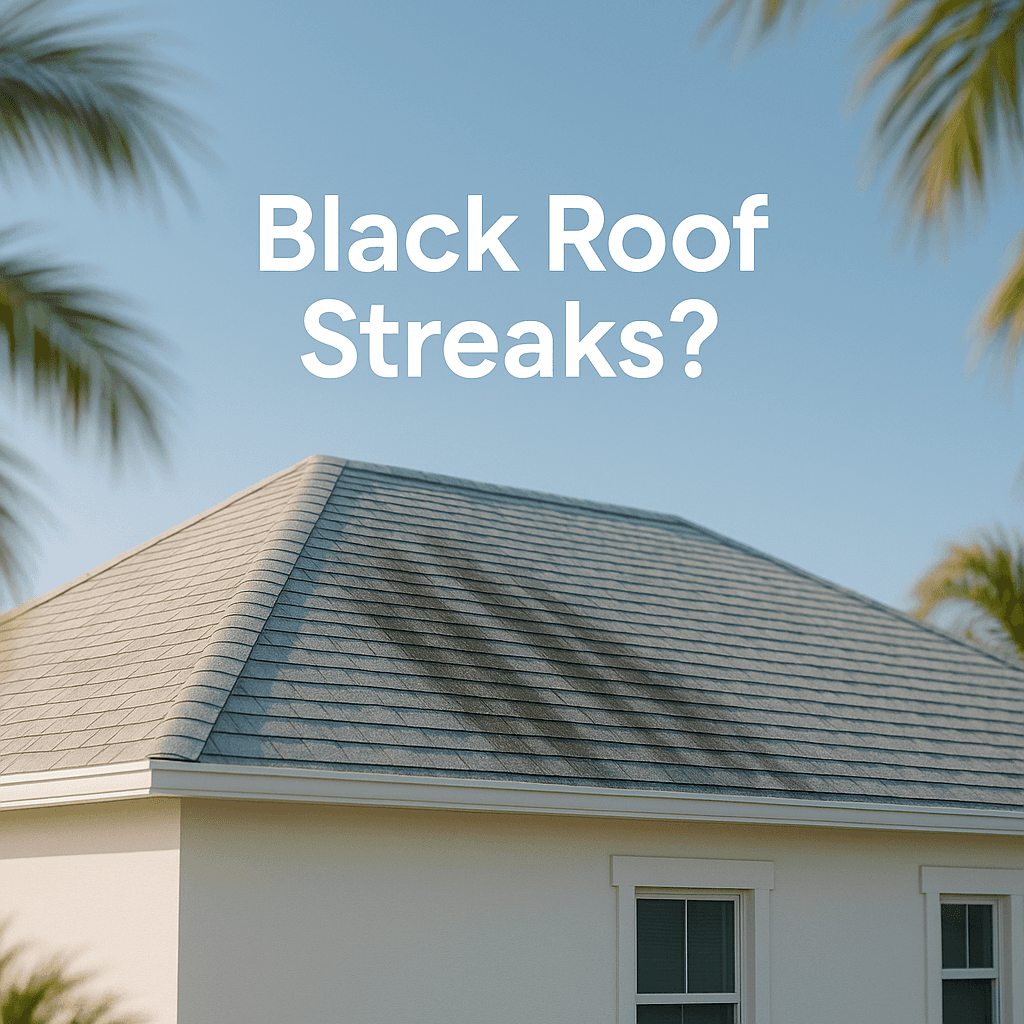
Naples Roof Algae & Black Streaks — The Cyanobacterium Behind the Stains and Why Standard Cleaning Fails It
|
B
|
Blane · Owner-Operator
11+ years · 8,000+ Naples roofs cleaned
|
“Why does my roof keep getting these black streaks? It just got cleaned.”
First answer — what you’re seeing isn’t dirt, isn’t rust, and isn’t sun damage. It’s Gloeocapsa Magma, a cyanobacterium that produces a dark pigmented sheath as UV protection. The sheath is what stains your roof. It runs in streaks from the ridge down because that’s the path moisture travels. Naples climate — year-round 75°F+, 70%+ humidity, no winter to interrupt growth — is essentially a continuous incubator for it.
Second answer — if it came back fast after a cleaning, the cleaning didn’t kill the holdfast. Gloeocapsa Magma anchors below the surface layer. Pressure washing strips visible pigment but leaves the root structure alive. The organism regrows from the existing anchor in 6–12 months. Soft wash with biocidal chemistry kills the holdfast at root depth, which is why a proper soft wash holds 24–36 months and a pressure wash holds 6–12. After 11+ years here, that’s the cleanest explanation for the question.
What’s Actually Living on the Roof
Gloeocapsa Magma is a photosynthetic cyanobacterium — technically not algae, though everyone calls it that. The dark pigmentation is a UV-protective sheath the organism produces. It thrives in warm, humid environments. Naples provides ideal conditions year-round with no growth-interrupting season. A roof that was cleaned 18 months ago and is showing early streaking will progress to heavy colonization faster here than almost anywhere else in the country.
Green algae is also common — usually preceding the darker Gloeocapsa. The green algae creates a nutrient-rich mat that supports establishment of the more aggressive cyanobacterium. Lichen, a symbiotic algae-fungi organism, shows up on older Naples roofs that haven’t been cleaned recently. Lichen is the worst of the three because the fungal component physically penetrates the roofing material.
Spread is by wind, birds, and rain splash. Once one roof in a Naples neighborhood is colonized, adjacent roofs are seeded within months. That’s why entire streets in Pelican Bay, Park Shore, or Olde Naples develop similar dark streaking patterns simultaneously. It’s also why one homeowner’s deferred cleaning becomes the neighborhood’s problem.
Lichen — Penetrates the Surface
Lichen attaches to tile and shingle with rhizines that physically penetrate the surface and cause micro-fracturing. When heavily lichenated tile finally gets cleaned, the surface texture is permanently altered — lichen has etched it. This doesn’t cause immediate failure but reduces the tile’s water-shedding ability and accelerates future recolonization. Most common on roofs that haven’t been cleaned in 5+ years.
Best for context: catch this before it gets here. After year 4–5 of deferred cleaning is when lichen takes hold.
Gloeocapsa Magma — Granule Loss + Thermal Load
On asphalt shingle, the biological community retains moisture against the granule surface, creating wet-dry cycling at the granule-asphalt interface that loosens granule adhesion. Granule loss accelerates UV degradation. Cumulative effect: 5–8 years off shingle lifespan. Plus thermal — dark Gloeocapsa absorbs solar heat, raising attic temps 10–20°F vs a clean roof.
Best for context: this is the most common Naples streaking. Black/dark gray running ridge to eave.
Green Algae — The Precursor Layer
Green algae alone causes minimal direct damage but creates the moist nutrient mat that supports Gloeocapsa establishment. Most Naples roofs go green first, then dark. If your roof is in the green-algae phase, you’re early in the colonization cycle and cleaning now is cheaper than cleaning after the cyanobacterium takes over.
Best for context: green is your warning shot. Schedule before it goes black.
The honest version — algae is mostly a cosmetic problem in years 1–3. The real damage compounds in years 4–7 when granule loss and lichen establishment become measurable. Most homeowners I see who lost 10+ years off their roof had three or four pressure-wash-only cleanings in a row that never killed the holdfast. The biology kept regrowing and the granule loss kept compounding.
If your roof has been clean within the last 24 months and you’re seeing fresh streaking now, that’s a useful diagnostic. Either the prior cleaning was pressure wash only (didn’t kill the holdfast) or you’re in heavy canopy that pulls the cycle toward 18 months. Both are fixable.
Three Conditions That Mean Your Cleaning Wasn’t a Soft Wash
Streaking returned within 12 months
Proper soft wash holds 24–36 months in Naples. If visible streaking is back at 6–12 months, the cleaning was almost certainly pressure wash without ARMA-spec biocidal chemistry. The holdfast survived and the organism regrew from the existing root.
Granule loss visible in gutters after cleaning
Soft wash at 50–100 PSI shouldn’t dislodge granules. If gutters fill with granules after the cleaning, pressure was too high. That’s pressure washing with extra steps, not soft washing.
Operator walked the tile field
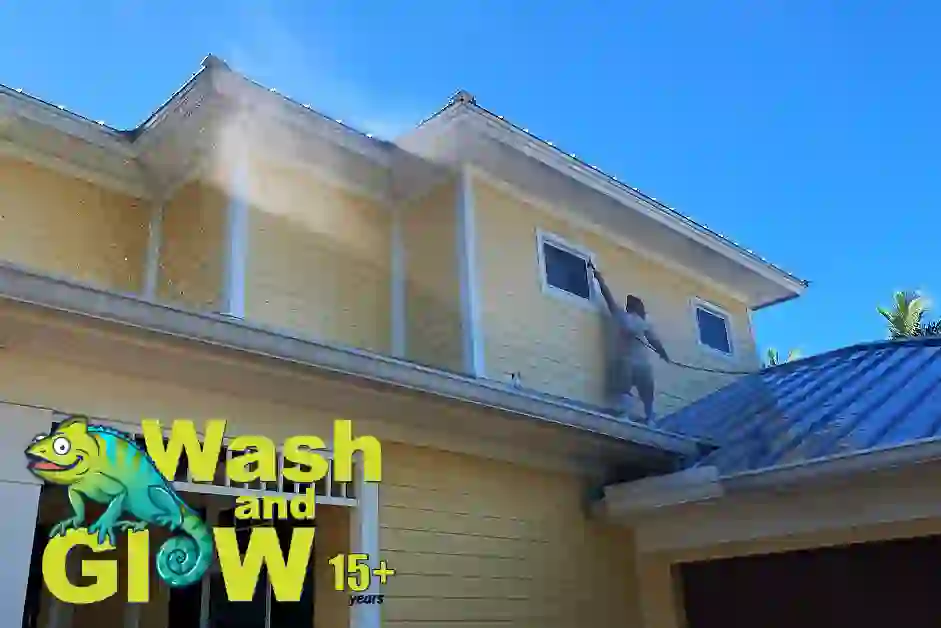
Professional soft wash on tile uses extension wands from the eave line. If the operator walked your tile, you got pressure washing in soft-wash language. That also explains short-duration results — pressure technique can’t deliver dwell time and root-depth kill.
A note from Blane, owner
12 YEARS CLEANING NAPLES ROOFS · LICENSED · INSURED

“The streaking question is really a method question. If the cleaning held 24–36 months, it was a soft wash. If it came back in under 12, it wasn't. Gloeocapsa Magma doesn't care about how the roof looks the day after cleaning — it cares about whether the holdfast survived. That's the difference between cleaning that lasts and cleaning that just resets the visible layer.”
— Blane, owner · answers the phone personally
 |
SERVICE PAGE
Soft Wash Roof Cleaning ›
Root-depth kill that holds 24–36 months
|
 |
SERVICE PAGE
Naples Roof Cleaning ›
2-year clean guarantee on full root-depth biological kill
|
 |
SERVICE PAGE
Power Wash vs Soft Wash ›
Why pressure leaves the holdfast alive
|
 |
SERVICE AREA
Marco Island Service ›
Salt-air recolonization on the Gulf side
|
Ready to kill the streaks at root depth?
Free on-site quote. ARMA-spec chemistry. 2-year clean guarantee. Holds 24–36 months, not 6.
| ☎ (239) 384-0208 | Free Quote → |