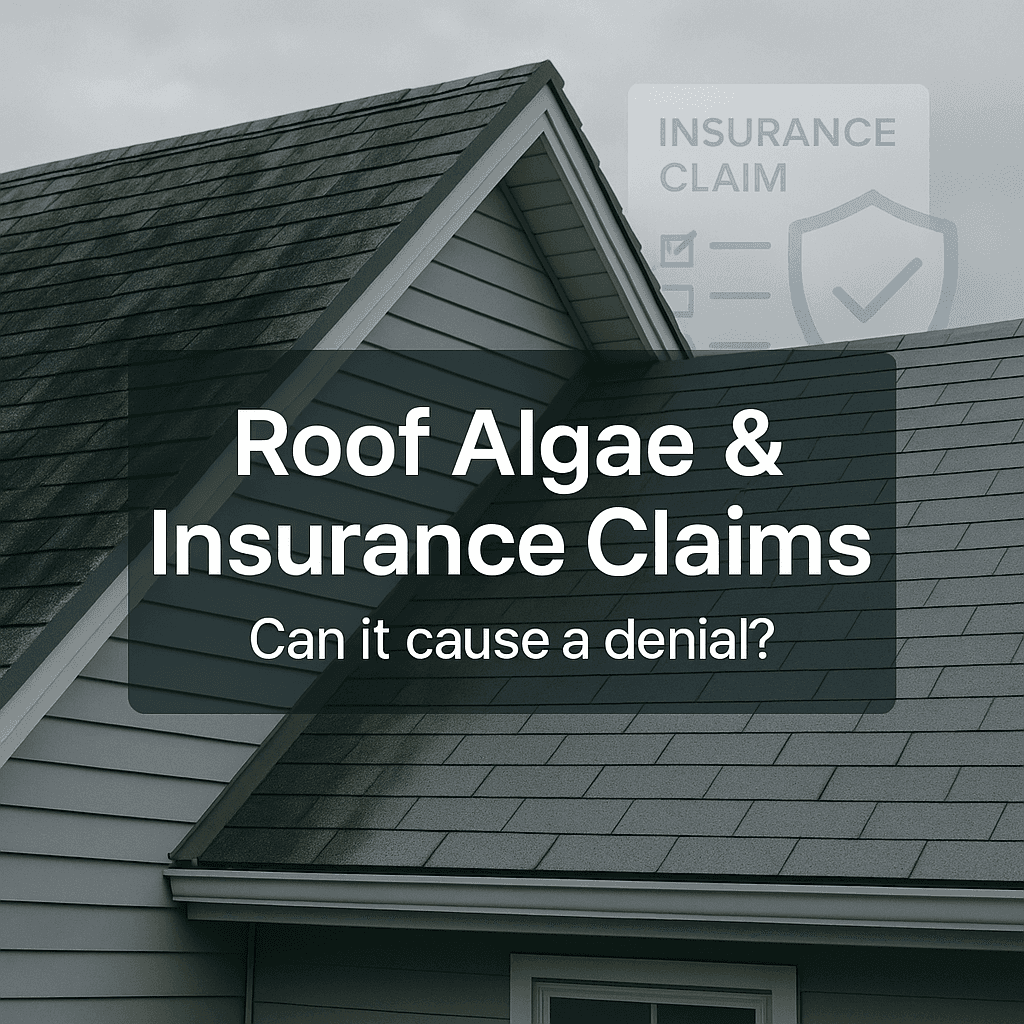
You notice it one day in the right light. Those black streaks. A green-ish film near the north side. Maybe a little patch that never really dries after rain.
And the annoying part is it can look “normal” for Florida. Like, of course a roof in Naples is going to get some algae. Sun, humidity, afternoon storms, salty air. It comes with the zip code.
But then a bigger thing happens. A leak. Shingle damage after a storm. A ceiling stain. You file an insurance claim. And suddenly that algae you ignored for two years is in the conversation.
So let’s answer the question straight.
Yes, roof algae can contribute to an insurance claim denial. Not because algae is some magical exclusion. But because insurers often treat heavy algae buildup as a sign of poor maintenance, and maintenance issues are one of the most common reasons claims get reduced or denied.
This article walks through how that denial happens, what insurance companies actually look for, and what you can do about it before you ever need to file a claim.
What “roof algae” really is (and why it shows up as black streaks)
Most of the dark streaking you see on Florida roofs is Gloeocapsa magma, a type of cyanobacteria that feeds on the limestone filler used in many asphalt shingles. It spreads. It holds moisture. And it makes a roof look older than it is.
Algae doesn’t usually “eat through” shingles overnight. It’s slow, kind of boring that way. The problem is what comes with it:
- It keeps sections of your roof damp longer.
- It traps grime and organic debris.
- It can make it easier for lichen to take hold (which is more aggressive).
- It hides early signs of actual damage (lifted tabs, granule loss, hairline cracks).
And when an adjuster gets on a roof, they don’t just see algae. They see a timeline.
They see something that’s been building up for a while.
The big insurance concept: “Sudden and accidental” vs “wear and tear”
Most homeowners insurance policies are designed to cover damage that is sudden and accidental.
Think:
- Wind event that tears shingles off
- Hail impact that fractures shingles
- Tree branch that punctures the roof
- Storm-driven rain that gets in because something failed suddenly
What they usually don’t cover:
- Wear and tear
- Deterioration
- Rot
- Mold from long-term moisture
- Neglect or failure to maintain
Roof algae lives in this gray zone because it’s not always “damage”… but it’s often treated as evidence that the roof has been exposed, damp, and not maintained for a long time.
So if you file a claim for a leak and your roof is heavily streaked, the insurer may say something like:
The condition appears consistent with long-term deterioration and lack of maintenance.
That sentence is where claims go to die.
How algae becomes part of a denial (what actually happens)
Here’s the typical chain of events.
1) You file a claim for a leak or storm damage
You’re thinking: the storm caused this.
They’re thinking: prove it.
2) The adjuster documents roof condition
Photos. Notes. Sometimes a third-party inspector. Sometimes a drone.
If algae is heavy, they’ll photograph it. Not because algae is the “cause” necessarily, but because it helps support a narrative of age and maintenance.
3) They look for “prior condition” indicators
Even if wind lifted a few shingles, they may argue:
- shingles were already brittle
- seal strips were already compromised
- underlayment looked aged
- flashing issues existed before the storm
- water intrusion appears long-term
Algae and staining can become supporting evidence.
4) The claim is limited or denied
Sometimes they deny the whole thing. Sometimes they approve a small portion and call the rest maintenance-related.
You’ll see phrases like:
- deterioration
- mechanical breakdown
- repeated seepage/leakage
- improper maintenance
- pre-existing damage
And yes, algae may be in the photo set that backs it up.
Situations where roof algae makes denial more likely
Not every claim with algae gets denied. But these scenarios get dicey fast.
Heavy algae plus an older roof
If your roof is near the end of its expected lifespan, like those discussed in this guide on how to determine roof age, algae can push the insurer toward “normal aging” instead of “storm damage.”
Algae + lichen + visible granule loss
Lichen is tougher. It can root into shingle surfaces. If an adjuster sees widespread pitting or granule loss around growth, they may argue deterioration.
Algae hiding cracked or missing shingles
Sometimes homeowners genuinely didn’t see damage because the roof looked uniformly streaked. The insurer might still say the damage is older.
Claims filed long after the storm date
If you wait months and the roof has algae, staining, and signs of long-term moisture, the insurer has more room to argue it didn’t happen when you said it happened.
Repeated leak patterns
If interior stains show multiple “rings” or different ages, algae on the roof can reinforce the idea this has been going on.
Important nuance: algae itself is usually not the excluded “cause”
This matters.
A denial is rarely written as: “Denied because algae.”
It’s more like: “Denied because the roof shows signs of long-term deterioration/neglect.”
Algae is just one of the visible, easy-to-photograph signs that supports that.
So if you’re reading this hoping for a simple yes or no, it’s a yes but… it’s indirect.
What insurers expect homeowners to do (even if nobody says it out loud)
Insurance is basically a deal. They’ll cover unexpected events. You maintain the home.
And roof maintenance expectations usually include:
- replacing missing/damaged shingles when noticed
- keeping gutters flowing (water backup causes problems)
- trimming overhanging branches
- addressing obvious moss/lichen/algae growth
- preventing long-term water intrusion
In Florida, algae happens fast. That doesn’t automatically make it neglect. But if it’s been sitting there for years, thick and widespread, that starts to look like you ignored a roof problem.
Can cleaning the roof help with insurance claims?
It can help in two ways.
1) It removes the “maintenance red flag”
A clean roof looks cared for. That sounds superficial, but insurance is heavily photo-driven. Condition matters.
2) It makes it easier to spot real damage early
When algae is gone, you can actually see:
- lifted shingles
- nail pops
- flashing issues
- soft spots (from the ground sometimes)
- granule loss patterns
Then you can repair small issues before they become a big claim.
And if you ever do file a claim, you’re not trying to prove a “sudden event” on top of a roof that looks like it hasn’t been touched in a decade.
Soft washing vs pressure washing (this part matters more than people think)
If you clean your roof the wrong way, you can create a different problem: actual damage.
Pressure washing can:
- strip protective granules
- break shingle seal strips
- force water under shingles
- void some manufacturer warranties
- create the exact kind of wear insurers label as “deterioration”
Soft washing is different. It uses low pressure and cleaning solutions designed to kill algae at the root, then the weather rinses it away over time (or it’s gently rinsed depending on the system).
That’s why roof cleaning companies that specialize in soft washing are usually the safer move for asphalt shingle roofs in places like Naples.
If you want to see what that process looks like locally, Wash and Glow (Naples Soft Wash Roof Cleaning) lays it out clearly here:
https://softwashroofcleaningnaples.com
What you can do now to protect yourself before a claim ever happens
This is the practical checklist. Nothing fancy.
Take roof photos once or twice a year
Just stand back and shoot each slope. Date-stamped if possible. After a major storm, do it again.
If you ever need to show “before and after,” you’ll be glad you did.
Keep receipts and records
If you get your roof cleaned, repaired, or inspected, save documentation.
A simple invoice showing you maintained the roof can help counter a neglect argument.
Don’t wait for algae to become a crust
When it’s light streaking, cleaning is easier and gentler. When it’s heavy plus lichen, it can take more effort.
Get small repairs handled fast
Loose flashing and one missing shingle can turn into a big interior mess.
Avoid DIY pressure washing
I know it’s tempting. Rental machines feel like power. But roofs aren’t driveways.
If your claim is already in progress and algae is on the roof
Not legal advice, just real-world steps people take:
- Ask for the full adjuster photo set and notes. You want to see what they documented.
- Request the specific policy language they’re using to deny or limit coverage.
- Get a licensed roofer inspection report that addresses cause and timeline.
- If needed, consider a public adjuster for complex disputes.
- Don’t alter the roof (including cleaning) mid-claim without understanding the implications. It can be argued as changing evidence.
If you’re past the claim and just trying to reduce future risk, then yeah, cleaning and documenting condition is usually smart.
So, can roof algae cause an insurance claim denial?
Yes. It can.
Not because algae is automatically excluded, but because it can be used as evidence of long-term wear, deterioration, or lack of maintenance. And that’s where insurers tend to draw the line.
If you’re in Naples or nearby and you’re looking at those black streaks thinking, I should probably handle this before it becomes a bigger thing, that’s basically the right instinct.
You can get a quick quote and see the soft wash process here:
https://softwashroofcleaningnaples.com
Sometimes the easiest way to avoid a stressful claim fight later is just keeping the roof looking like someone actually lives under it. Which, you do.
FAQs (Frequently Asked Questions)
What is roof algae and why does it appear as black streaks on Florida roofs?
Roof algae, primarily Gloeocapsa magma, is a type of cyanobacteria that feeds on the limestone filler in asphalt shingles. It appears as black streaks because it spreads across the roof surface, holding moisture and trapping grime. This makes the roof look older and can contribute to further issues like lichen growth and hidden damage.
How can roof algae affect my homeowners insurance claim after storm damage?
Heavy roof algae buildup can lead to insurance claim denial or reduction because insurers often view it as evidence of poor maintenance and long-term deterioration. Since most policies cover sudden and accidental damage but exclude wear and tear or neglect, algae presence may suggest the damage isn’t storm-related but due to lack of upkeep.
Why do insurance companies differentiate between ‘sudden and accidental’ damage versus wear and tear regarding roof claims?
Homeowners insurance typically covers damage caused by sudden events like storms or accidents but excludes coverage for gradual issues such as wear and tear, deterioration, or neglect. Roof algae indicates ongoing moisture retention and possible maintenance neglect, which insurers interpret as pre-existing conditions outside policy coverage.
What is the typical process when an insurance adjuster evaluates a roof with algae during a claim inspection?
When inspecting a claim, adjusters document the roof’s condition with photos and notes, sometimes using drones or third-party inspectors. Heavy algae presence helps them build a narrative of age and poor maintenance. They look for prior damage indicators like brittle shingles or compromised seal strips to determine if damage is new or pre-existing before approving or denying claims.
In what situations does roof algae increase the likelihood of an insurance claim denial?
Claims are more likely denied when heavy algae coincides with an older roof nearing its lifespan, presence of lichen and granule loss indicating deterioration, algae hiding visible shingle cracks or missing pieces, delayed claim filing after storm events, or repeated leak patterns suggesting long-term issues rather than sudden damage.
Is roof algae itself usually the direct cause for an insurance claim denial?
No, insurers rarely deny claims solely because of algae. Instead, they use heavy algae buildup as supporting evidence that the roof has suffered from long-term neglect or deterioration. The denial is typically based on these maintenance-related issues rather than the presence of algae itself.