
✓ SWFL Vocabulary Translation
✓ Pool Pavers + Lanai + Travertine + Composite
✓ Pre-Snowbird Departure Service
✓ 2-Year Clean Guarantee
Most homeowners who search deck power washing Naples FL are recent transplants from cold-weather states — Boston, Cleveland, Chicago, New York, Detroit, Pittsburgh, Boston, the Northeast, the Midwest. Up north, a “deck” is a specific thing: an elevated wood platform off the back of the house, built from pressure-treated lumber or cedar, attached to the home with a ledger board, supported on posts and footings, with railings and stairs down to the yard. The vast majority of Naples homes don’t have that. The Florida Building Code, hurricane structural requirements, year-round termite pressure, salt-air wood degradation rates, HOA architectural restrictions, and slab-on-grade construction standards combine to make elevated wood decks rare in SWFL. What Naples customers are usually pointing at when they say “my deck” is something completely different — and it needs a completely different cleaning method than what worked on the wood deck back home.
Here’s the translation: when a Naples homeowner says “deck,” they almost always mean one of these surfaces: (1) the paver pool deck — the brick or concrete pavers laid around the swimming pool, the most common SWFL “deck” surface; (2) the screened lanai floor — the concrete or paver floor inside the screened pool enclosure; (3) the travertine pool coping — the natural-stone edge stones around the pool itself; (4) the back patio — a poured concrete or paver outdoor area at the back of the house, often with no roof; (5) the spa or hot tub surround — the surface immediately around an in-ground spa, usually paver or travertine; (6) the outdoor kitchen pad — the concrete or paver area at the grill/outdoor kitchen; (7) the screen-room or sun-room floor — covered exterior space with vinyl or aluminum walls and a tile or concrete floor. Each of these surfaces requires a different cleaning method than a wood deck. Pressure-washing a paver pool deck at the pressure that worked on a Boston wood deck will blow the polymeric joint sand out and cause paver shifting. Pressure-washing travertine at any high pressure permanently etches the surface. Pressure-washing screen mesh tears it. The vocabulary translation matters because it determines the method.
For the small minority of Naples homes that do have an actual elevated wood or composite deck — typically waterfront homes on canals or the Gulf with second-floor screened balconies, or older homes built before slab-on-grade became universal — the cleaning method is closer to what would work up north, but the SWFL climate makes it more demanding. SWFL wood decks last 5–8 years on average versus 20–25+ in the Northeast — the combination of year-round 80–95°F surface temperatures, sustained 70–85% humidity, salt-air corrosion, year-round biological growth pressure, and termite presence accelerates wood degradation roughly 3–4x faster than in cooler/drier climates. Composite decks (Trex, TimberTech, Fiberon, Azek) hold up far better in SWFL conditions than wood and have largely replaced wood for the rare elevated-deck installations on canal and Gulf-front Naples homes; we clean those at manufacturer-specified pressure with biocidal soft wash chemistry.
The other thing transplant customers learn quickly: the cleaning cadence in Naples is different than what worked up north. Up-north decks needed cleaning roughly every 2–3 years because the cold winters slowed biological growth. SWFL outdoor surfaces colonize biology year-round and need cleaning every 12–18 months on most pool deck and lanai surfaces — the warm-wet conditions don’t pause for winter. The snowbird scheduling pattern typically runs: clean before departure (April–May, before the wet season explodes biological growth on a property no one is watching), and clean before return (September–October, so the property is ready when the homeowner gets back from up north). The homes most damaged by wrong-method cleaning in our experience are the homes of recent transplants who used DIY pressure washing instincts that worked on their old wood deck and applied the same approach to a paver pool deck or travertine surround. Different surface, different method. The translation is the cheapest education you can get.
Every Wash and Glow service comes with a written 2-year clean guarantee — covering whatever you call your “deck” surface. Paver pool deck, screened lanai, travertine coping, back patio, spa surround, outdoor kitchen pad, composite deck, or actual wood deck. We match the right method to the actual surface and back the result with paper. Most transplants are surprised that the cleaning cadence is more frequent in SWFL than up north (12–18 months) — the warranty period of 2 years is genuinely conservative for these surfaces in Naples climate.
What Wash and Glow Looks Like in Practice
✓ The Vocabulary Translation — We Match Method to Actual Surface
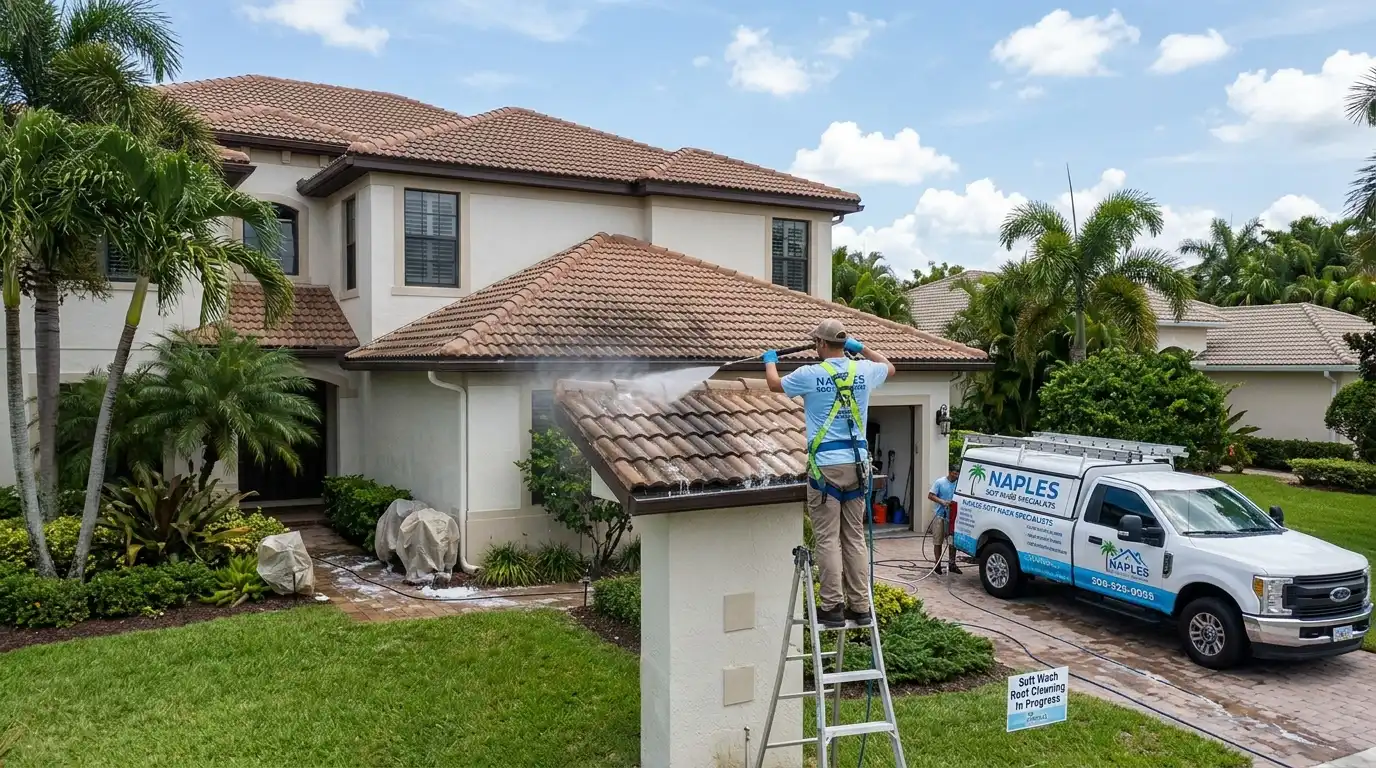
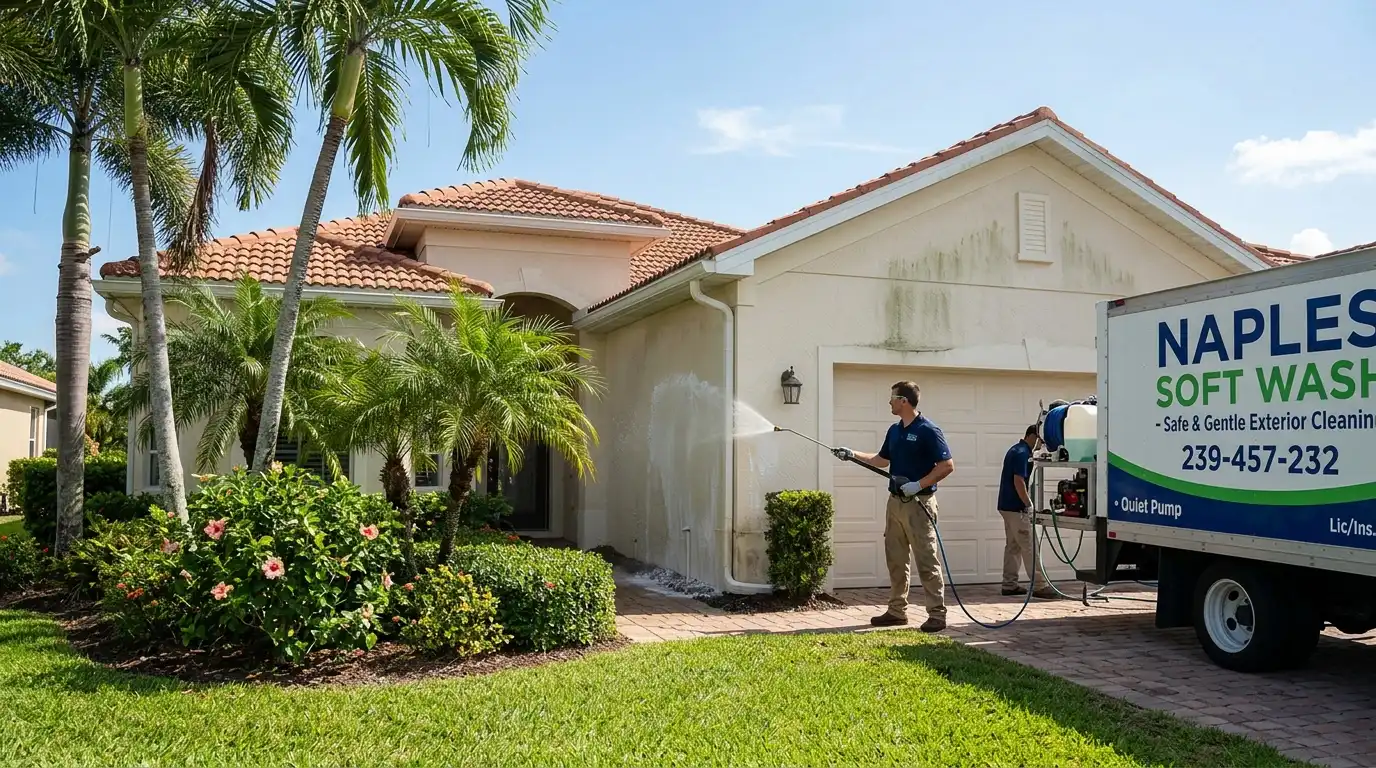
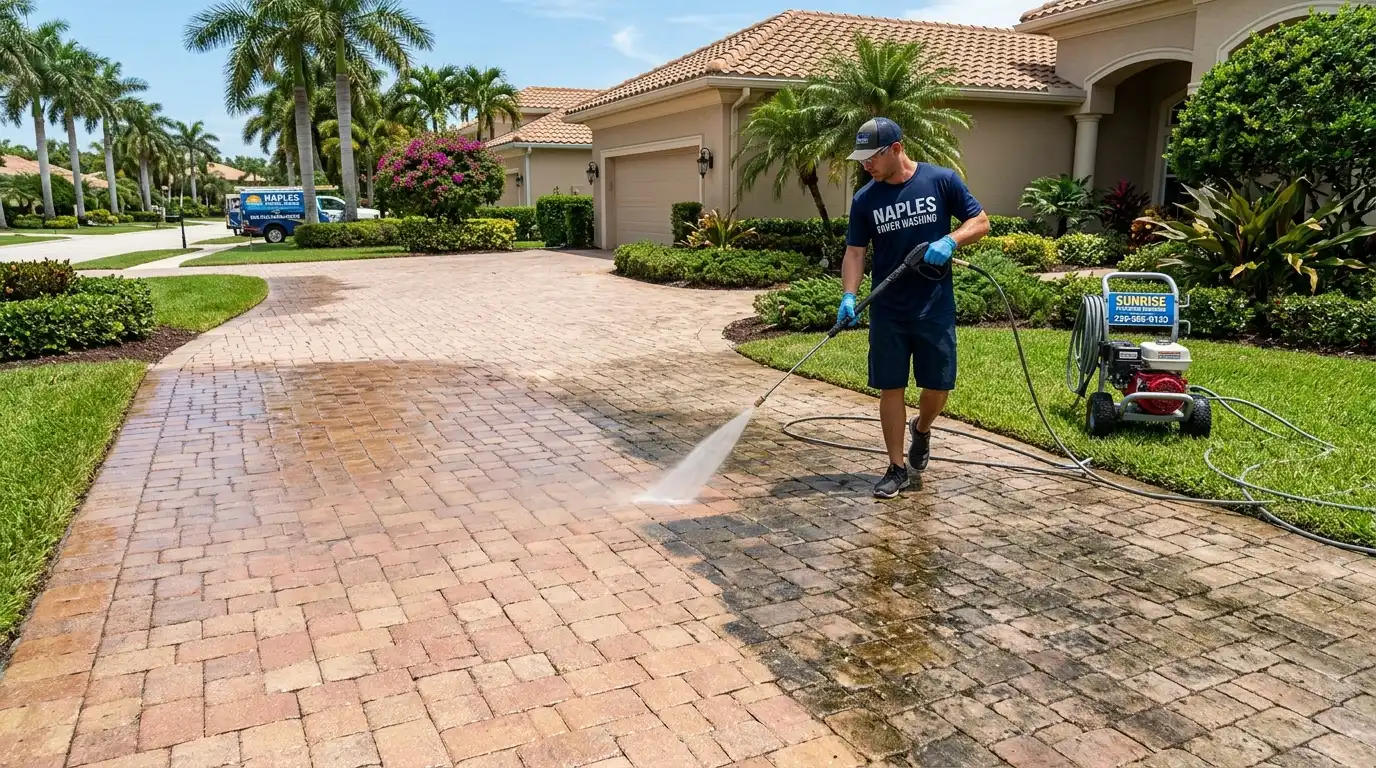
When a transplant customer calls and says “deck,” we ask what it actually is on the property: paver pool deck, lanai concrete, travertine coping, composite, wood, or some combination. The walkthrough confirms which surfaces are present and what method each needs. The customer doesn’t need to know SWFL terminology — we translate. The job ends up using 2–4 different methods across the property because most Naples “decks” are actually 2–4 different surface materials in the same outdoor space, each calibrated separately.
✓ The Snowbird Scheduling Specialty
Pre-departure service in April–May before the wet season hits. Pre-return service in September–October before the homeowner comes back from up north. We coordinate directly with property managers, pool services, and house-watchers to schedule access during the empty months. Documentation packet (date, photos, scope) emailed to the homeowner up north so they can verify the work was completed. Most snowbird customers settle into a twice-yearly cadence after the first cycle.
✓ We Talk Customers Out of Wrong-Method Approaches
Most damaging mistake we see on transplant properties: customer brings their up-north “DIY pressure washing once a year” instinct and applies it to a paver pool deck or travertine pool coping. Joint sand blowout on pavers, permanent etching on travertine, screen tearing on lanais. Once we explain that paver joint sand is structural (it locks the pavers in place) and travertine is a soft natural stone that can’t survive surface-cleaner-grade pressure, customers stop the DIY approach. Cheaper than the repair bill they were heading toward.
✓ 12–18 Month Cadence vs the Up-North 2–3 Year Cycle
SWFL biology doesn’t pause for winter. The same surface that needed cleaning every 2–3 years in Boston needs cleaning every 12–18 months in Naples. Pool deck pavers and lanai concrete in particular regrow biology fast under sustained warm-wet conditions. Most transplants accept the new cadence after the first year when they see how fast their freshly cleaned surfaces re-fouled compared to up north. The 2-year warranty exceeds the practical re-clean cadence on most surfaces, which is how we can offer it confidently.
A note from Blane, owner
VOCABULARY TRANSLATION · SNOWBIRD SCHEDULING · 12–18 MONTH CADENCE · 2-YEAR GUARANTEE

“The translation conversation happens with almost every transplant customer. They moved down from Boston or Cleveland or Chicago, they had a wood deck up there for 20 years, they called us for 'deck power washing.' We come out and there's no actual deck — there's a paver pool deck, a screened lanai, travertine pool coping, a composite second-floor balcony off the master bedroom. Each one needs a different method. The customer's instinct from up north is 'rent the strongest pressure washer at Home Depot and blast everything,' and that's the instinct that destroys joint sand on pavers and etches the travertine permanently. Once we explain what each surface actually is and what it needs, customers convert to the calibrated approach quickly. The other half of the conversation is the cleaning frequency — they're used to once every two or three years up north, and they need to clean these surfaces every 12 to 18 months in Naples. The warm-wet doesn't pause. We schedule a lot of pre-departure cleans in April and May for the snowbird population, then pre-return cleans in September and October. Twice a year is the new normal.”
— Blane, owner · answers the phone personally
Dated, Geotagged, Owner-Verified
Every job photographed before and after. Posted with date, community, and tech name.
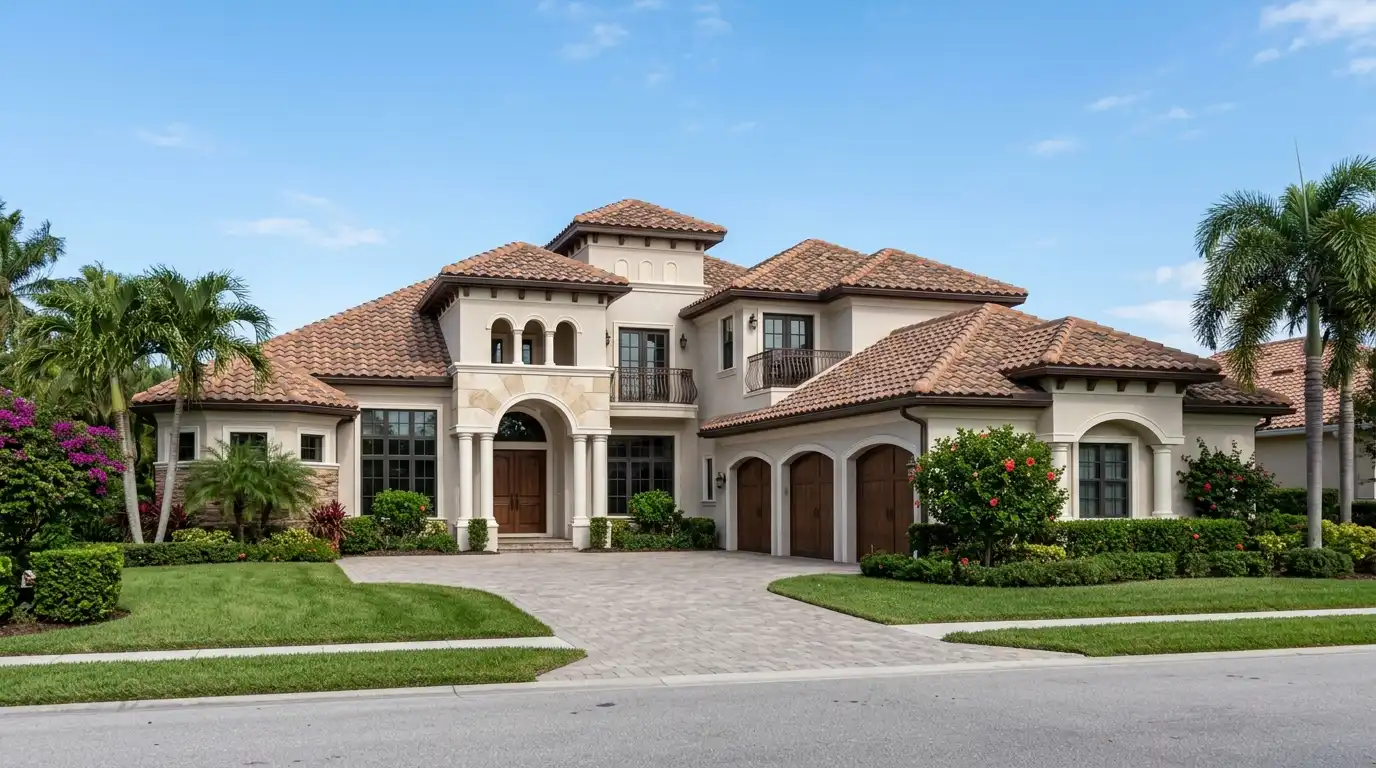
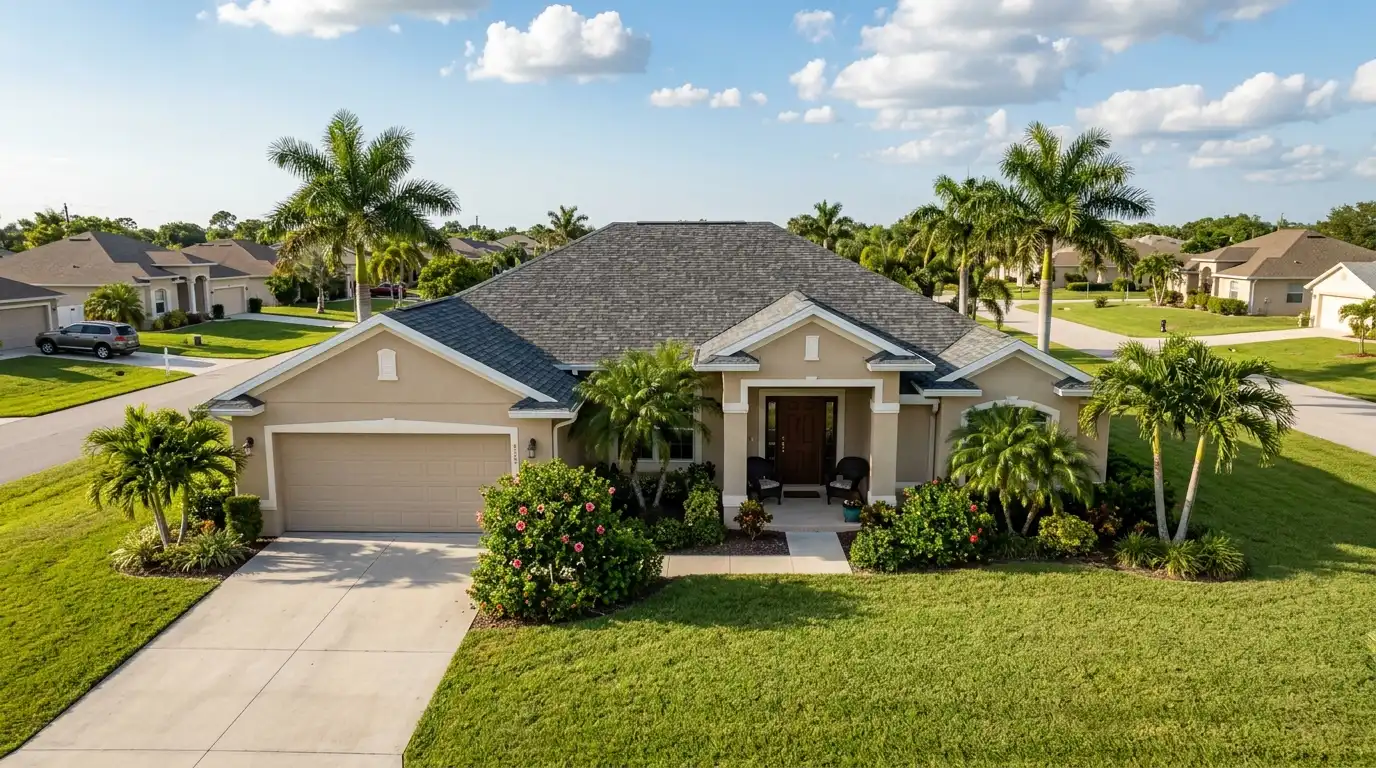
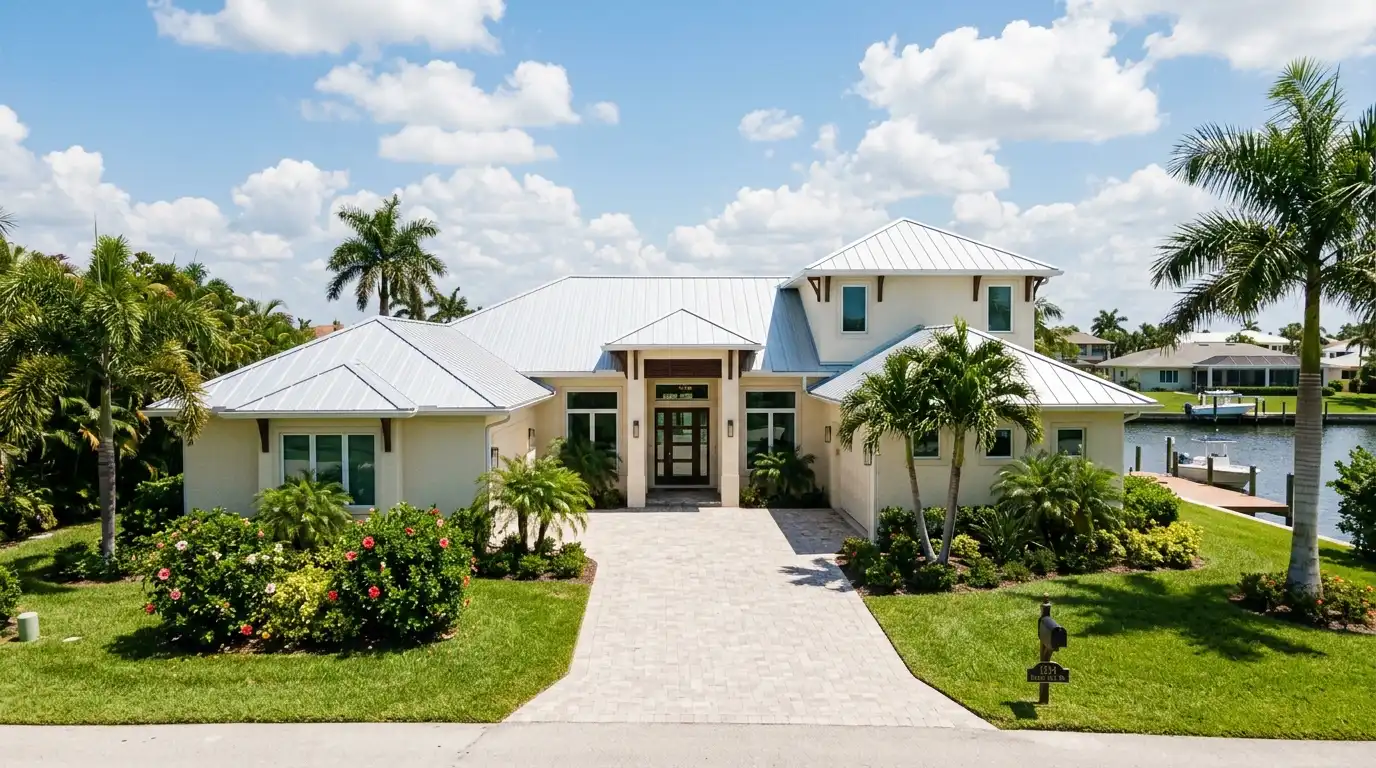
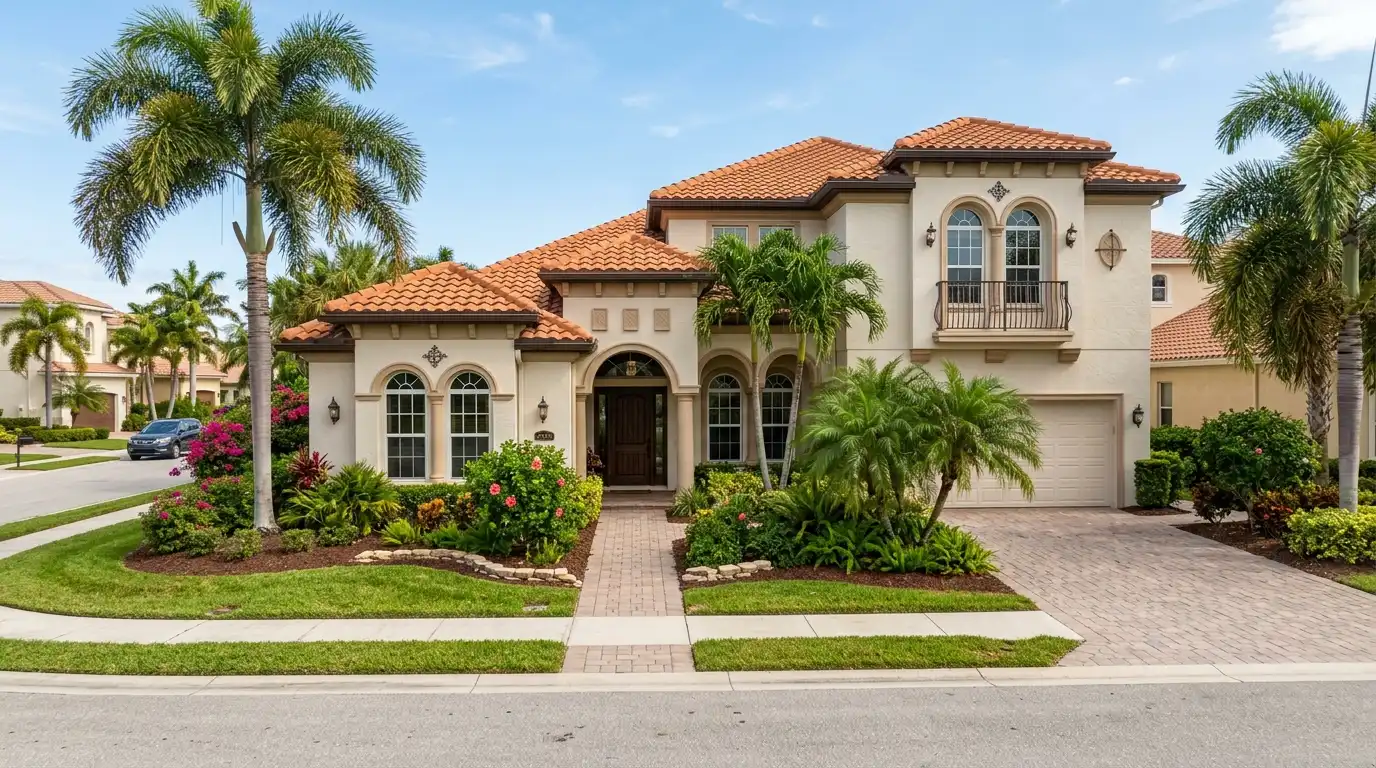
“My Deck” → Paver Pool Deck (Most Common)
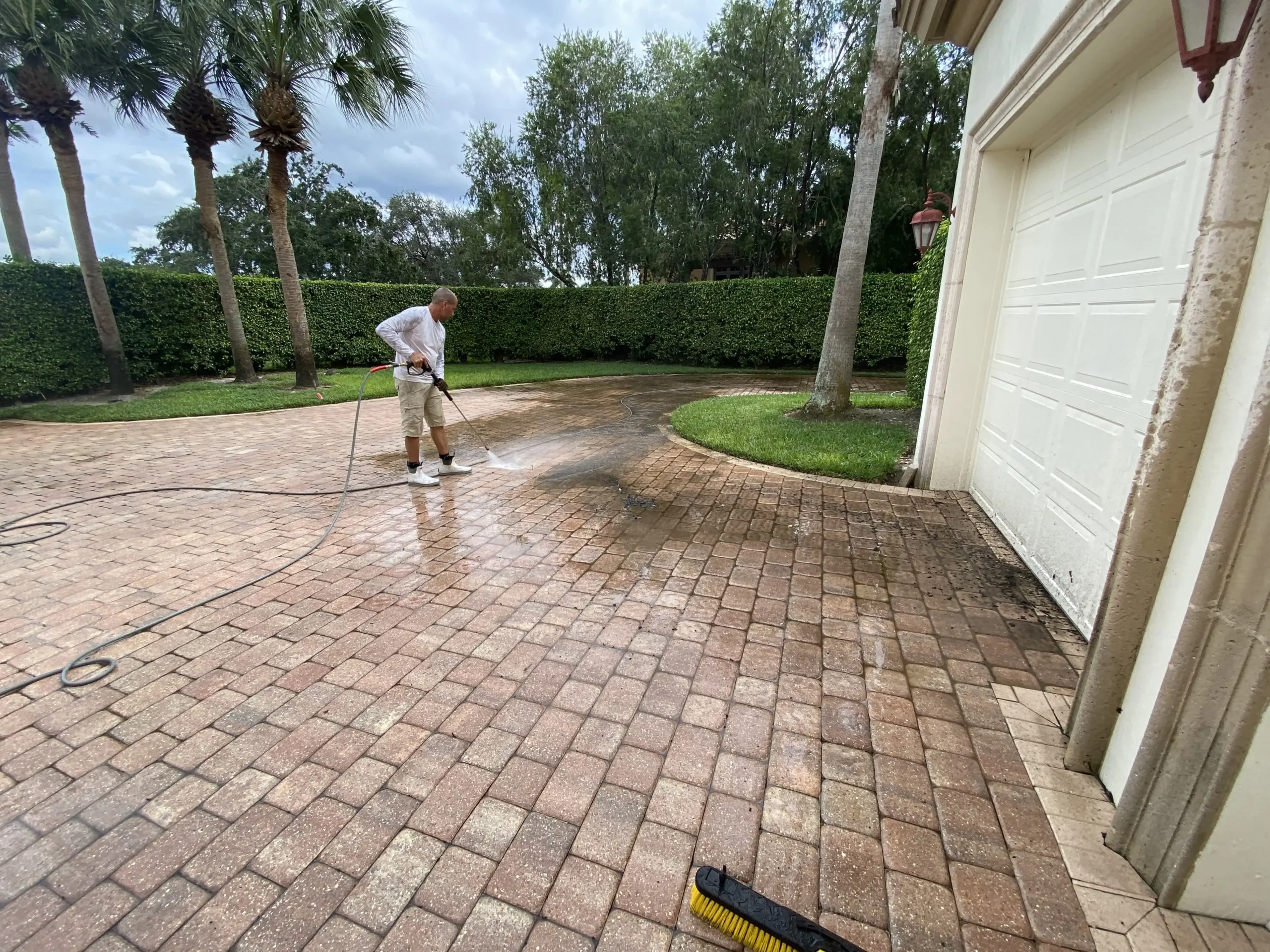
The brick or concrete pavers laid around the swimming pool. The dominant SWFL “deck” surface. Cleaned at medium pressure (800–1,200 PSI) with biocidal pre-treatment to preserve polymeric joint sand. Joint sand replacement and re-sealing available as add-ons after cleaning. NOT cleaned with surface cleaner equipment at standard pressure-washing PSI — that displaces joint sand and causes paver shifting over time. Detail on our patio power washing page.
“My Deck” → Screened Lanai Floor
The concrete or paver floor inside the screened pool enclosure. Method depends on substrate: poured concrete gets surface cleaner at 1,500–2,000 PSI with pool-safe biocidal; pavers get medium pressure with joint preservation; tile gets pH-neutral chemistry at low pressure. Pool equipment covered, screen panels protected, runoff managed away from pool. Lanai ceiling and screen frame cleaning often added in the same visit — the full enclosure addressed at once.
“My Deck” → Travertine Pool Coping or Surround
The natural-stone edge stones around the pool, typically tumbled travertine or polished marble. This is the surface most damaged by transplant DIY cleaning — high-pressure surface cleaner permanently etches travertine and there’s no recovery. We use pH-neutral biocidal chemistry only, low pressure rinse, no mechanical surface cleaning. Travertine is a soft sedimentary natural stone; it cannot tolerate the pressure that worked on the up-north wood deck.
“My Deck” → Back Patio (Poured Concrete or Pavers)
The covered or uncovered outdoor area at the back of the house. Poured concrete gets surface cleaner at standard concrete PSI with biocidal pre-treatment. Pavers get medium pressure with joint preservation. Most Naples back patios are part of a larger interconnected outdoor surface system that includes the lanai and pool deck — we clean them as part of the bundle rather than standalone for cost efficiency.
“My Deck” → Composite Deck (Rare in SWFL, Common on Canal/Gulf Homes)
Composite materials (Trex, TimberTech, Fiberon, Azek) used for elevated deck construction on the small minority of Naples homes that have actual decks — typically canal-front, Gulf-front, or older homes with second-floor balconies. Cleaned at manufacturer-specified pressure (1,000–1,500 PSI with fan tips) with biocidal soft wash chemistry that addresses embedded mold in composite surface texture. Composite materials hold up far better than wood in SWFL conditions; cleaning preserves the warranty.
“My Deck” → Actual Wood Deck (Cedar, PT, Tropical Hardwood)
Real wood elevated decks are rare in Naples but they exist — cedar, pressure-treated lumber, ipe, mahogany, and other tropical hardwoods. Cleaned at 500–800 PSI with wood-specific bio-active chemistry to remove algae, mold, mildew, gray weathering, and tannin staining without raising wood grain or causing micro-splintering. SWFL wood decks have 5–8 year functional lifespan vs 20–25 years up north — cleaning + sealing extends the life but doesn’t reach northern climate longevity. Many Naples wood decks get replaced with composite at end-of-life precisely because composite handles SWFL conditions better.
“My Deck” → Spa or Hot Tub Surround
Smaller surface around an in-ground or surface-mounted spa. Usually paver or travertine. Method matched to substrate (medium pressure on pavers, pH-neutral chemistry on travertine). Spa equipment covered, water chemistry protected. Often the most heavily-fouled surface on the property because the warm-wet microclimate around the spa accelerates biological growth even faster than the main pool deck.
“My Deck” → Outdoor Kitchen Pad / Grill Area
The concrete or paver area where the outdoor kitchen, grill, fire pit, or fire feature lives. Often heavily stained with grease drips, organic food debris, soot from grills, and biological growth in the shaded transitions. Hot-water pressure washing tier (180–200°F) genuinely useful here for grease dissolution. Method matched to substrate, cleaning detail at the equipment-to-pad interface where staining concentrates.
5-star reviews across Naples, Marco & Bonita
"Roof was black with algae. Gone in 3 hours, no streaks, no damage. Two years later still clean."
"Owner showed up on the quote himself. Half what the franchise quoted. Roof looks new."
"Tile roof, soft wash. They explained what they were using and why. Professional."
Ready for a clean roof, guaranteed for 2 years?
We come to your property, inspect the roof, give you a firm price. 15–30% less than franchises.