
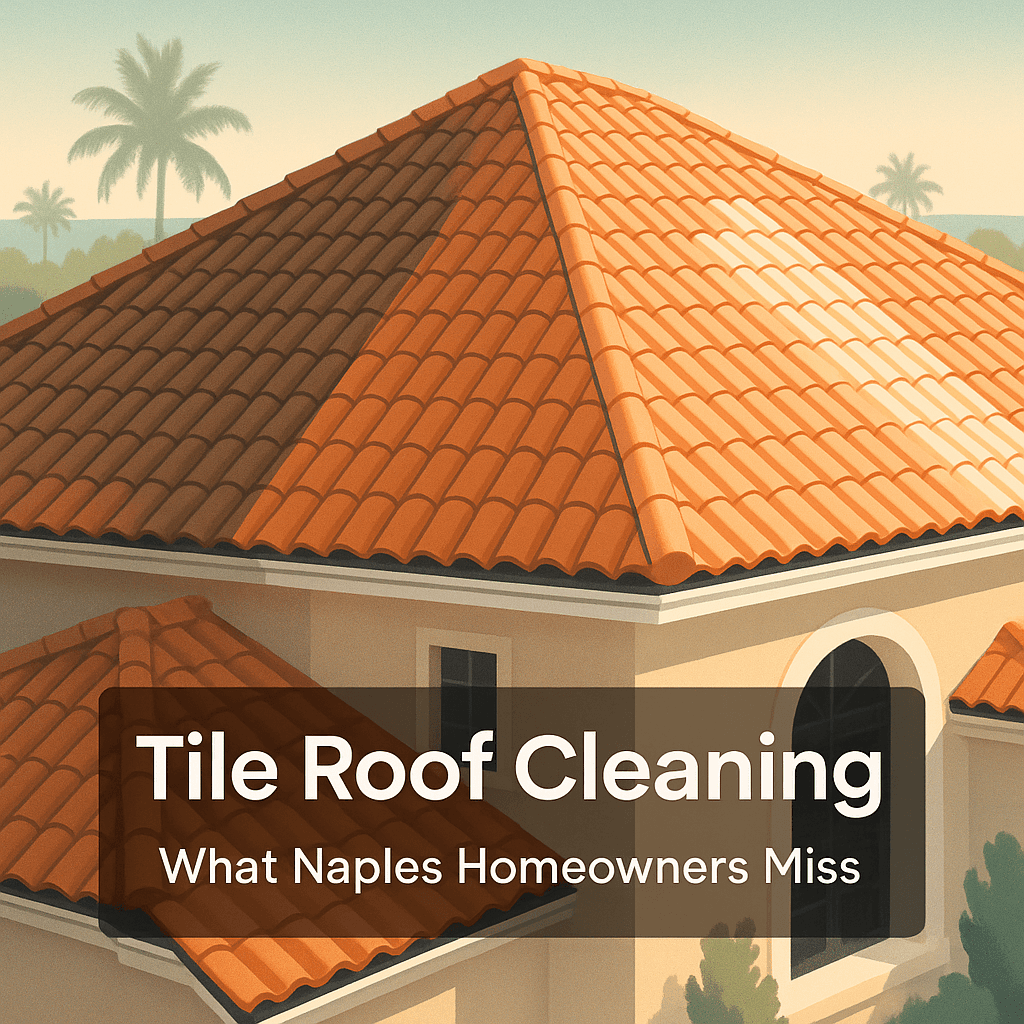
Tile Roof Cleaning Mistakes Naples Homeowners Make — Walking on Tile, Skipping the Glaze Inspection, and Trusting “We’ve Cleaned 1000s of Tile Roofs” Without Asking Material-Specific Questions.
|
B
|
By Blane · Owner · Wash and Glow
11+ Years Naples · Published February 28, 2026 · Updated May 2026
|
After 11+ years and 8,000+ Naples cleanings (a meaningful share concrete and Spanish/clay tile), the question I should be asked but rarely am is: “What’s different about cleaning tile vs shingle, and what mistakes do operators make on tile that homeowners don’t catch until later?” The honest answer has two parts. First: tile is a different chemistry, different access protocol, different glaze inspection process. Second: the three biggest mistakes operators make on Naples tile roofs cause damage that doesn’t show up until 6–18 months post-cleaning — by which time the operator is hard to find.
The three mistakes, the questions to ask, the glaze inspection checklist, and why “we clean tile roofs all the time” isn’t enough.
Mistake 1: Walking Directly on Tile Without Foot-Plate Discipline — Causes Cracked Tiles That Show Up in Next Storm
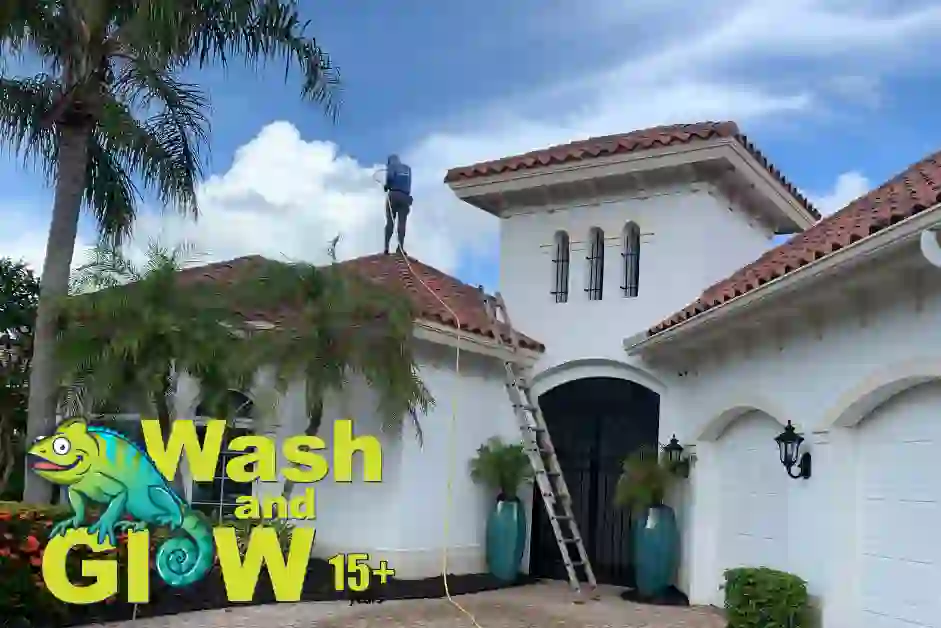
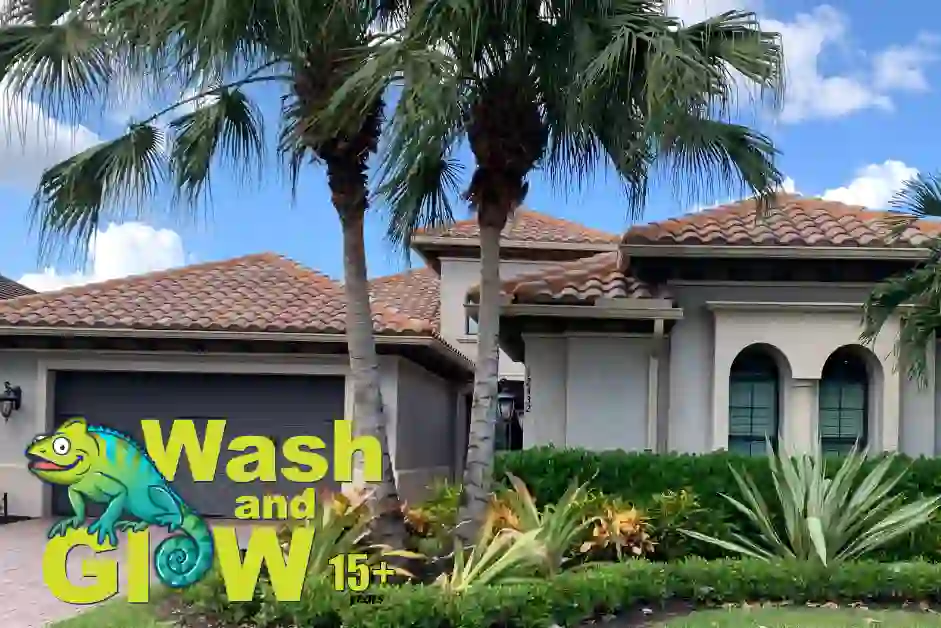
Tile roofs are walkable but require specific foot-plate discipline. The right method: place feet on the bottom 3 inches of each tile (where the tile is supported by the layer below) and never on the top 1–2 inches (where the tile is unsupported overhang). Operators who walk on tile without this discipline crack tiles invisibly — hairline fractures that don’t leak immediately but propagate during the next thermal cycle or storm event. Damage shows up 3–18 months later as leaks or visible cracks; by then the operator is gone. Best for: the test — watch how the operator’s crew positions feet on tile during walkthrough quote. If they’re walking like it’s a sidewalk, they’ll crack tiles. The right operator hires crew specifically trained on tile foot discipline. Detailed Spanish/clay tile chemistry on our Naples-proper geo page.
Mistake 2: Skipping Glaze Condition Inspection Before Chemistry Application
Concrete and Spanish/clay tile have a glaze layer (factory-applied surface coating). Glaze condition determines what chemistry concentration the tile can safely tolerate — glaze that’s intact tolerates 4–6% working solution; glaze that’s pitted/spalled/eroded should only see 2–3%. Operators who use a one-size-fits-all chemistry without inspecting glaze cause two problems: damaged-glaze tile gets over-chemistry exposure that accelerates substrate damage; OR intact-glaze tile gets under-chemistry that doesn’t kill biology and customer needs re-cleaning in 12 months. The walkthrough quote should include glaze inspection on at least 4–6 tile sections from accessible areas. Best for: homes with original 1990s–2000s tile where glaze is starting to age — the inspection prevents the over-chemistry damage that wouldn’t show up until next-cycle replacement.
Mistake 3: Using Pressure Washing on Tile to “Speed Up” the Cleaning
Some operators use pressure washing on tile (1500+ PSI) under the framing that tile is more durable than shingle and can handle higher force. False. High-pressure water on tile causes three problems: (1) glaze damage that progresses to substrate erosion over 5–10 years, (2) grout damage in tile-to-tile joints that creates water intrusion paths, (3) immediate tile cracking on already-stressed tiles that wouldn’t have failed under chemistry-based cleaning. Tile manufacturer warranties (Boral, Eagle, Hanson, MCA) explicitly exclude pressure-washing damage. Best for: the question to ask — “do you ever use pressure washing on my tile?” Right answer: no, soft wash only at 50 PSI rinse pressure. Wrong answer: any version of “only when needed” or “depends on biology load.” See our power wash page for full pressure-vs-soft-wash detail.
A note from Blane, owner
BLANE · OWNER · (239) 384-0208 · 11+ YEARS NAPLES SPECIALTY

“On tile cleaning specifically, the difference between operators who genuinely understand tile and operators who treat it as ‘similar to shingle’ is consequential. Tile is more expensive to repair than shingle (one cracked Spanish tile can run $25-$60 just for the tile, before installation). Walking discipline matters. Glaze inspection matters. Chemistry calibration matters. The customers who got burned by tile cleaning gone wrong usually got the cheapest quote, didn’t ask material-specific questions, and the damage didn’t show up until 12-18 months later. Ask the questions during the walkthrough. The right operator answers them confidently and walks you through their tile-specific protocol.”
— Blane, owner · answers the phone personally
Have a Spanish, clay, or concrete tile roof and want material-specific protocol?
Walkthrough quote includes glaze condition inspection, chemistry calibration to your specific tile material, and tile foot-plate discipline confirmation. Call or text the same number.
| ☎ Call (239) 384-0208 | 💬 Text Same Number |