
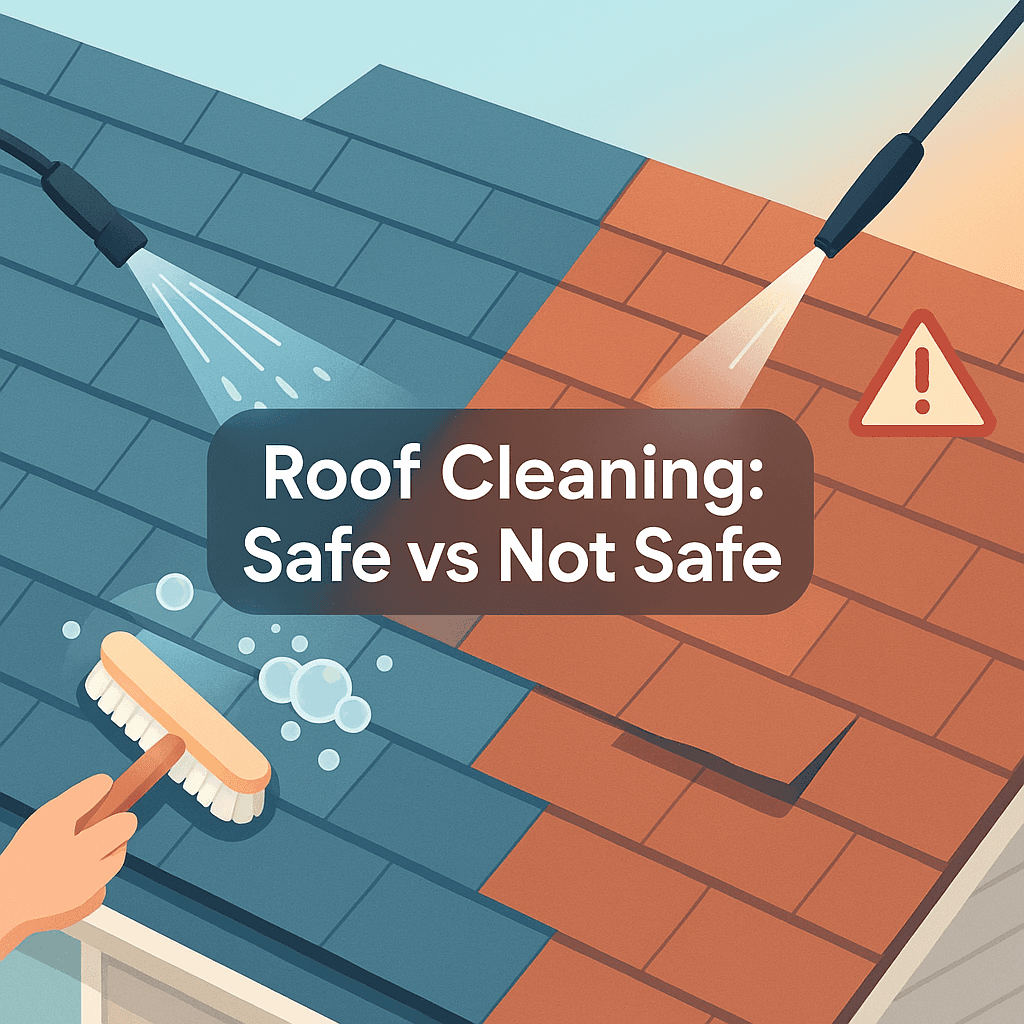
When Shingle Roof Cleaning Is Safe and When It’s Not — The Three Conditions That Make Cleaning Safe, the Three Conditions That Make It Risky, and the Roof Age Threshold Most Operators Ignore.
|
B
|
By Blane · Owner · Wash and Glow
11+ Years Naples · Published March 2, 2026 · Updated May 2026
|
After 11+ years and 8,000+ Naples cleanings, the question I get most often from older-shingle-roof owners is: “My roof is 18 years old — is cleaning still safe at this age?” The honest answer has two parts. First: shingle cleaning is safe in three specific conditions and risky in three others, and the difference matters more than most operators acknowledge. Second: the roof age threshold most operators ignore is around year 15–18 — past that point, the cleaning conversation becomes a roof-replacement-timing conversation.
The three safe conditions, the three risky conditions, the age threshold, and the honest decision tree.
Roof Under 15 Years Old + Soft Wash at 50 PSI + ARMA-Spec Chemistry
The fully-safe condition. Shingle roof under 15 years old (well within design life), soft wash equipment delivering 50 PSI rinse pressure, ARMA-spec chemistry concentration (1–3% sodium hypochlorite working solution). All three conditions satisfied = no granule loss, no binder damage, full warranty preservation. The cleaning kills biology at root depth, the roof returns to factory-new appearance, the maintenance cycle continues normally. Best for: the 80% of Naples shingle roofs that fall in this category — standard cleaning protocol, standard pricing, standard warranty. Detailed soft wash chemistry on our main soft wash page.
Roof 15–18 Years Old — Cleaning Safe With Modified Protocol and Honest Lifecycle Conversation
The transition band. Shingle roofs 15–18 years old are approaching end-of-design-life but are still cleanable safely with modified protocol — lower chemistry concentration (1–2% instead of 1–3%), shorter dwell time, gentler rinse approach. The honest conversation that goes with this band: cleaning extends visual lifespan, but the roof is approaching replacement timing regardless. Recommended frequency drops from 24 months to 18–20 months because biology returns faster on aging surfaces. Best for: homeowners who want to preserve curb appeal during the final 5–10 years of roof life without committing to early replacement — the modified protocol works, but the conversation about replacement budget should happen alongside.
Roof Past 18 Years OR Pressure Washing OR Sub-Spec Chemistry — Cleaning Becomes Risky
Three risky scenarios. Roof past 18 years: granule binder is approaching end-of-design-life regardless of cleaning method, granule loss risk increases significantly, the right conversation is replacement-timing not cleaning. Pressure washing on shingle: 1,500+ PSI strips granules from any-age shingle, voids manufacturer warranties, accelerates substrate damage — ARMA-prohibited regardless of operator framing, see our power wash page. Sub-spec chemistry: working solution above 5% concentration on shingle damages binder regardless of pressure used; below 1% won’t kill biology so operator compensates with mechanical force = damage. Best for: the test — ask operator (1) what’s the roof age threshold for soft wash safety? (2) what PSI? (3) what chemistry concentration? Right answers: 15–18 years modified protocol, 50 PSI, 1–3% on shingle.
A note from Blane, owner
BLANE · OWNER · (239) 384-0208 · 11+ YEARS NAPLES SPECIALTY

“On the shingle safety question, the honest framing is that age matters and operators rarely talk about it. A 12-year-old shingle roof is fully safe to clean with standard protocol. An 18-year-old shingle roof is cleanable with modified protocol but the replacement conversation should happen alongside. A 22-year-old shingle roof is past design life and cleaning is mostly cosmetic-only — the honest answer is to budget for replacement and clean as final-stage curb appeal, not to expect cleaning to extend lifespan meaningfully. The walkthrough quote should include an honest read on roof age and condition. Operators who quote a cleaning on a 22-year-old shingle roof without raising the replacement timing conversation are either not paying attention or not being honest. The cleaning works in its window. The window matters.”
— Blane, owner · answers the phone personally

Older shingle roof and want an honest cleaning vs replacement read?
Walkthrough quote includes roof age assessment, granule condition check, and honest read on whether you’re in the cleaning band or the replacement-timing conversation. Call or text the same number.
| ☎ Call (239) 384-0208 | 💬 Text Same Number |