Wash and Glow Logo

Shingle Roof Cleaning: What’s Safe (and What’s Not)

Shingle Roof Cleaning: What’s Safe (and What’s Not)

If you live in Florida long enough, you start to recognize the “roof stains” timeline.

One day the shingles look fine. Then you notice a faint dark streak. Then after a rainy season or two, it’s like someone spilled ink down the slope of your roof. Neighbors will say it’s dirt. Or mold. Or “just age”.

Most of the time, it’s algae. Specifically that black streaking you see everywhere down here. And yes, it can be cleaned.

But here’s the part that trips people up.

Shingle roof cleaning is one of those jobs where the wrong method does not just do a bad job. It can shorten the life of the roof, knock off granules, void a warranty, or create leaks if someone gets careless walking around up there. So, if you’re trying to figure out what’s safe (and what’s not), let’s lay it out plainly.

The thing about asphalt shingles

Asphalt shingles are basically a layered system. There’s the asphalt base, then a top surface coated with mineral granules. Those granules aren’t decoration. They protect the shingle from UV, slow down wear, and help with fire resistance.

So when you hear “just pressure wash it”, what they’re really suggesting is blasting away the protective layer that makes the shingle last.

Not always instantly. But enough that you’ll notice it later.

What those black streaks usually are

Most dark staining on roofs in Naples and nearby areas is algae (Gloeocapsa magma). It feeds on airborne nutrients and moisture, and it spreads across shingles as those streaky lines.

It’s not the same as moss, and it’s not always “mold”, but it does hold moisture and it makes your roof look tired way earlier than it should.

If you have trees overhead, you might also have:

  • Lichen (crusty, spotty patches)
  • Moss (green and thicker, more common in cooler/wetter regions but can still pop up in shaded areas)
  • Heavy organic buildup in valleys and near gutters

Different gunk, similar cleaning rule: shingles need a gentle approach.

What’s safe for shingle roof cleaning

Let’s get specific. Safe does not mean “weak”. It means the method removes growth without mechanically shredding the roof surface.

1) Soft washing (the right way)

Soft washing is the method most shingle manufacturers and roof-care guidelines point toward because it relies on cleaning solutions and low pressure, not force.

A proper soft wash setup uses:

  • Low pressure application (think garden hose level, not pressure washer blast)
  • A roof safe cleaning mix designed to kill algae and organic growth
  • Dwell time (letting it work)
  • A gentle rinse, when needed

The key is that the algae gets killed at the root, not just “washed off the surface”. That’s why soft washing typically lasts longer than a quick cosmetic rinse.

If you’re local, this is basically what Wash and Glow, Naples Soft Wash Roof Cleaning focuses on. You’ll see it mentioned across the site here: https://softwashroofcleaningnaples.com

They also talk about a 2 year clean guarantee, which honestly is the kind of thing you only offer when you’re confident you’re not just doing a surface-level rinse.

2) Manufacturer-friendly cleaning solutions (used responsibly)

A lot of roof cleaning comes down to chemistry. The common ingredient in many effective mixes is sodium hypochlorite (a form of bleach), usually paired with surfactants to help it cling and work evenly.

This is where nuance matters. Because people hear “bleach” and think either:

  • “That’ll destroy my roof.”
  • “Cool, I’ll pour pool shock on it.”

Both reactions miss the point.

At correct dilution, with proper application, rinsing, and plant protection, this type of solution is widely used in professional roof cleaning because it works. The danger comes from sloppy mixes, over-strong concentrations, or letting it dry where it shouldn’t.

A good operator controls runoff, protects landscaping, and doesn’t treat your roof like a science experiment.

3) Gentle manual removal, only when necessary (and done carefully)

For thicker patches like lichen or moss, sometimes there’s a temptation to scrape. However, if you’re facing a moss issue, it’s advisable to follow specific guidelines on how to remove moss from your roof.

If scraping happens, it should be minimal and careful. Not aggressive. Not with metal tools. And not in a way that rips granules off.

Most of the time, the better move is: treat it, let it die, and allow weather to slowly release the remnants. It’s less “instantly satisfying”, but it’s easier on the roof.

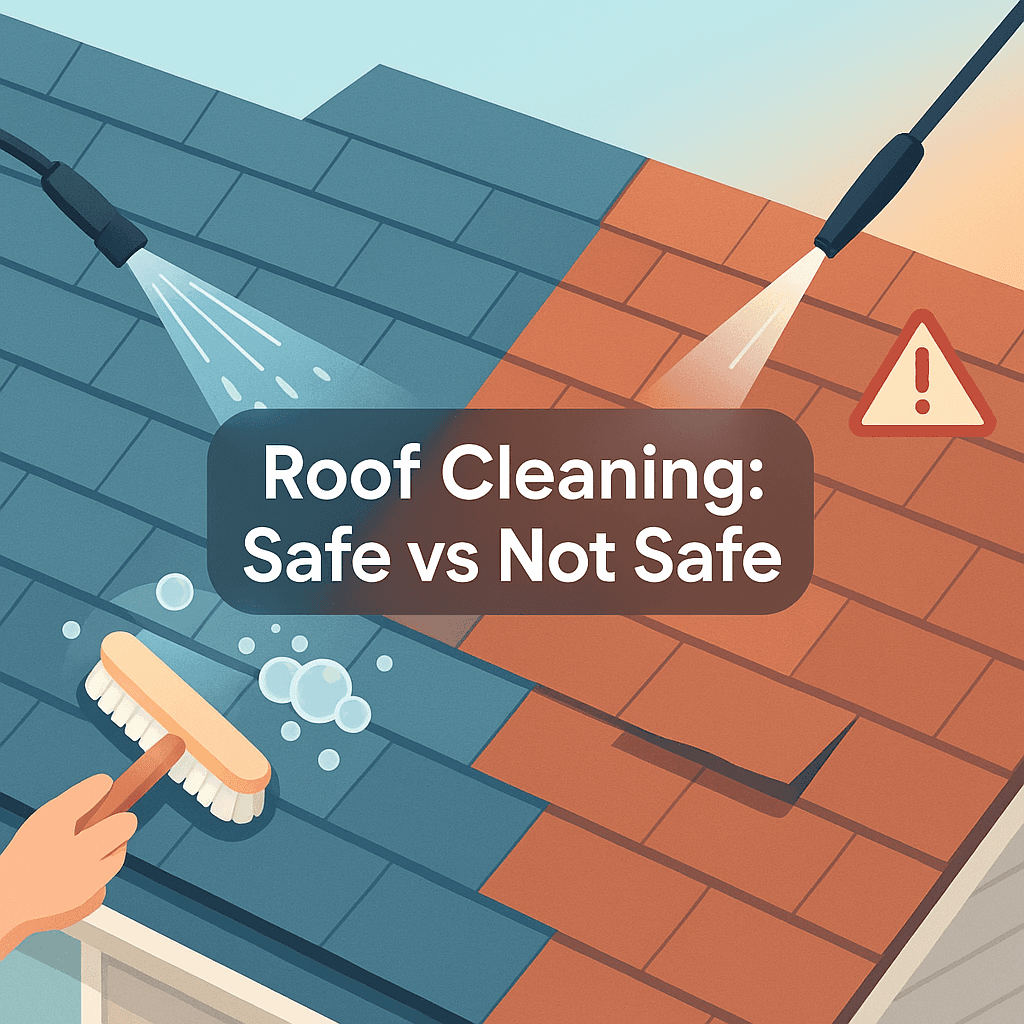
What’s NOT safe (or usually a bad idea)

This is the list that saves people thousands. Because a roof is not a driveway. It’s not a paver patio. It’s a layered system designed to shed water.

1) Pressure washing asphalt shingles

This is the big one.

High pressure can:

  • Blast off protective granules
  • Lift shingle edges
  • Force water up under shingles (especially if sprayed upward)
  • Shorten roof lifespan
  • Create uneven “clean stripes” that look worse than the original stains

Even if it looks clean right after, you may have just traded cosmetic improvement for accelerated aging.

If someone shows up with a pressure washer wand pointed at shingles, that’s your cue to pause the job.

2) Straight, undiluted bleach or harsh DIY mixes

Dumping concentrated bleach (or pool chemicals) onto a roof can:

  • Fade shingles unevenly
  • Damage flashing and metal components
  • Burn landscaping from runoff
  • Leave residue that attracts dirt later
  • Increase risk of brittle shingle surfaces over time if repeated

It’s not that the word “bleach” is automatically evil. It’s that DIY roof cleaning often skips the parts that make it safe: dilution control, dwell time management, runoff control, and full-property protection.

3) Abrasive brushing

Scrubbing shingles with stiff brushes sounds harmless, but it can scuff off granules and create visible wear patterns. If you’ve ever seen a roof where certain spots look “bald” or oddly shiny, aggressive brushing is one way that happens.

4) Walking all over the roof without a plan

Not a “cleaning method” exactly, but it’s a common source of damage.

Walking on shingles can crack them, especially older roofs or hot afternoons when the asphalt is softer. It can also break seal strips and create subtle lifting that turns into wind issues later.

Pros use proper footwear, minimize traffic, and understand where it’s safer to step.

5) “Roof rejuvenation” add-ons that sound magical

You’ve probably seen ads that promise to restore roofs with sprays that “bring back oils” and make it look new. Some products may have niche use cases, but a lot of it is marketing that distracts from the basics.

If your roof is stained but structurally fine, cleaning is usually the real answer. If your roof is failing, no spray is going to un-fail it.

A simple way to tell what you’re dealing with (before you clean)

Look at the staining pattern.

  • Long dark streaks running down the roof: usually algae.
  • Round-ish patches, crusty growth: likely lichen.
  • Green fuzzy clumps: moss (or sometimes algae mixed with trapped debris).

Also check where it’s worst:

  • North-facing slopes and shaded areas usually show growth first.
  • Valleys and edges near gutters collect debris and hold moisture.
  • Areas under overhanging branches stay damp longer.

This matters because different growth responds differently. Lichen, for example, can take time to fully release even after it’s dead.

“Will cleaning damage my roof?” The honest answer

If it’s done wrong, yes.

If it’s done right, it’s one of the safer things you can do for the roof’s appearance, and it can help prevent moisture-holding growth from sticking around year after year.

The bigger risk is waiting too long, then trying to “fix it fast” with pressure or harsh chemicals. That’s when people get into trouble.

How often should you clean a shingle roof in Naples?

There’s no perfect schedule because shade, tree cover, roof pitch, ventilation, and even your street can change how fast algae returns.

But in Southwest Florida, a lot of homeowners find that every couple of years is a reasonable rhythm, especially if you’re trying to keep HOA standards or just keep the house looking sharp.

If you’re hiring a company, this is also where guarantees matter. A 2 year clean guarantee (like the one mentioned on Wash and Glow’s site) is basically the company saying, “We expect this to last, and we’ll stand behind it.”

Quick checklist: What to ask before you hire anyone

If you want to avoid the pressure-wash disaster scenario, ask these questions:

  1. Are you using pressure on the shingles at all?
    The answer you want is “no” or “low pressure only”.
  2. What process are you using? Soft wash?
    Listen for clear steps, not vague “we wash it”.
  3. How do you protect plants and landscaping from runoff?
    There should be a real plan here.
  4. Do you have insurance for roof work?
    Basic, but important.
  5. Do you offer any kind of clean guarantee?
    Not required, but it tells you a lot about confidence and consistency.

Images (add these throughout the post)

Here are a few relevant images you can insert in WordPress (or keep as-is if your theme supports hotlinked placeholders). If you want, swap these with your own project photos later. Real local photos usually convert better.

Typical algae streaking on shingles

Black algae streaks on an asphalt shingle roof

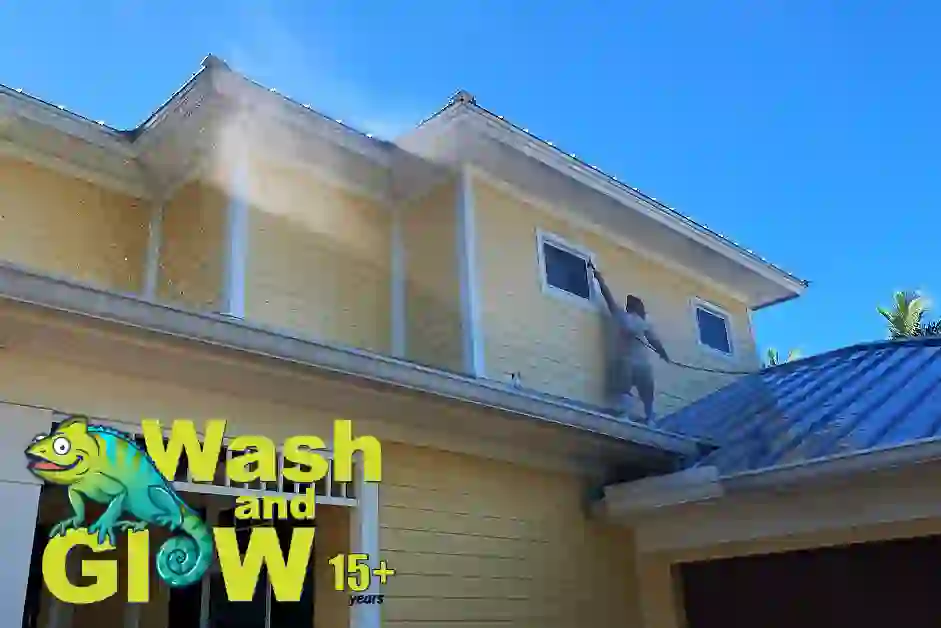
A soft wash style roof cleaning (low pressure application)

Exterior cleaning technician applying cleaning solution

Clean gutters and roof edges help prevent buildup

Home exterior with roof edge and gutters

If you’re in Naples and want it handled safely

If you’re in Naples, Bonita Springs, Estero, or Marco Island, and you’d rather not guess with a ladder and a chemical mix, you can get a quote from Wash and Glow here: https://softwashroofcleaningnaples.com

Soft washing is one of those services where doing it gently is not “extra cautious”. It’s the whole point.

And once you see a properly cleaned shingle roof, you kind of can’t unsee it. The whole house looks newer. Like it got a reset.

FAQs (Frequently Asked Questions)

What causes the black streaks commonly seen on asphalt shingle roofs in Florida?

The black streaks are usually caused by algae called Gloeocapsa magma, which feeds on airborne nutrients and moisture, spreading across shingles as dark streaky lines. This algae is different from moss or mold but holds moisture and makes roofs look aged prematurely.

Why is pressure washing not recommended for cleaning asphalt shingle roofs?

Pressure washing can blast off the protective mineral granules on shingles, lift shingle edges, force water under shingles, shorten roof lifespan, create uneven clean stripes, and potentially void warranties. It damages the layered system of asphalt shingles designed to protect your home.

What is soft washing and why is it considered safe for shingle roof cleaning?

Soft washing is a gentle cleaning method that uses low-pressure application (similar to a garden hose), roof-safe cleaning solutions designed to kill algae and organic growth, dwell time to let the solution work, and a gentle rinse. This method kills algae at the root without damaging shingles or removing protective granules.

Can bleach be safely used to clean shingle roofs?

Yes, sodium hypochlorite (a form of bleach) can be used safely when properly diluted and applied with care. It must be combined with surfactants to cling evenly, rinsed properly, and applied responsibly to avoid damage, runoff issues, or harm to landscaping. Sloppy use or over-concentration can cause problems.

How should moss or lichen be removed from asphalt shingle roofs?

Thicker patches like moss or lichen should be treated carefully with gentle manual removal only when necessary. Scraping should be minimal, done without metal tools, and not aggressively to avoid damaging shingles. The preferred method is treating the growth so it dies naturally and allowing weather to remove remnants gradually.

What are some common misconceptions about roof stains on asphalt shingles?

Many people mistake black streaks for dirt, mold, or just aging. However, most dark staining in places like Naples is due to algae growth. Also, some believe pressure washing or strong bleach applications are harmless or beneficial; in reality, these methods can damage shingles and reduce roof lifespan if not done correctly.

Our Five Star Services

Residential Services

Commercial Services

Our Popular Services

Surface Cleaning

Surface Cleaning

Surface Cleaning