Paver Sealing & Rust Removal Naples FL — Clean, Re-Sand, Seal
Paver sealing is not one job, it is three, and skipping any of them wastes the money you spent on the other two. Clean the pavers. Replace the polymeric joint sand. Then seal. Sealing over dirty pavers locks the dirt in permanently, and sealing without re-sanding leaves joints that wash out the first wet season.
The other thing Naples pavers need is rust removal. The orange staining spreading out from your sprinkler heads is iron in the irrigation water. It is chemically different from dirt or algae and it does not come off with pressure, no matter how much of it you apply.
Clean and rust-treat, re-sand the joints with polymeric sand, then apply UV-protective sealer. Miss a step and the result does not last.
✓ Rust is iron, and it needs the right chemistry
Irrigation water in Collier County carries dissolved iron that oxidises on the paver surface. Pressure does nothing to it. It needs an oxalic-based treatment that converts and lifts the stain — and no acid wash, which etches the paver face and leaves it permanently dull.
✓ Joint sand is structural, not cosmetic
Polymeric sand locks the pavers against each other. When it washes out the pavers move, the surface goes uneven and weeds get in. Cleaning removes what is left of the old sand, so it has to be replaced before sealing — otherwise you have sealed in an empty joint.
✓ Sealing over dirt is permanent dirt
Sealer is a clear film. Whatever is under it is under it for years. Every shortcut taken at the cleaning stage becomes a feature of your driveway until the sealer is stripped.
✓ UV protection is the point in Florida
Naples sun fades paver colour faster than anywhere north of here. A UV-protective sealer holds the colour and makes the surface far easier to clean next time. Expect three to five years before it wants redoing.
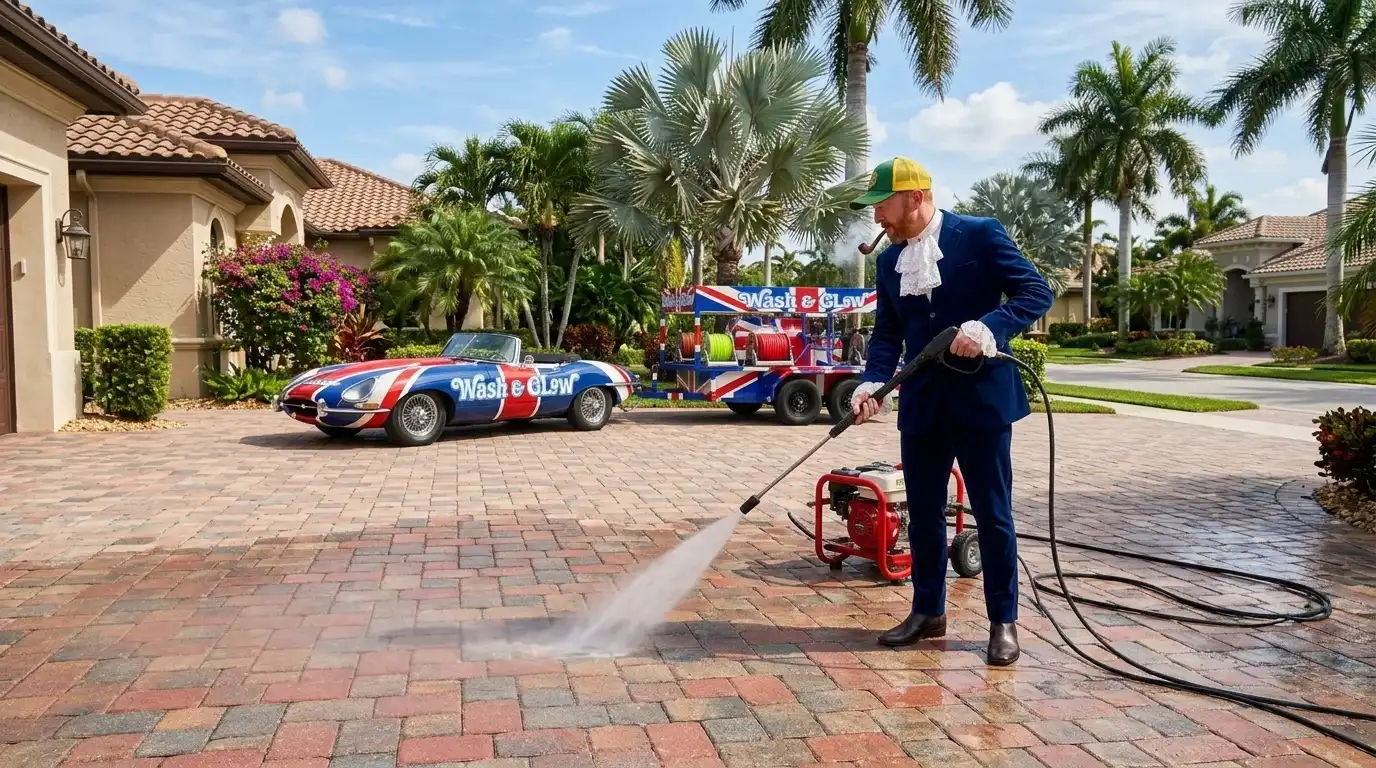
What Wash and Glow Looks Like in Practice
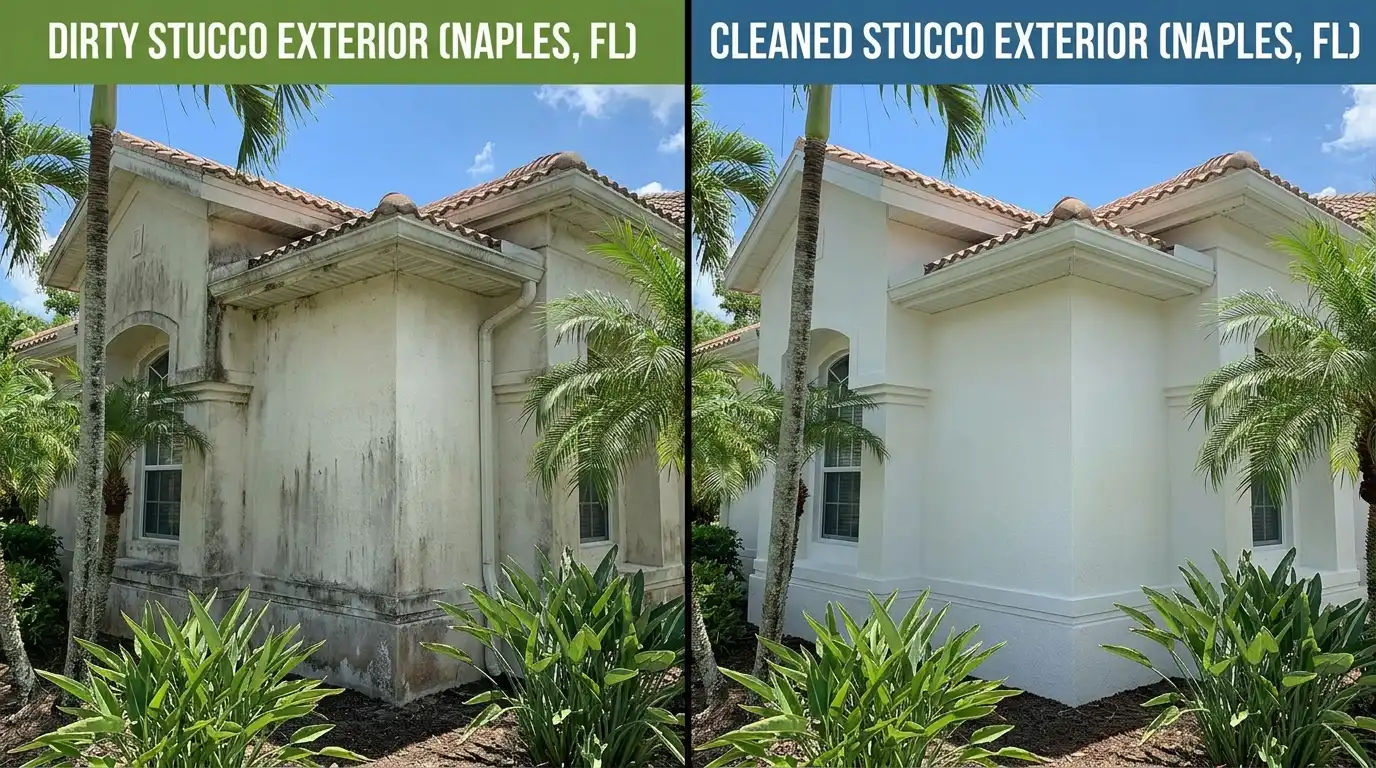
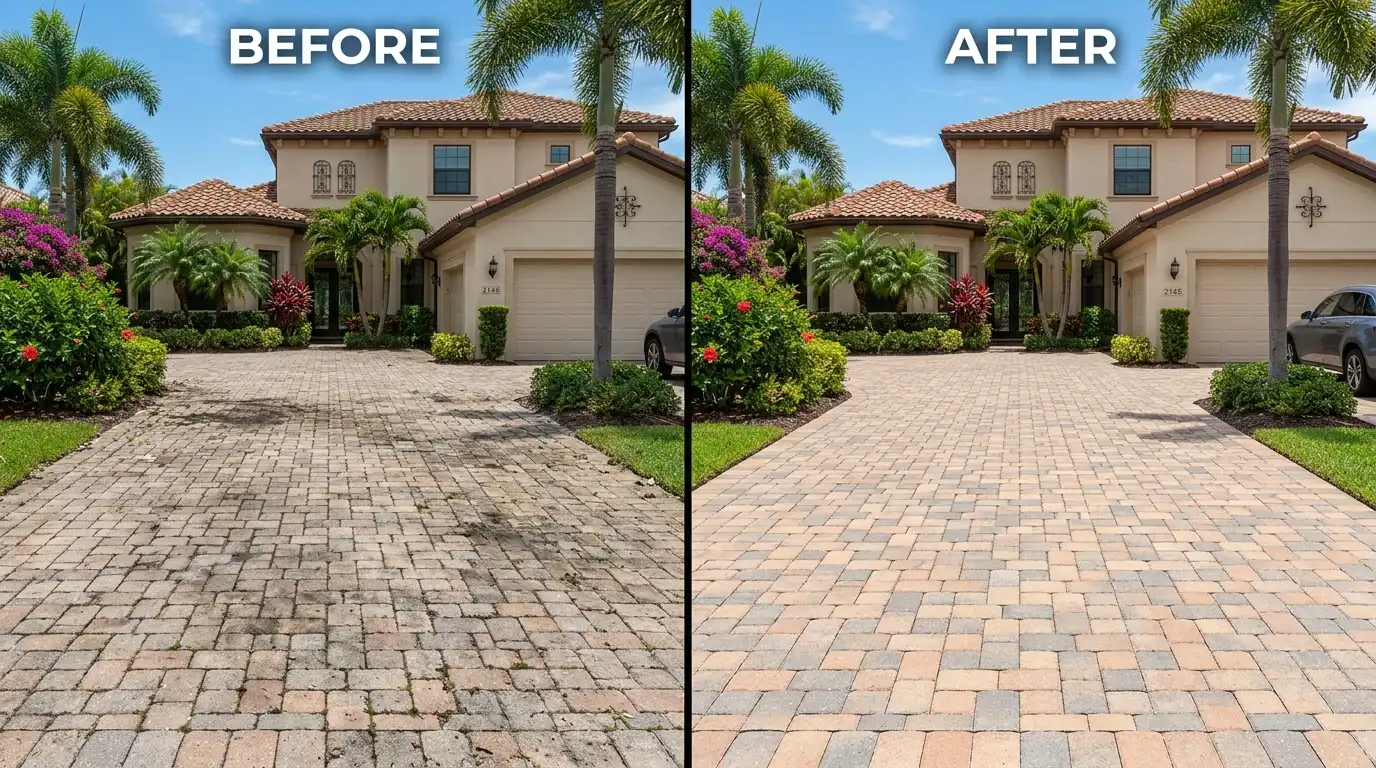
Driveway Cleaning →
The cleaning stage on its own, if you are not sealing this time round.
Patio & Pool Deck →
Paver pool decks and lanai floors, same three-step treatment.
House Washing — From $299 →
Whole-property visit, multi-service discount.
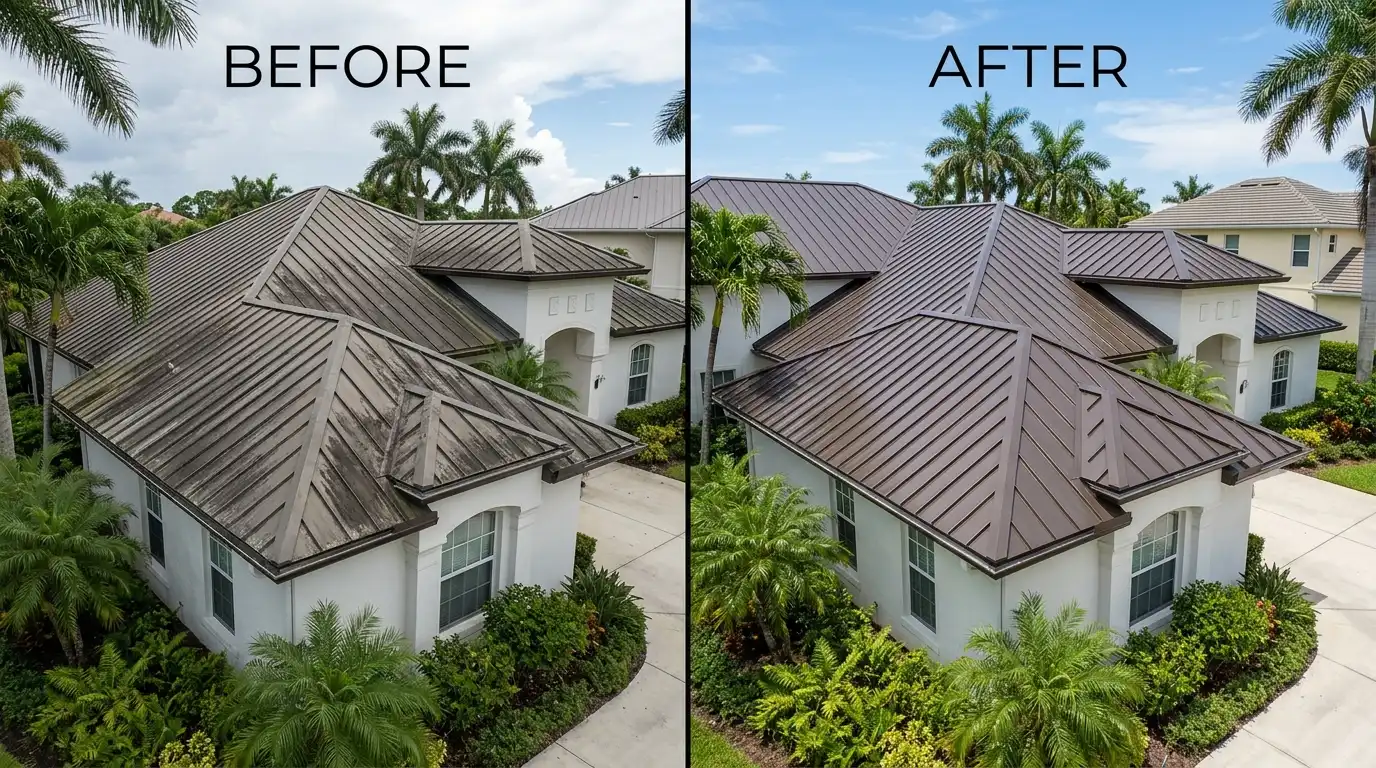
Soft Wash Roof Cleaning — From $299 →
Roof before pavers, always — run-off lands on the drive.
A note from the owners
16 YEARS CLEANING NAPLES ROOFS · LICENSED · INSURED

“After 16 years cleaning Naples roofs we'll tell you straight: most 'pressure washing' companies are blasting your tiles at 3,000 PSI and shortening their life by a decade. We soft wash at under 100 PSI with chemistry that kills the algae at the root — that's why our 2-year guarantee actually holds. If a competitor offers a longer guarantee, ask them to put it in writing on the invoice. We do.”
— Blane Perun & Jonathan Corcoran, owners · we answer the phone personally
After Sealing: Curing Time, Everyday Care and When to Call Us Back
Give the sealer time to cure. Plan to keep foot traffic off a freshly sealed surface for the rest of the day, and cars off a sealed driveway for longer. We will tell you the exact timing for the product used on your job. Switch off irrigation zones that hit the pavers until the cure period has passed, because water landing on uncured sealer can leave cloudy patches.
Weather matters on the day. Sealer needs a dry surface and a dry forecast. Between June and September that generally means starting early so the work is finished before afternoon storms build. If rain looks likely, we would rather move the date than seal a damp driveway.
Everyday care is simple. Sweep regularly so sand and grit do not grind into the surface. Rinse bird droppings and leaf stains while they are fresh. Wipe up oil, fuel or brake-fluid drips from cars quickly with an absorbent and mild detergent; the sealer buys you time, but it is not a permanent shield.
Watch the joints, not just the colour. Weeds or ants appearing between pavers, or a joint that has dropped below the paver edge, usually means the sand is going. Catching that early is cheaper than relaying shifted pavers later.
When the rust comes back. If orange staining reappears near sprinkler heads, the iron is still in your water. Treating the stain again works, but adjusting the heads or fitting a filtration or treatment system on the irrigation line is what stops it for good. Ask your irrigation contractor about options.
Proper